
Why Bed-Stuy's Bike Plant became a worker-owned co-op
'I hate capitalism, but I also love small businesses.'
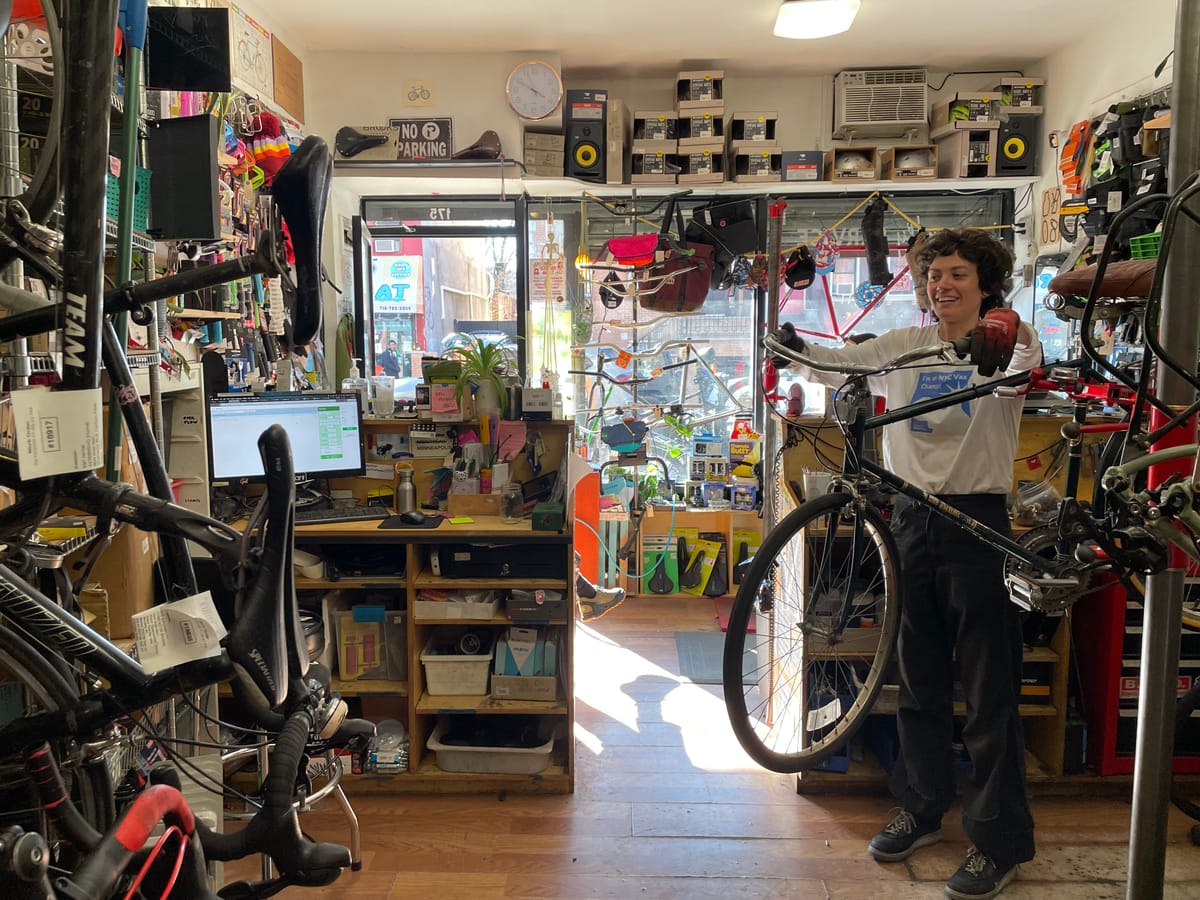
The first warm days of the year hit this week and that meant many bike-riding New Yorkers were pulling their wheels out of storage or scrubbing the long winter rust off the chains to take advantage of glove-free riding weather.
Tuesday’s sunny fool’s spring day was also a coming-out party of sorts for Bed-Stuy’s Bike Plant: the small but friendly bike shop became a worker-owned co-op in January, and was experiencing its first busy day as a cooperatively run business. Owner Robin Graven-Milne founded the shop in 2021 but had long had a goal of becoming a cooperative, part of Graven-Milne’s general distaste for the capitalist grind. Sharing ownership of the business felt “more fair,” they said.
“It’s just really crushing to run a business by yourself,” Graven-Milne said. “The bike world is really difficult to make any type of living wage in, so I was like, more heads are better than one.”
The shop is now owned by five mechanics, with two other employees still working part time.
I visited Bike Plant on Tuesday to check out the scene, but also to get new lube for my bike chain, which was crackling with such a brittle and loud intensity, that I thought it might offend other cyclists on the road (I am guilty of always storing my bike outside, even in this winter’s brutal cold, because I simply use it too much to lug it indoors ever). I found the shop overflowing with customers, with Graven-Milne and another mechanic busily working on bike frames suspended on repair stands and another two workers chatting with customers on the sidewalk. The 70-degree weather definitely beat the shop’s co-op celebration in January, when a few dozen people and lawmakers gathered on the sidewalk in the bitter cold to usher in the shop’s new era.
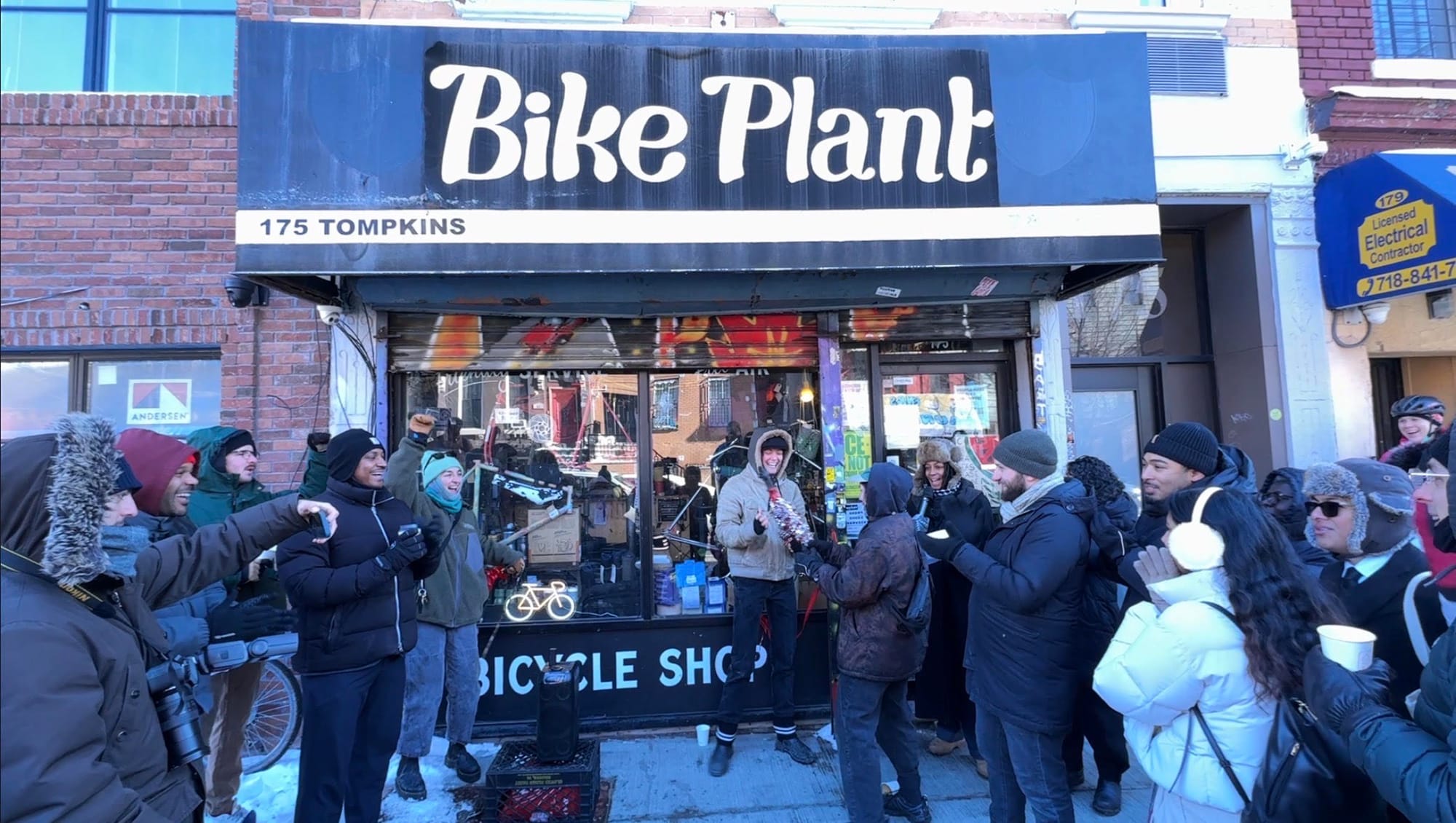
Bike shops are often punky by nature but some in the city can tend to feel a little corporate, more geared toward the carbon-fiber speed rider than the average grease-stained workaday biker. Bike Plant reminded me of the old-school activism-oriented businesses that seem to be increasingly priced out of the city (RIP Bluestockings and seemingly dozens of mission-forward vegan restaurants). The walls of Bike Plant are covered in anti-ICE messages, Black Lives Matter banners and a sign for solidarity with Amazon workers. The shop runs a repair fund that has given away tens of thousands of dollars in repairs to migrant and low-income New Yorkers.
👋 hi free reader: This site is owned and operated by journalists and we rely on our members to keep us afloat. Join us for as little as $6 a month to unlock sweet perks too.
For Graven-Milne, the co-op model is part of believing that the bike shop and its mission is bigger than one person.
“If I ever have to leave, the shop can continue without me,” they said. “I feel like the business is just a project you’re doing. It’s kind of the next stop on the project: can this stand on its own, without me being the sole owner, [pushing] it up the hill? Now I feel like there’s a chance that everyone is pushing the boulder together.”
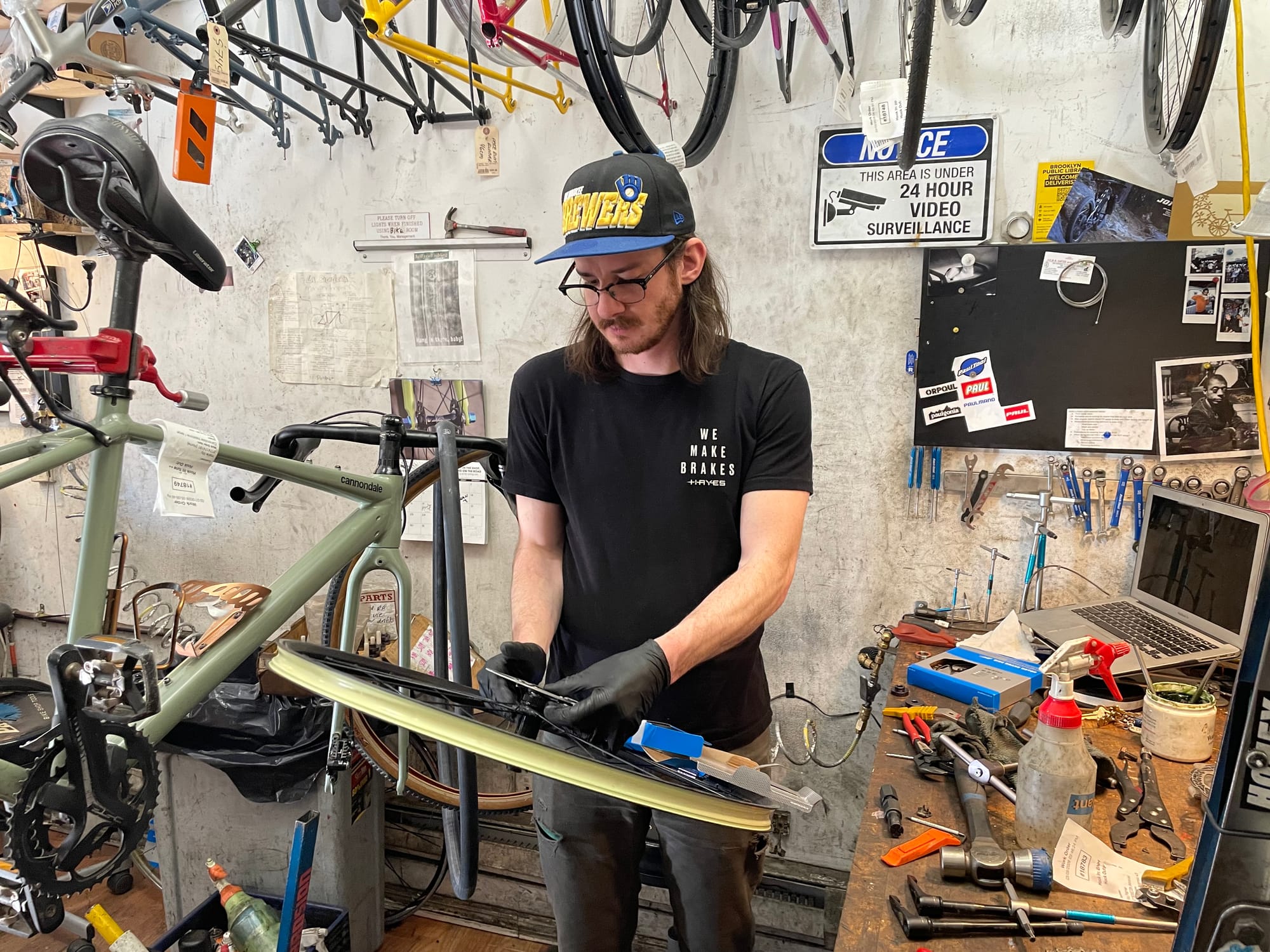
For mechanic Sean Patterson, becoming a part owner of the shop meant taking his lifelong dedication to bike repair to the next level; he’s 30 now and has been fixing bikes for 17 years.
“We all have a diff background in bikes and other work, I thought it was a great opportunity to share this with the friends that we have here,” he said, “and keep the community rolling with bikes and give us all a little more say of our own.”
The shop represents the inherent conflict in many people with socialist tendencies in this very money centered city.
“I hate capitalism,” Graven-Milne said, “but I also love small businesses.” On their day off, Graven-Milne said they like to walk up and down Broadway supporting local Brooklyn businesses, like the pet store, grocery markets or a friend’s Korean restaurant.
“I try to keep money in the community,” they said. “To me that’s less potent of a capitalism than ordering something from Amazon.”
The process of becoming a cooperative took about two years of talking with the ICA Group, a nonprofit that started in 1977 to help establish worker coops. Bike Plant also took inspiration from Bed-Stuy Bike Shop Cooperative, which operated out of Restoration Plaza until 2024.
Thanks to City Council funding, ICA is able to do pro-bono work in New York City, Mike Sandmel, a senior strategist with the group, said. That has led to a growth spurt in co-ops: the number of coops in the city has tripled in the past 10 years, Sandmel said. (Hell Gate has a feature profiling some of them, from cocktail bars to homecare services).
“I am increasingly busy over the past few years,” he said. It’s a self-propelling idea: the more there are, the more the idea spreads.
“There have been much more visible worker owned co-ops in the city that are more helpful in getting this idea out there that this is a possibility.”
To find out about turning your business into a coop, contact the ICA here; to find out about turning a bike shop into a coop, Graven-Milne said they’re always happy to chat.


Comments ()