
Volunteer Brooklyn Bridge cleaners face a new hurdle: the cops
After being hailed as local heroes, bridge cleaners are facing pressure to pack it up
It’s a bridge too far.
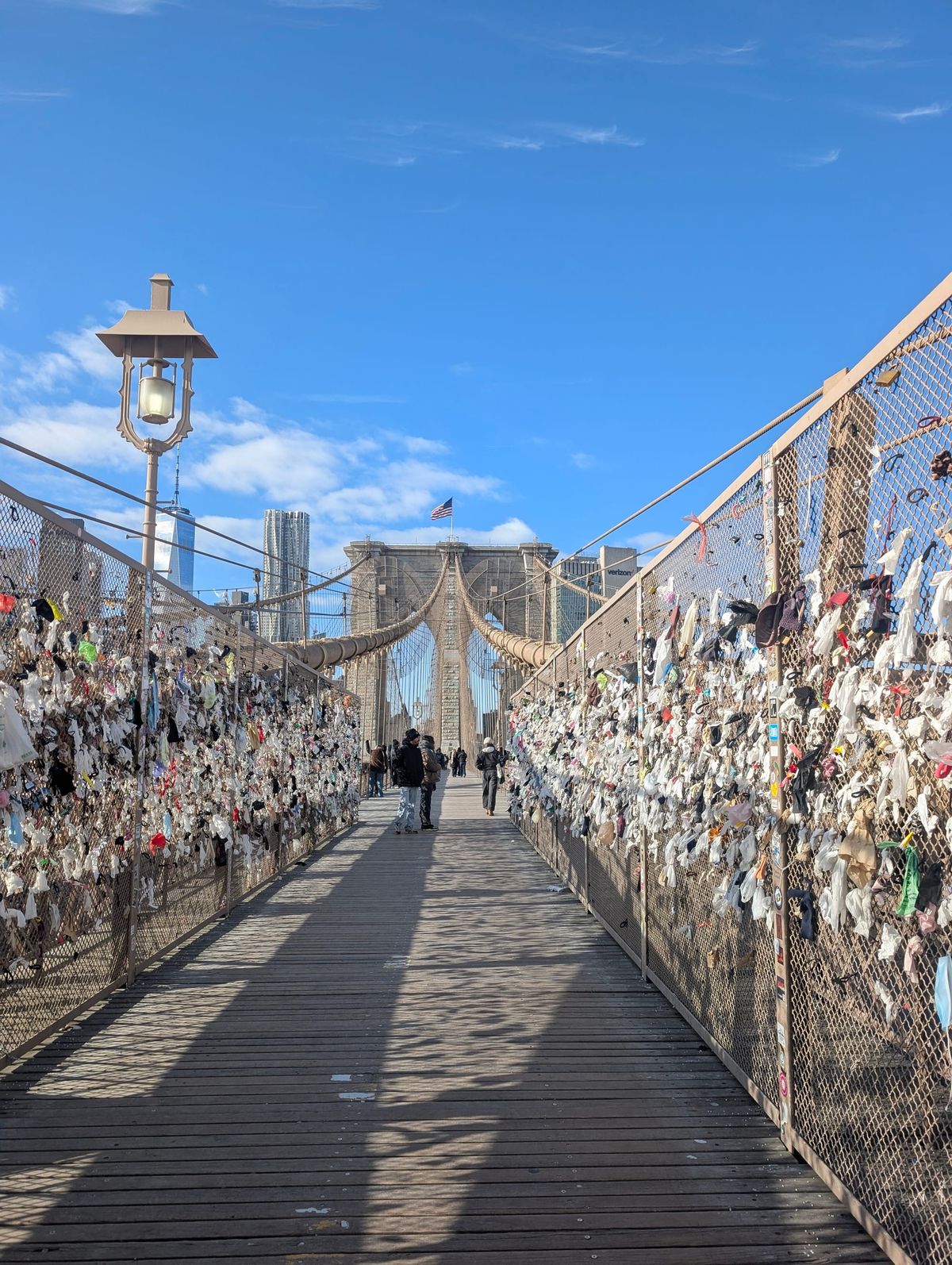
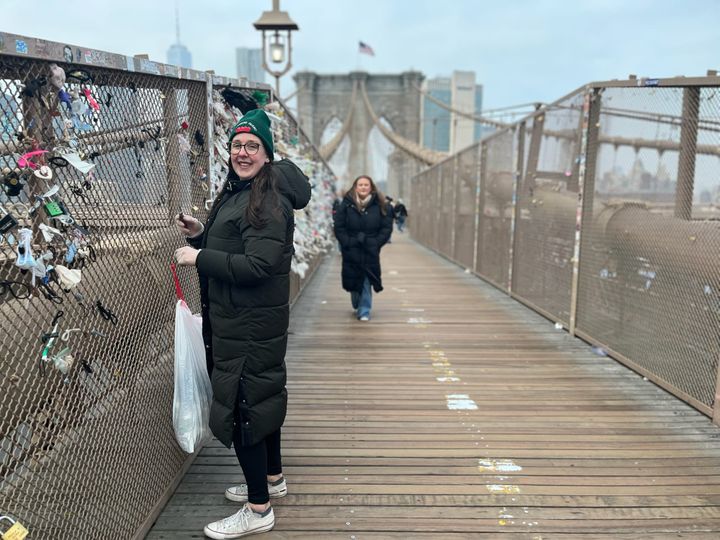
Volunteers who became local celebrities for their efforts to clean garbage and love locks from the iconic Brooklyn Bridge say they’re now facing pushback from cops and other city employees for their efforts to pull trash off the bridge.
In the weeks and months since The Groove broke the story earlier this year about volunteers cleaning plastic garbage and those odious “love locks” off the Brooklyn Bridge, bridgilantes Ellen Baum and Max Parke have been rightly hailed as local heroes, and received a frenzy of positive media attention. So naturally, the pair seem to have drawn the ire of the police.
“A couple of cops have come up to me and said someone complained,” said Parke, who regularly goes to the bridge with an angle grinder to take down the locks. “No one has been able to cite any rule or law. But one was very set on what he wanted me to do and not do, even when I was literally just using scissors to cut down trash.”
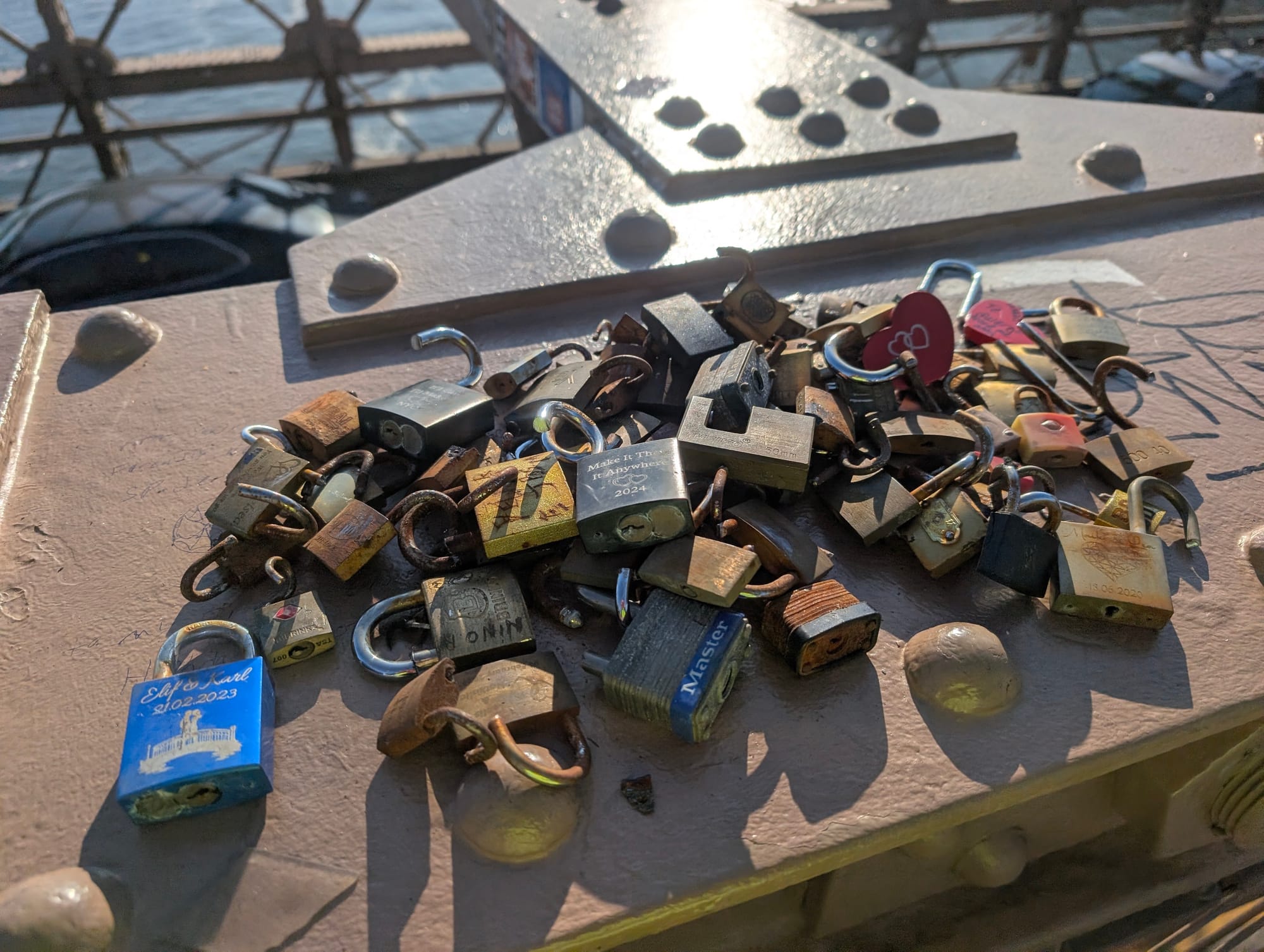
According to Parke, one piqued member of the Finest warned him that if cops received more complaints, Parke would be in “big trouble.” A baffled Parke told The Groove it is unclear to him what law he’s violating.
“I looked into it, this is not a thing you can get a permit for, and there’s also no regulation specifically against it,” he said.
In a separate incident, Parke and fellow bridge cleaner Ellen Baum were working together when two beat cops loomed nearby watching them work “without saying anything or approaching us” for a full 45 minutes, Baum tells The Groove.
“I think people get freaked out by power tools” and the sparks sometimes created by the angle grinder, Parke said. “So I’m trying to stick to shears and bolt cutters where I can. But am I going to get in trouble for picking up trash?”
As for why he’s been running into problems recently after months of positive-to-neutral interactions all winter, Parke theorizes that with the weather warming up, “More people are around, which means more people to complain.”
The last time he was out cutting locks, Parke faced pushback from a much more unexpected foe.

“A union iron worker was there to do work on the bridge, and wanted to file a grievance against me for using an angle grinder as a non-union worker,” Parke said. “He argued that ‘this is not your job, and it’s unsafe.’ But if this is your work, then why has no one done it for the last two or three years?”
Though the Department of Transportation periodically does sweeps to take down locks, Parke also noted locks with dates as recent as week old that had a coat of paint slathered over them.
“I’ve been calling it the landlord special,” he said. “They’re out here doing maintenance but they don’t take the locks down, they just throw paint over them.”
Spokespeople for Mayor Mamdani and the NYPD did not respond to requests for comment. But DOT press secretary Vincent Barone suggested that the agency, which manages the bridge, remains supportive of the volunteer cleanup efforts.
“Cluttering this iconic landmark with debris detracts from the enjoyment of everyone who uses the bridge. While DOT crews work to maintain this historic landmark, we appreciate anyone willing to roll up their sleeves and help take care of our shared public spaces as well.”
While numerous people have reached out to Baum about organizing group clean-ups since the initial wave of publicity, the recent incidents have her wary about putting more volunteers in the NYPD’s crosshairs
“I don’t want to put someone else in the position of being hassled by a cop over taking trash off the bridge,” she told The Groove.
Baum has since reached out to various local organizations and politicians in a bid to transform volunteer bridge cleanup efforts into something more organized and official. One of them was her local Councilmember, Lincoln Restler, who has since been in touch with the DOT over the issue.
“We should be encouraging this, not undermining it,” Restler told The Groove, adding that he’s seeking a “reasonable compromise” with the NYPD and DOT. “I’m sympathetic to the safety issues involved in cutting locks from a bridge where there’s moving traffic underneath. We do need to make sure there’s a safe way of doing that.”
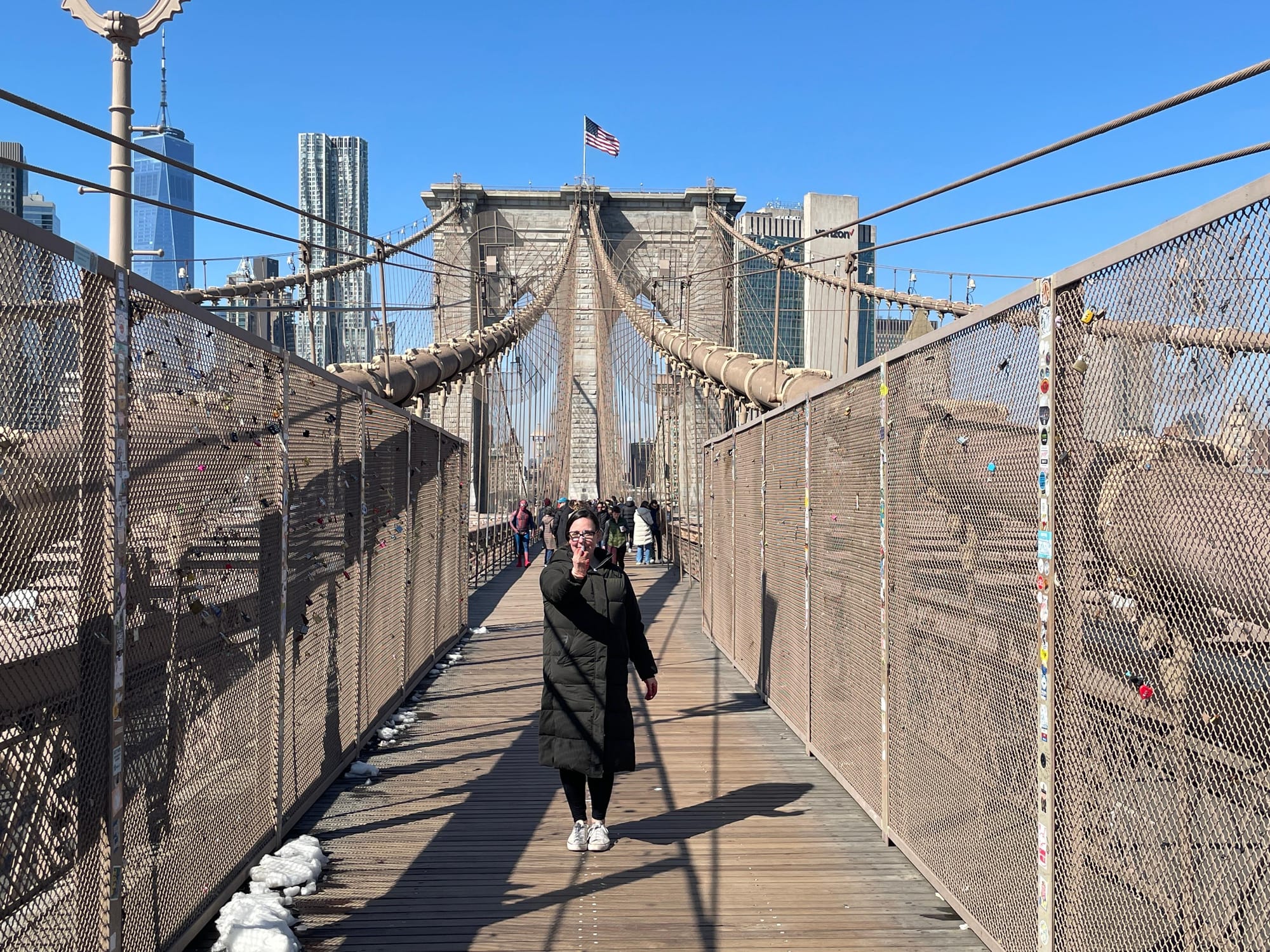
For now, both Baum and Parke plan to continue their own bridge cleanup work, saying that the vast majority of people they encounter are supportive of their efforts. And anyway, for now, the bulk of the plastic ties and metal locks are actually gone.
“There are a couple areas where I see a bit of buildup, but nothing like it was before,” Baum said, noting that she anticipates an uptick in trash when World Cup tourism to the city ramps up this summer.
Though signs are posted on the bridge warning that anyone attaching trash will be ticketed, both Baum and Parke have yet to see any enforcement in action.
“If they just put up signs that say ‘locks will be cut,’ that could be a lot more motivating than ‘you might get a fine,’” Parke said.

Comments ()