
'God's waiting room' that welcomed all: new doc spotlights infamous dive Hank's Saloon
A new documentary tracks a changing city through the 114-year history of the bar
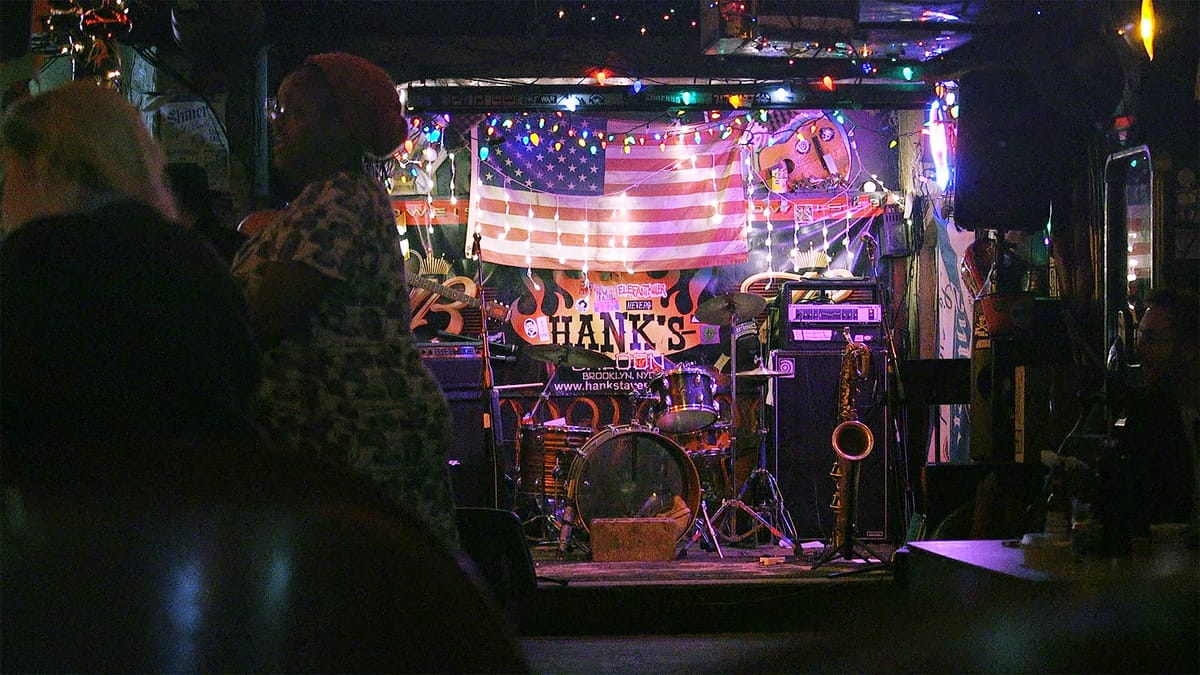
The year was 2002 and filmmaker Leon Chase had just learned about Hank’s Saloon, the eternally dumpy, sagging, foul-smelling honky tonk at the corner of the then-still-far-flung location of Atlantic and Third avenues in Brooklyn. The bar was known for its wooly and wild clientele ever since its first iteration opened in 1904; on that night almost 100 years later, some guys Chase called “frat bro types” came in and were “truly drunk, truly out of place,” he said. The out-of-place part would have been fine: one of the dive’s most charming characteristics was that everyone was welcome. But the bros committed the ultimate sin: messing with the band.
“I've never seen a full-on, like, Hollywood brawl, where everybody was just throwing punches, like everybody wanted to kill these guys,” Chase told me last week. “I was kind of amateur bouncing, because I was like: these guys are gonna die. We have to get them out of the door before something with a siren shows up.”
Like most of the best dive bar stories, the brawl wasn’t captured on film in the pre-iPhone era, but it does capture the spirit of the bar and the new documentary: Hank’s Saloon, premiering at Nitehawk Cinema in Park Slope on Jan. 26. The movie chronicles the sprawling history and emotional last few months of the bar, which always seemed to be in a state of imminent closure for a decade before finally pouring its last beer in December 2018.
Hank’s was a place alternately described as “dark, dirty and dangerous,” “the original Benetton ad of New York” for its no-questions-asked diversity or “God’s waiting room” for its ever-present clientele of decaying daytime professional alcoholics. It was either the best dive in Brooklyn or the worst, depending on your tolerance for the smell of feet and some drunk girl who wants to talk to you about how she’s a fan of “theories” (a real experience I had). Dive bars disappear all the time in this city, sometimes they’re notable and sometimes they’re not. The disappearance of Hank’s, the documentary argues, was a different sort of ending: the bar served as a catch basin for aging punks, alt-country music and residents of the neighboring halfway house who had no other place to hang out but the sidewalk. The movie tracks the changing neighborhood as tipped from a hinterland for Manhattanites into a worldwide brand and then a runway for the Barclays Center; after the arena opened, the bar’s death seemed inevitable.
“I was just aware of Hanks being this place that was the kind of the last of a breed where, … yeah, was it dangerous? And did it smell terrible?” Chase said, over beers at Smith’s Tavern in Park Slope, one of the remaining old-man-bar style dives left in the area. “And, you know, were people probably behaving in ways that weren't good for their health? Absolutely.”
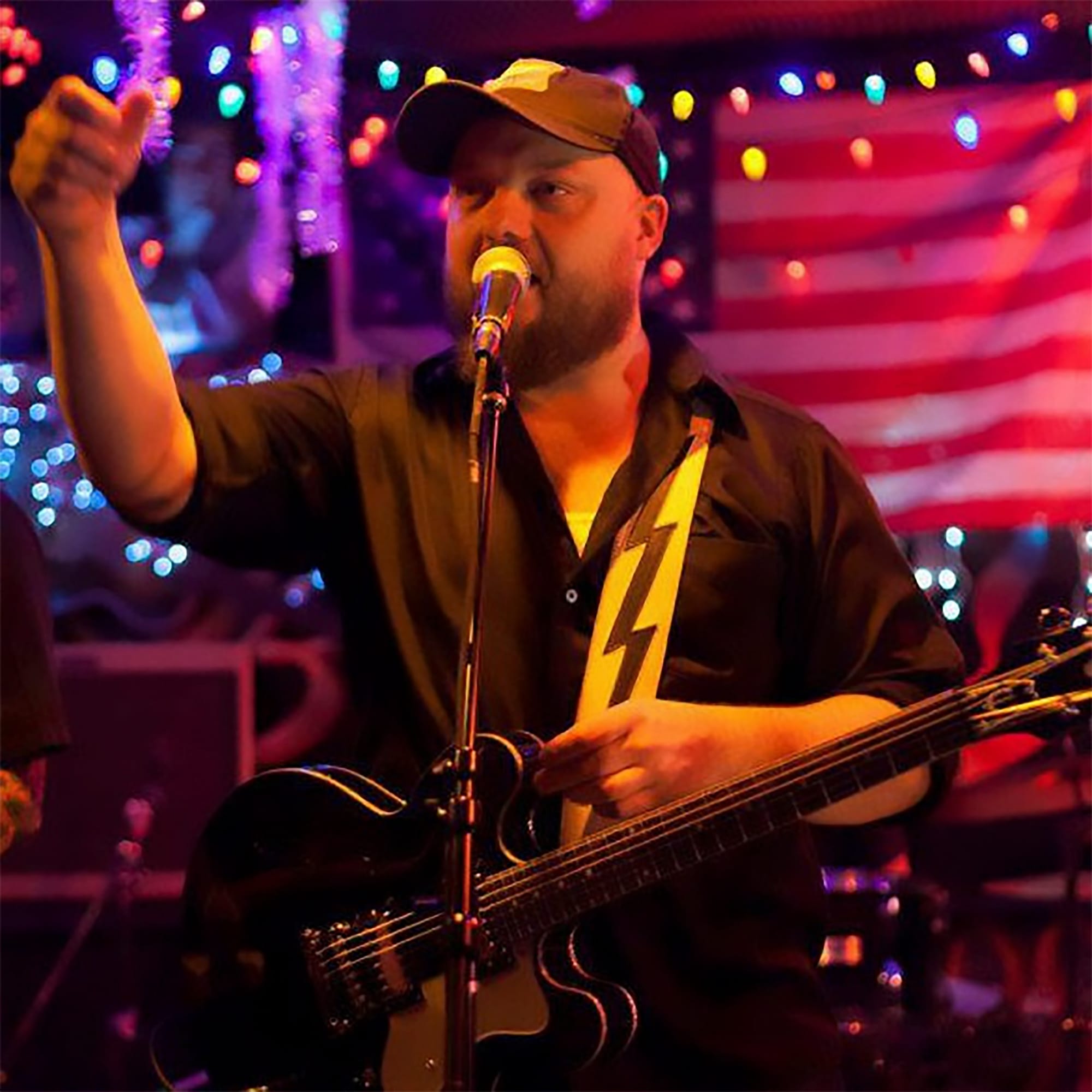
Besides the love for the bar, Chase, 53, wanted to make the documentary to capture the small-D democracy of a dive like Hank’s. He discovered the bar in 2001 while working at nearby coffee shop the Flying Saucer, a pre-Starbucks time when he would travel from South Brooklyn just to find a cafe in which to work. His band, Uncle Leon and the Alibis, played there dozens of times. He ended up getting his future wife’s phone number at Hank’s. That democracy — catering to a wider variety of people with cheaper prices — doesn’t really work in a world where new bars are going after the high-end clientele who can pay $19 for cocktails.
“There was this culture there, going back to when it was mostly factory workers, of what I consider old-school bar culture, which is kind of like: Who are you? What's your personality? Are you a jerk? Can you pay?” Chase said. “Everything else was kind of like, whatever. I don't care.”
From iron age to golden era
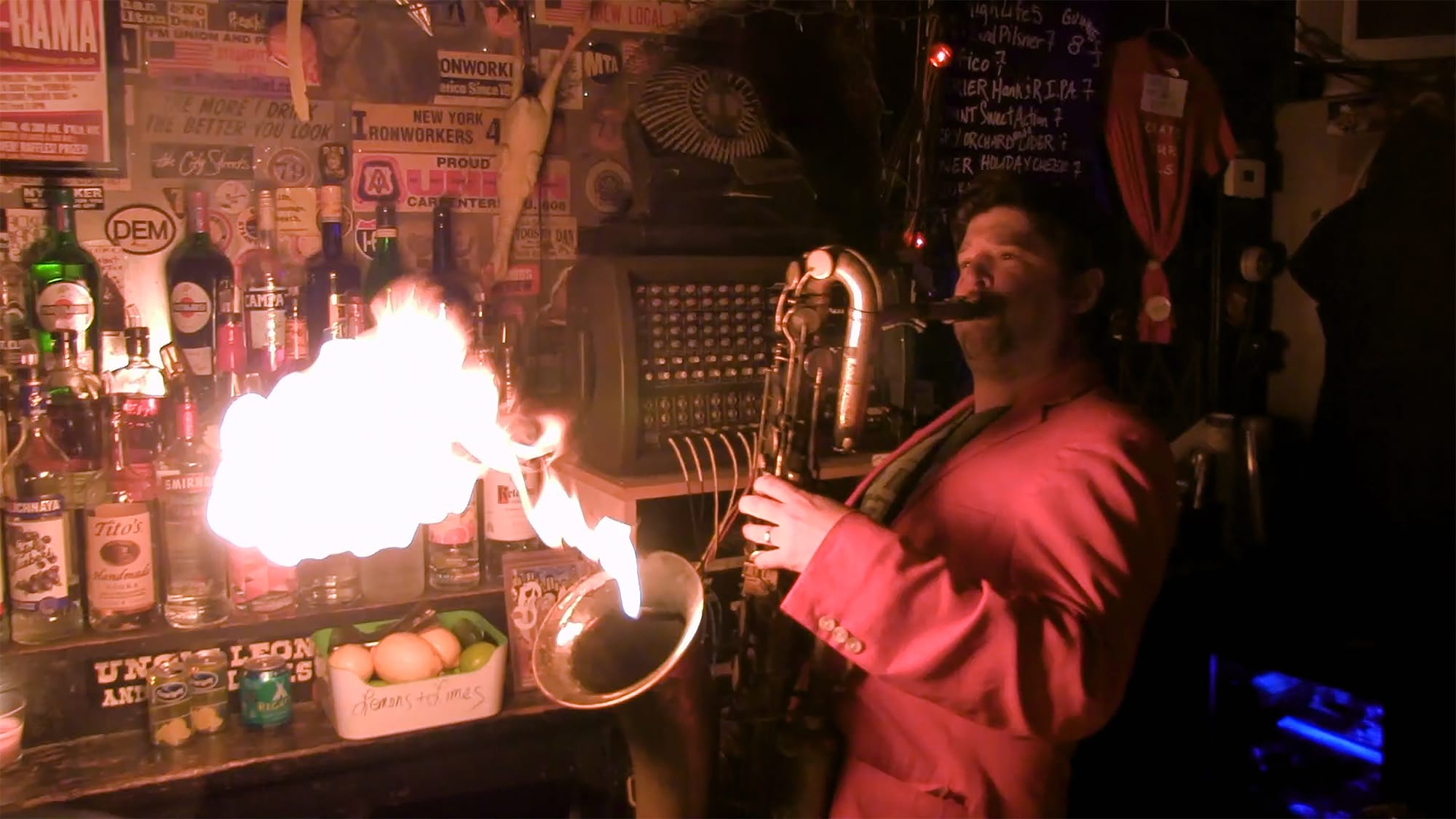
A quick primer on Hank’s Saloon for the uninitiated: a bar existed at the corner of Third and Atlantic since 1904, and was formerly known as the Doray Tavern, popular with iron workers getting off their third shifts when the industry was still alive in Brooklyn. In 2000, a new owner painted Harley Davidson-style flames on the side and renamed it Hank’s. The bar stayed mostly the same with a few menu and decor changes over the years. A pool table was jacked up and moved to the side for music on the small, rickety stage, with live music several nights a week.
🚨 Hi! Tim here, sorry to interrupt, but just wanted to remind you that this story is free to read but this work is paid for entirely by our members. Help support us by joining for as little as $6 a month and you'll unlock sweet perks too. Then get back to reading!
The bartenders were by necessity stern bulldogs on the outside but sweet on the inside if you sat at the bar and tipped well. I lived around the corner for seven years and joked that it always seemed to be open, late at night or early in the morning. It seemed to invite bad behavior, like the one time in about 2009 when my roommate, noticing the bartender was outside smoking, reached over the bar and refilled our pint glasses herself. It was always cash only.
“There was a lot of walking in and walking out,” Lauren Billings, a longtime bartender and bar manager for the last run, told me.
It was never in great shape but in the last few years the bar really fell into disrepair, due to the fickle real estate market. The parcel of land it sat on was bought and sold a few times before it closed in 2018, which made it impossible to get a landlord to do repairs, as Julie Ipcar, the bar’s last owner, explains in the documentary. Chase’s camera goes into forbidden parts of the building, including an eerie abandoned apartment above the bar, and the dank basement of the building where a mysterious flow of water under the floor that no professional could explain earned the nickname “Hank’s Creek.”
For those of us who were regulars (which I was pleasantly surprised to count myself among at the end), the closing of the bar seemed to go on forever. Years would pass and Hank’s would still be there, and the same people would still be inside. A developer who owned the land at one point proposed a new building on the site with a plan for Hank’s to reopen on the ground floor, but that never materialized.
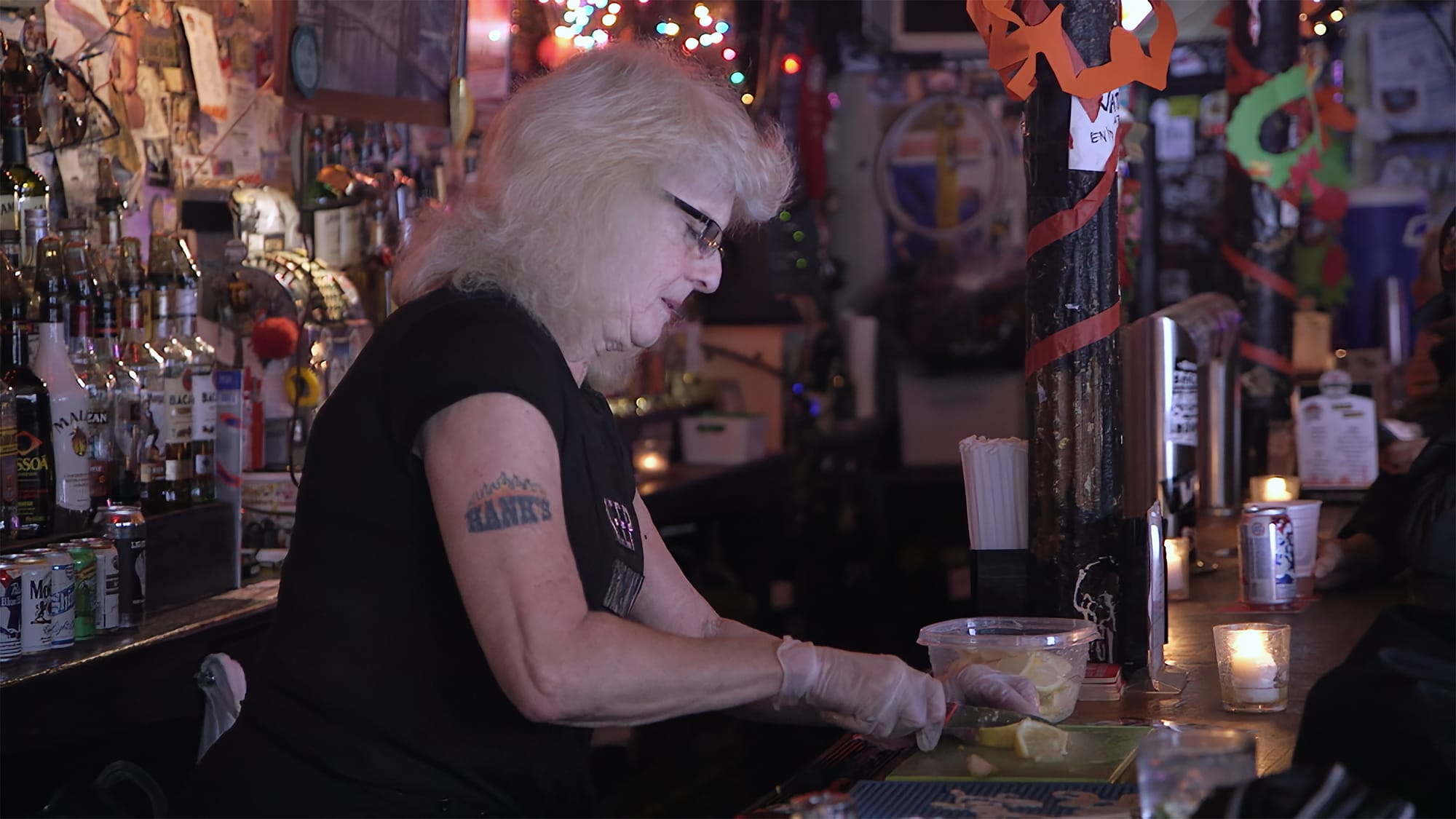
The star of the documentary is Jeannie Talierco, a Greenpoint native and the bar’s longtime daytime bartender, who greeted you with the kind of raspy warmth and was known for a heavy pour; but also for judiciously cutting off anyone who needed to drink some water.
You can track the bar’s trajectory with that of Brooklyn overall. It was there when Robert Moses wanted to tear down parts of brownstone Brooklyn to build more highways; it was there when gun shots were common on Atlantic Avenue. It was there when Brooklyn became an annoying artisanal brand export in the 2000s and it lasted a good few years into the Barclays Center era, long enough for confused fans from Katy Perry concerts to look in the window and quickly scurry along, or for absolutely fucking stoked fans of Slayer to discover before the band’s show at the arena.
The bar’s stage was ramshackle and unglamorous; and the music was mostly honky tonk and alt-country, but this worked to attract a lot of fans who were “aging out of the punk scene” in the 2000s, Chase said. The mic would sometimes give the singer an electric shock and the monitors barely worked.
“You couldn't really have a lot of pretension about it; it was a very kind of organic fun,” he said. “There's this thing in New York where you're looking over your shoulder, like, ‘Is this gonna be the thing that gets me attention or makes me money or whatever,’ you know? And that wasn't happening at all. It was very pure in that way.”
People from the DIY punk scene (CBGB lasted until 2006), were ready for a place like that, he said.
“We're like, ‘yes, like, this is what we want,’” he said. “We just want, like, fun people doing it for the love of whatever, of the party, you know, not trying to sell a record or whatever.”
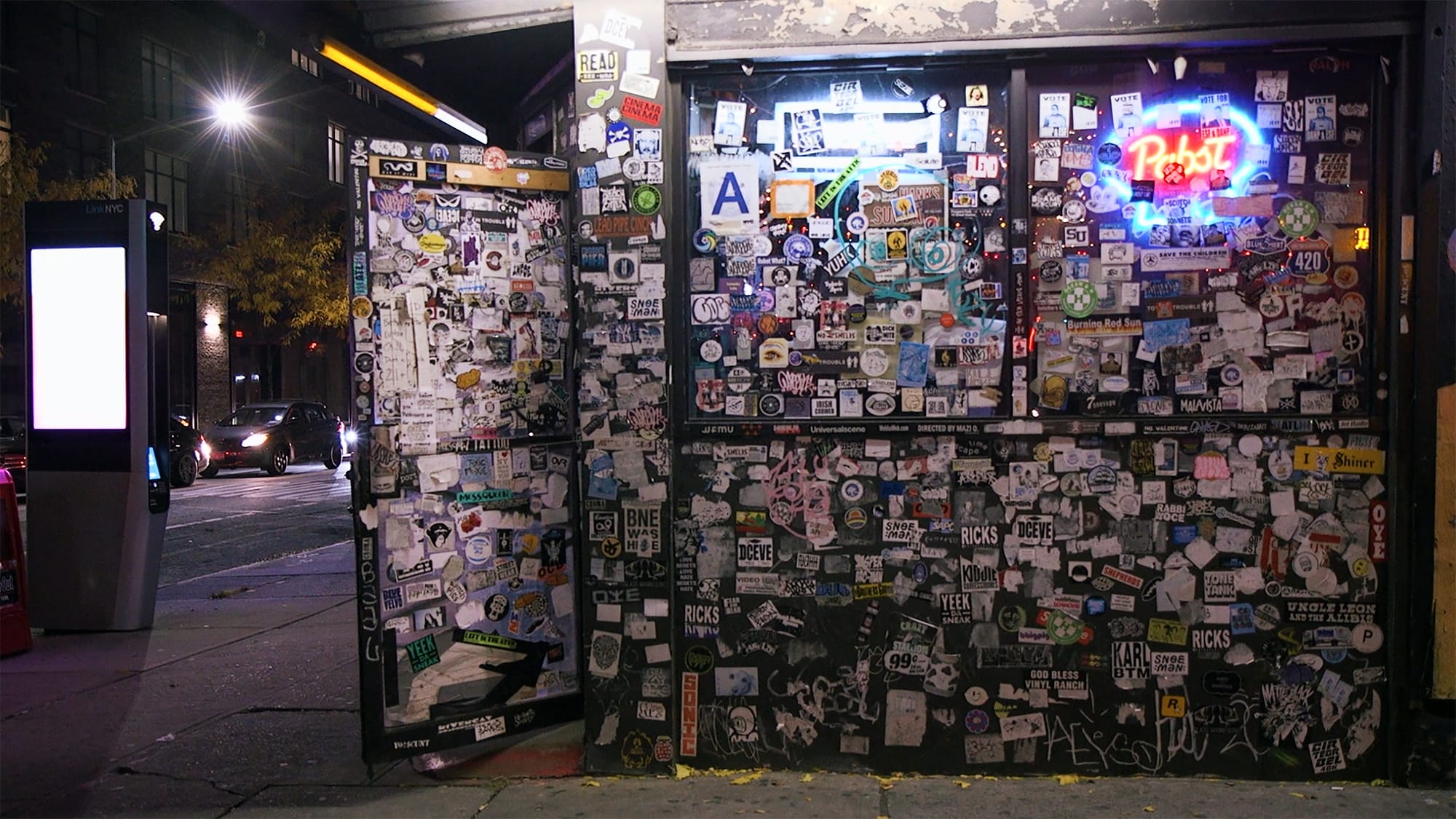
The bar had a rough reputation, but it was always clear that anyone who behaved (and the bar was high for that) was welcome. It was a de facto queer bar at times when those were not common, Chase said.
“People might like, razz you and call you some names, but if you could hang they really were probably more accepting than a lot of ‘upper class’ places were,” Chase said.
Hank’s could have technically survived longer than it did, but the management decided to call it before a pipe burst or something that caused it to close unceremoniously for good, Billings said. It never would have survived COVID anyway, she said. For the last month, the bar declared it Dicksmas and hung dozens of paper penises from the ceiling.
“Hopefully [the documentary] reignites this passion for small business in New York City and the fact that community is what we're trying to accomplish,” said Billings, now a bar manager at Trees Lounge at Nitehawk Cinema Prospect Park. “You can’t do that with Petco, you can't do that without a place that is economically viable for all walks of life.”
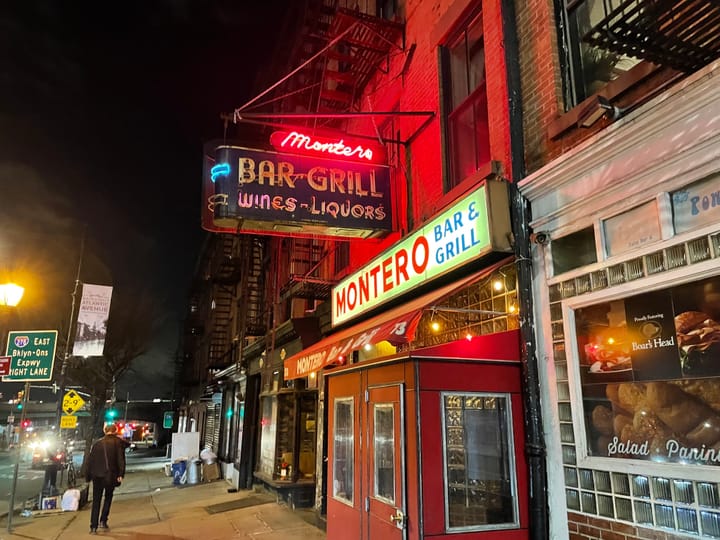
The melting pot aspect of it may be what’s most lost when a place like this closes. The economy overall is shifting to cater to the wealthy, from Disney World to the latest small-plates, oyster-bar craft cocktail bar that opens on Atlantic Avenue. Only a certain type of person is going to wander into the craft cocktail bar after work; but a vast melange ended up at Hank’s. People leaving a show at BAM, freelancers leaving the neighboring coffee shop after a day of laptop work (me) or people from the halfway house who had a lifetime of wild, possibly true stories to share. It’s why people fret when they hear that a bar like Montero is about to be taken over by a hospitality group; even though the new owners pledge they’re not changing a thing, there’s just no financial incentive to cater to dive bar crowd these days when you can gouge fat-walleted yuppies with gose beers and tiny plates of food.
“I hope it will make people more cognizant of the fact that places like that are not just dumpy dive bars, they’re community spaces,” Billings said.
‘Stoop sitters vs. elevator takers’
A stick in the eye for fans of Hank’s is that the building is still technically standing, seven years after it closed. It shows up occasionally in movies; scenes for The Marvelous Mrs. Maisel were filmed there. People will text Chase and the former bartenders whenever they see a new “for sale” sign go up on the building.
“My wife and I joke about winning the lottery and just sitting there in lawn chairs with our [middle] fingers in the air,” Chase said.
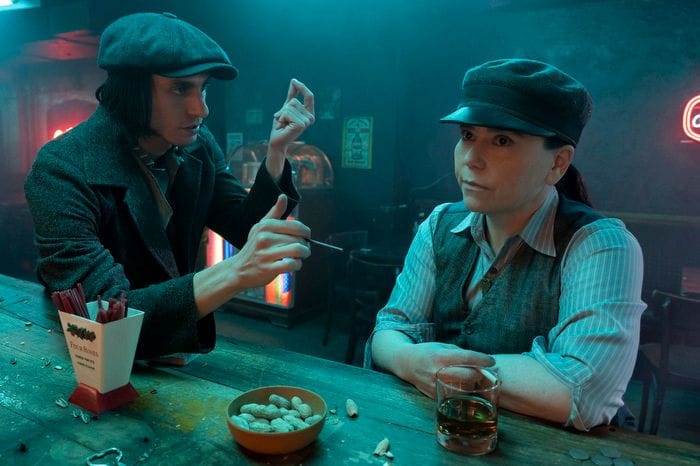
The bar briefly moved to an upper floor of a new food hall in Downtown Brooklyn, but the vibes were sterile compared to the old version, and the food hall shuttered soon anyway. The property was sold again recently; current owner James Fong did not respond to requests about his plans for the property. Fong owns several properties around town and has been accused of being a slumlord in the past.
Ipcar, the bar’s final owner, grew up on State Street around the corner from Hank’s. She talks in the documentary about how the neighborhood changed leading up to the closure; row houses, brownstones and small businesses were being replaced with glittering, towering skyscrapers (my old four-unit loft building on State Street is now a gigantic “electric” skyscraper with a cartoon plug on it). She talks about the change as shifting from “stoop sitters” to “elevator takers.”
That is the dilemma of development in that neighborhood, and across the city. Every part of New York is suffering a housing crisis; there are simply not enough units to meet demand, which is why rents keep going up. The skyscrapers go a long way to pack more units into spaces like my old loft, which only held four units containing struggling journalists, struggling actors, struggling writers, artists and fashion designers; now it can house hundreds of people. Though they probably are not “struggling” in any sense, taking an elevator home to the 30th floor is not inherently bad.
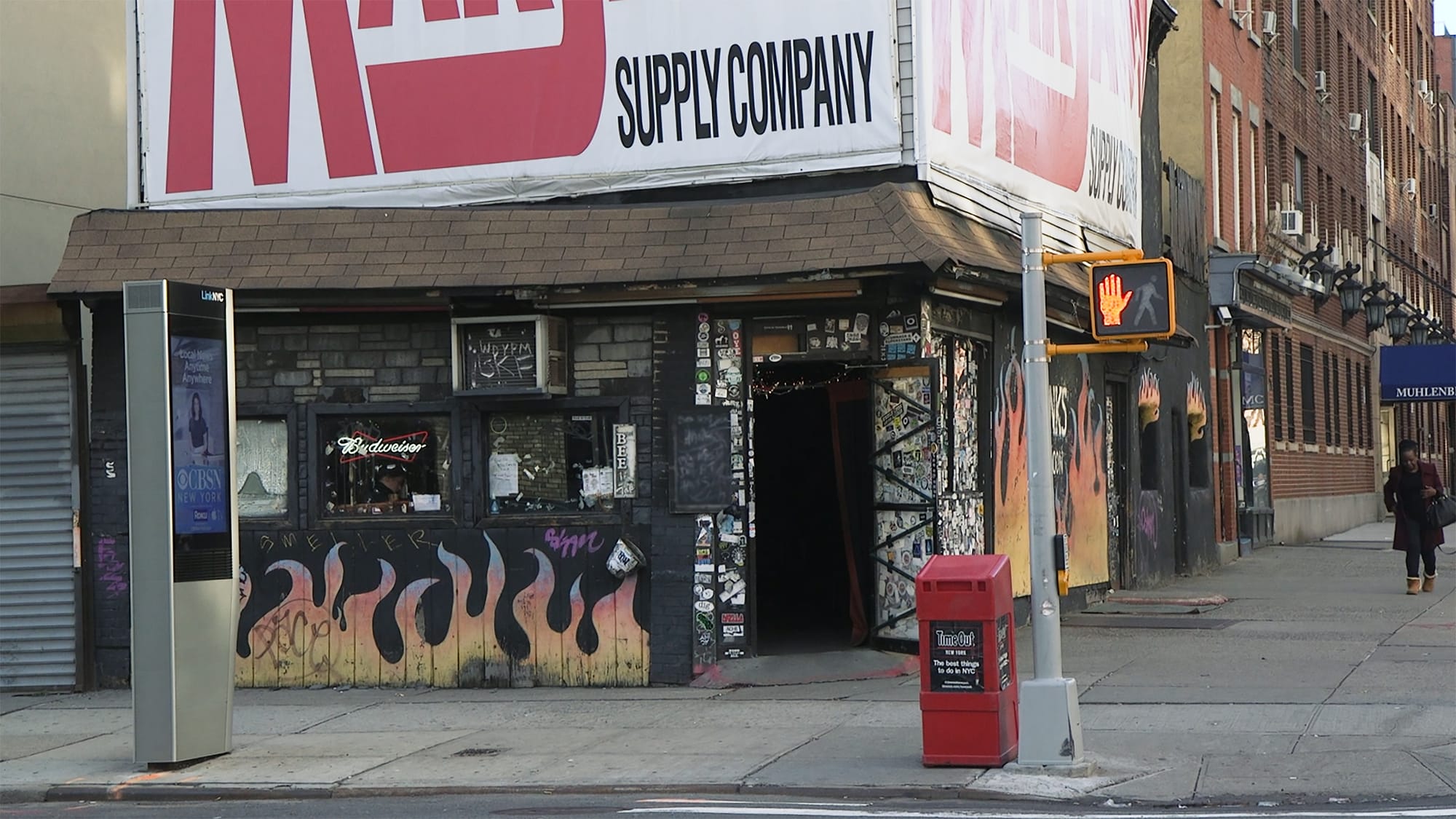
But at the same time, all the development along that stretch of Boerum Hill, prime commercial real estate across from Atlantic Center and the Barclays Center, has felt like kind of a dud. The stretch of Atlantic is full of empty storefronts and rental ads from Thor Equities. A neighborhood 24-hour laundromat at the corner of Nevins Street (where Solange once played) was killed to make way for a new development, and the ground-floor retail has sat mostly empty for more than a decade. My old building now has a Chase bank on the ground floor, a symbolic nod that the new construction is all about money, community building be damned.
“It doesn’t feel any safer but it doesn’t have soul,” Billings said.
Two things here can be true: the city desperately needs more housing, and it’s depressing as hell to watch new construction go up only to see the ground floor commercial space rented out to a national bank or a Just Salad; or, sometimes, stay vacant forever as the developer collects tax write-offs. The Barclays Center has not exactly led to a massive surge in small businesses around the arena. Nearby ground-floor real estate boasts both a Just Salad and a Sweetgreen. Do people really crave a slop bowl before going into a Liberty game or when leaving a Linkin Park concert, or would they actually just like somewhere to meet their friends to pound a fucking beer before paying stadium prices?
Hank’s for the memories
I had a personally complicated relationship with Hank’s: I loved it and hated it in rotating fashion. It has the distinction of being one of two bars I’ve been kicked out of in this city (upon hearing my story, which involved an easily offended bartender, Chase confirmed “that's not really 86 worthy at Hank’s.”)
I spent some long Sundays there doing the crossword and met my Hurricane Sandy hookup inside with hours to spare before the city reopened. I screamed in disbelief at Alcides Escobar’s heart-breaking, tone-setting inside-the-park home run against the Mets during game one of the World Series game there in 2015. I have helped break up fights outside the bar and saw bare tits on its stage for a performance of Showgirls: The Musical.
I will also admit now that I was in a hate wave when Brokelyn was doing our best dive bars in Brooklyn round-up and demanded it be excluded (the prices were too high for a dive, I argued; how naive I was then). I was wrong then, and apologize for it.
I had some truly fascinating conversations with strangers there. I would often look through the window and decide if this is where I wanted to blackhole myself that day, and sometimes walk over to the more sedate Fourth Avenue Pub instead. But when I went in, there was almost always a story that came out of it.
“They’re just like museums of the city,” Billings said of dive bars. Some people look to that area of Brooklyn to be a place with new construction and a Blank Street Coffee on every corner. But much of the city takes pride in how old, and resilient, it is.
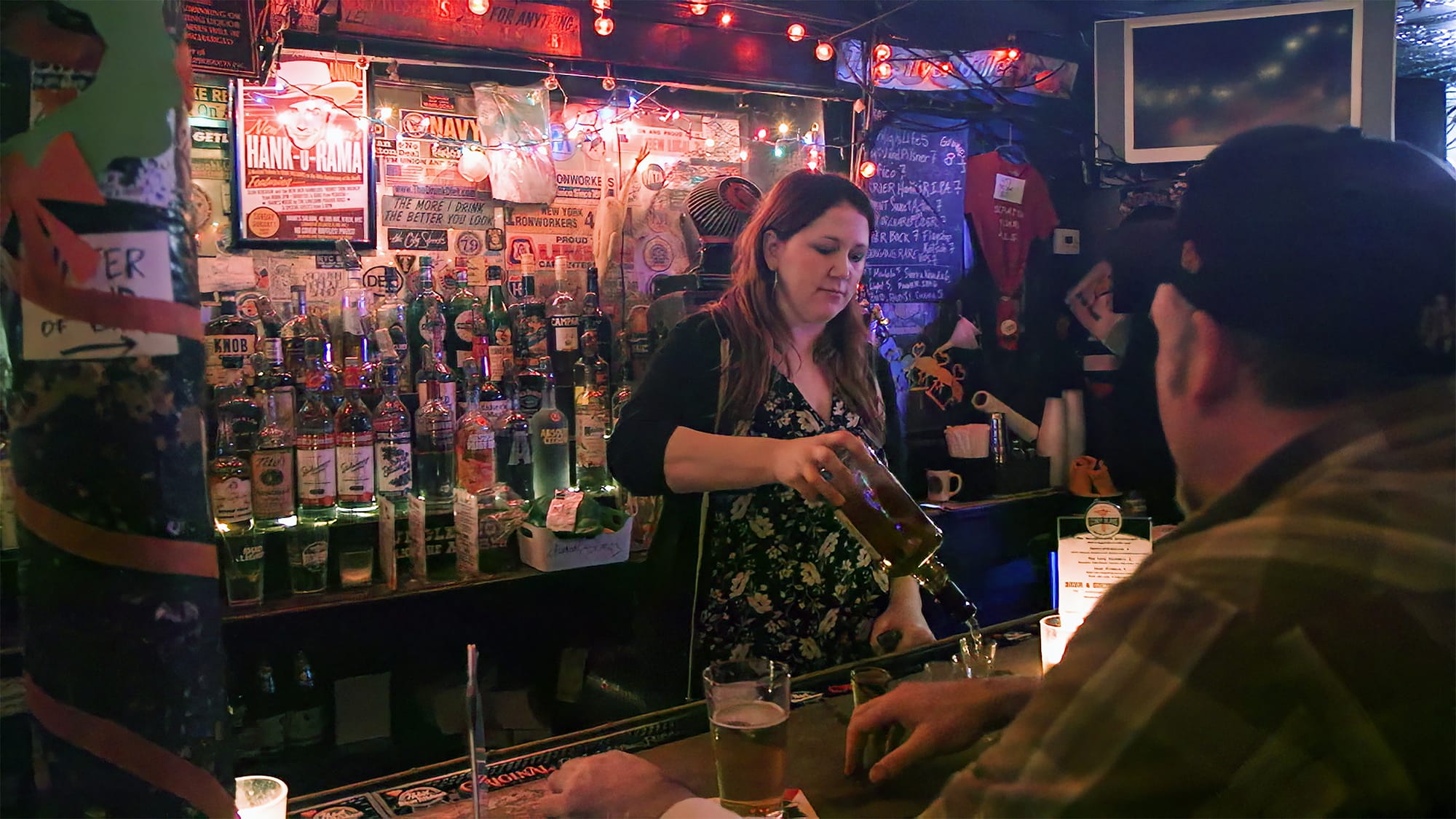
“We have to recognize that a lot of New York is not shiny and new, it’s old and dilapidated,” she said.
Chase wants to take the documentary on a tour of dive bars, just putting the captions on the video and letting it play while people can watch and drink if they want to. Billings said she still gets approached on the street when she’s wearing a Hank’s sweatshirt. Chase said it feels impossible to make a bar like Hank’s any more; neo-dives like Do or Dive pop up, but they have a long way to go to shed the veneer of dive-costume and achieve “old man bar” status.
“I think there's going to be a lot of people who see the movie who regret not going in, not having the gumption for going inside," Billings said. "It’s like magic, you can’t recreate it.”
The Hank's Saloon documentary debuts at Nitehawk Cinema Prospect Park on Jan. 26; the first screening sold out already and tickets for the second are going fast.

Comments ()