
New Yorkers say they're ready for ICE raids too: 'They thought we wouldn't care and we do'
The anti-ICE movement is already drawing a cross-section of New Yorkers, with echoes of 2020
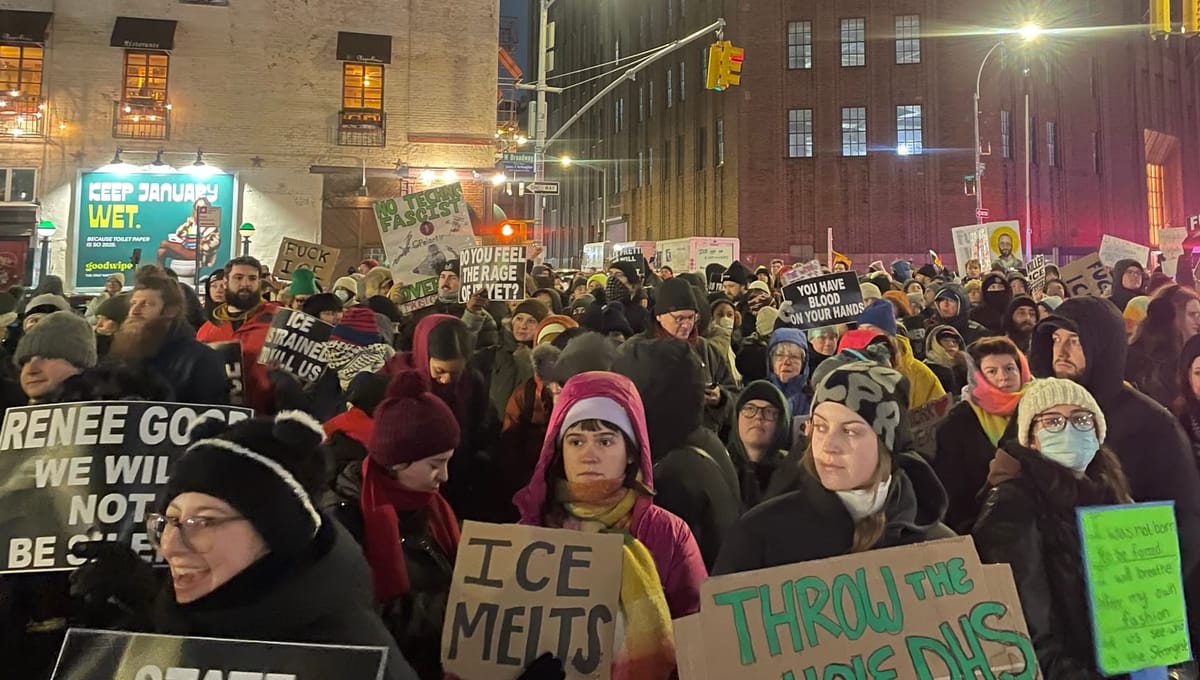
Standing in the knee-high snow banks of Lower Manhattan as single-digit wind chills whipped around anti-ICE protesters marching up Sixth Avenue, a day in the sun and sand sounded like a pretty good dream. But that was not exactly what protester Kathleen Chalfant was talking about.
I had asked: what did she think would happen if ICE came to shock-and-awe New York City like they did in Minneapolis?
“It’s going to make Minnesota look like a day at the beach,” the 81-year-old Chalfant told The Groove. “We must stop this, and the only way we're gonna stop it is that the people are going to stop it.”
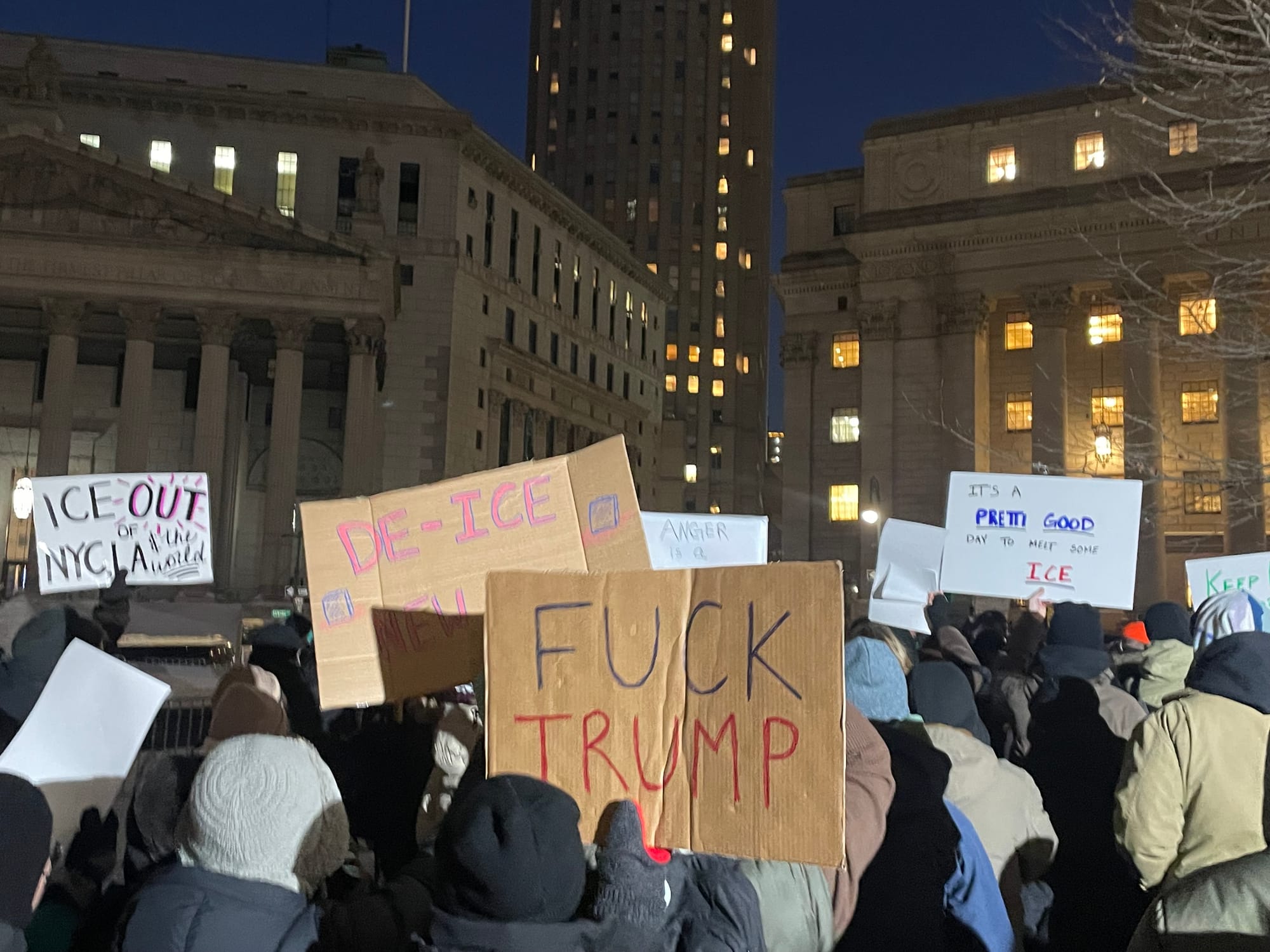
Tuesday night’s emergency protest and rally, started at Foley Square by a coalition of immigration and leftist groups in response to the murder of Alex Pretti on Jan. 24, gave a strong hint that New Yorkers are itching to show solidarity with Minneapolis, and to join the fight — and it’s not just the usual activist types.
“Our democracy is dying and we need to come out,” said Kris, a 55-year-old stay-at-home mom who came to the protest with her daughter from Westchester. She was holding a handmade cardboard sign with “RIP Alex Pettri” written on one side and “not buying Trump’s lies” on the other.
“I feel like they are feeding us lies. We can see it with our own eyes,” she said.
She was not a regular on the protest scene: she’d attended the Women’s March in 2017 and a recent No Kings march, but felt compelled to come to the city Tuesday for the rally in the cold. She paused when I asked her what her response would be if ICE shows up in full force.
“I really don’t know what to say to that because I just think it’s going to be a very scary world,” she said. “There has to be a way to bring back human dignity to all people. And to treat one another with respect no matter what citizenship you have or immigration status you have. We’re all human beings. We’re here on Earth to help each other not hate each other and kill each other.”
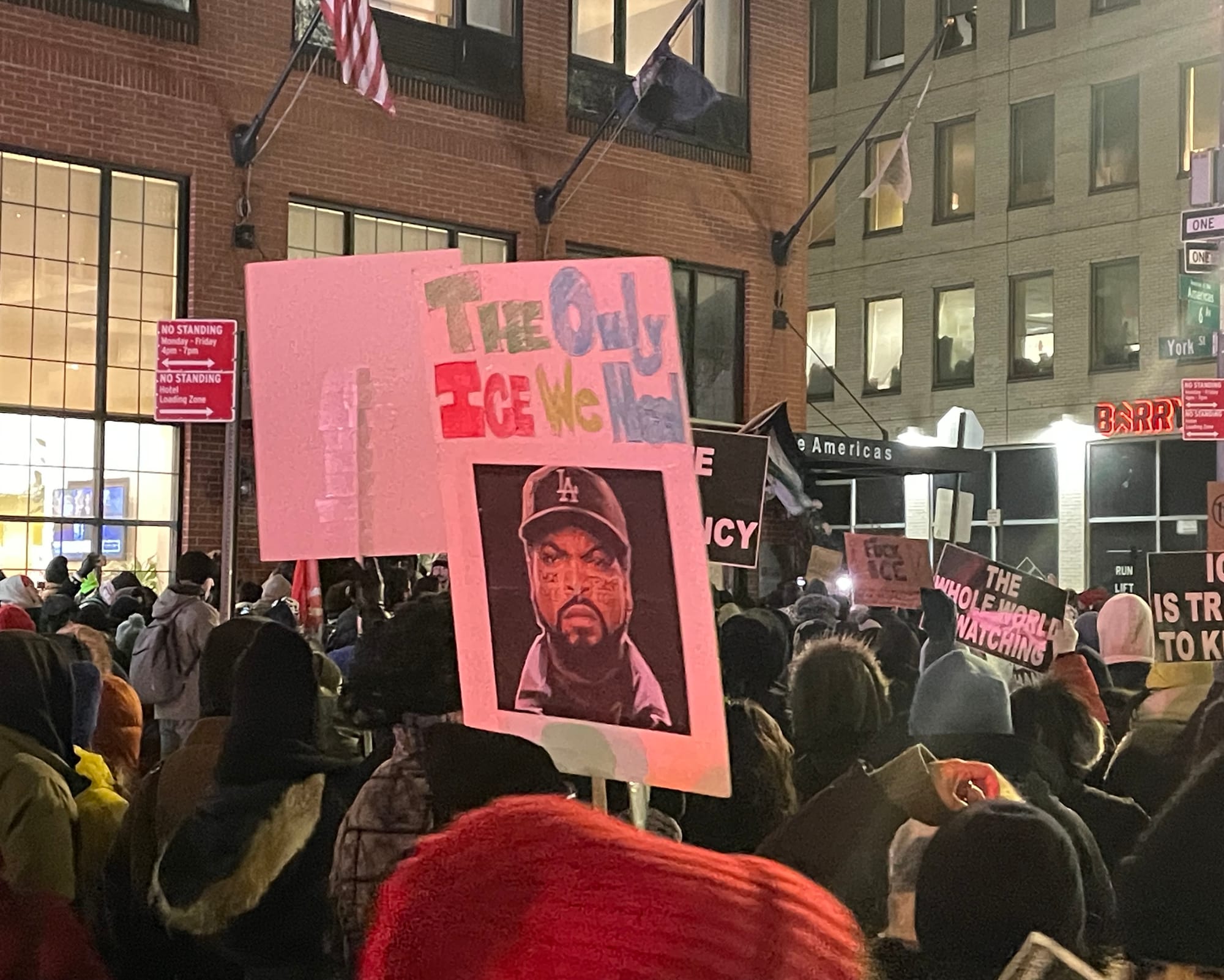
Midwesterners are clearly way better at this protesting-in-the-cold shit than your average New Yorker. Many arrived to Foley Square in inappropriate footwear (I saw one trudging through slush in low-cut Converse) and outerwear (a man in gym shorts standing still, listening to the rally’s speakers in Foley Square). But even on Tuesday night’s short-notice event, the crowd seemed to coalesce from disparate parts of the city in a way that immediately reminded me of the 2020 George Floyd protests that engulfed the city for more than a month. Trump has threatened to punish so-called blue cities (I hate this term btw!) by flooding the streets with ICE agents; the likelihood that he would invade his hometown and risk a bigger embarrassing media circus is low, but not impossible.
👋 Hi free reader! Our stories are always free for all, but we rely on members to keep the lights on. Please support our work for as little as $6 a month by becoming a member now and you'll get sweet perks too.
Chris, a 32-year-old from Astoria (who didn’t give his last name because he said his wife asked him not to do interviews at the protest), was holding a plastic jug of paw-safe rock salt with the words “Fuck ICE” written on one side in marker and “ICE melts under resistance” on the other. The prop acted as sign, noisemaker and mutual aid: he was salting some of the sidewalks that needed it along the marching route.
He had not attended an anti-ICE protest yet and said he was “kinda freaked out to be here.” But still, he stood near the front of the rally as it reached the Hilton hotel in Tribeca, the inside of which protesters had occupied, demanding the chain stop accommodating ICE agents (more than 60 people were eventually arrested, though the NYPD let them chant and whistle for a good 30 minutes in there).
“I don’t think it’s going to go well,” Chris said of a potential ICE surge in New York. “I think it’s going to be similar stuff to what we see in Minneapolis.”
ICE has about 22,000 agents total, roughly the population of the neighborhood of Tribeca itself.
“They’re obviously practicing on smaller cities, and they aren’t ready to tackle New York yet,” Kathleen’s husband, Henry Chalfant, 86, said. “There’s more of us than there are of them here.”
If picking on the land of hot-dish was supposed to be practice for the Trump administration and its goons, it’s gone horribly, even with Minneapolis’s relatively small population. As Adam Serwer wrote in The Atlantic this week, maybe the administration expected they’d be opposed by a few BlueSky scold posts at best.
“Instead, what they discovered in the frozen North was something different,” he wrote, “a real resistance, broad and organized and overwhelmingly nonviolent, the kind of movement that emerges only under sustained attacks by an oppressive state.”
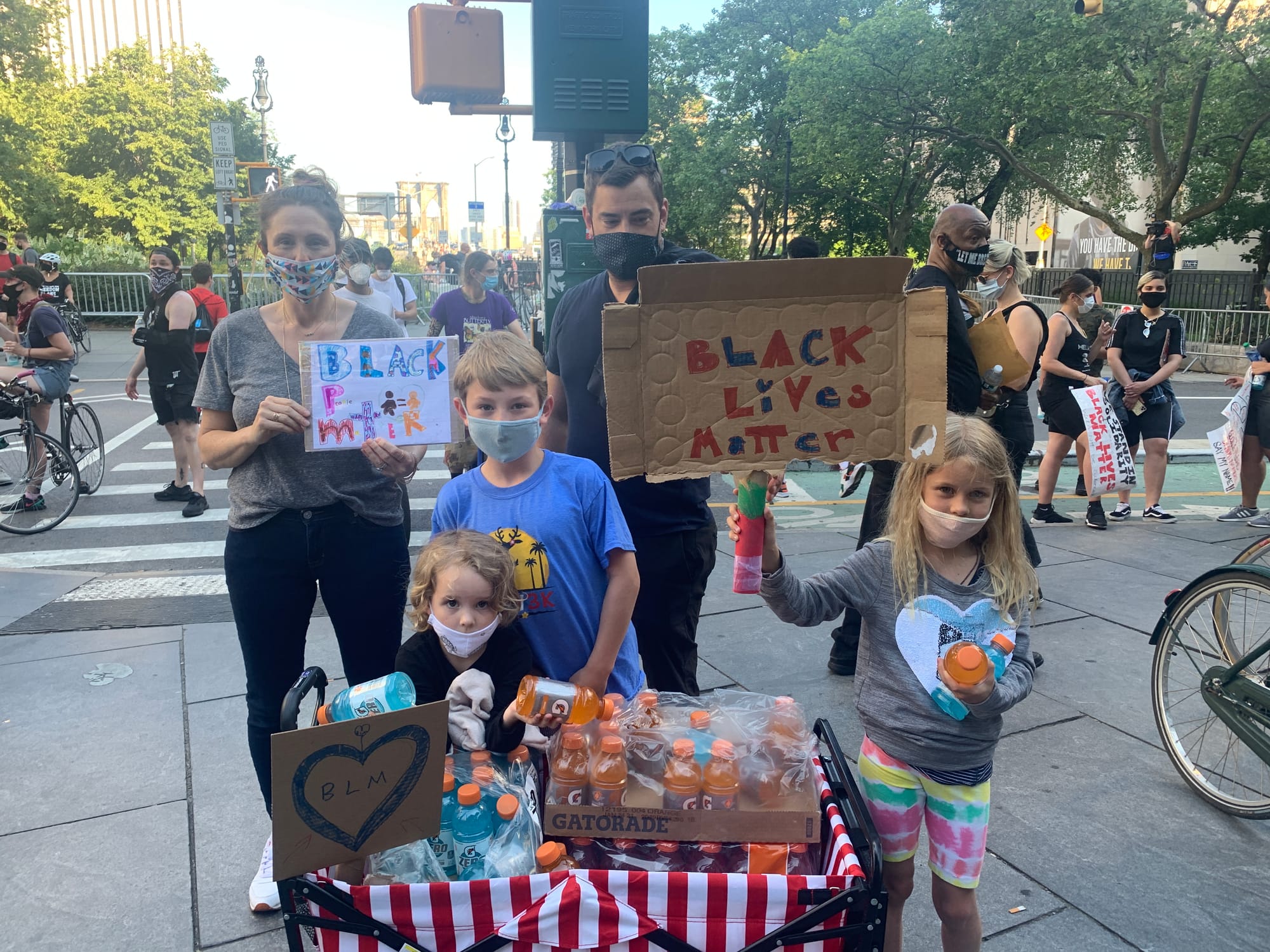
Protesting in New York has undergone significant growth spurts in the last two decades: Occupy Wall Street in 2011 brought decentralized organizing that later morphed into mutual aid groups like Occupy Sandy in response to the superstorm the following year. In 2020, even some of the most civilian, normcore New Yorkers found themselves activated in the summer of 2020 in the marches against police brutality after George Floyd’s murder.
It was the deep pandemic and a Black Lives Matter rally was probably the first time many people broke quarantine since lockdown started, but the seemingly endless stream of marches during that summer brought with them a revelation of the community spirit and self-reliance that are hallmarks of the leftist protest traditions.
Minnesota was the birthplace of the George Floyd wave of the Black Lives Matter movement; and activists there said they relied on the “muscle memory" of those protests this time around. New York wasn’t the starting point of that movement but it also consumed life here for weeks and weeks. That movement here was possibly the most well-stocked in the city’s history, with hordes of people winding through marches and rallies, offering free PPE, water, snack bars and, in the case of more than one group I ran into that year, free tacos.
Minneapolis, to some, now tops Philadelphia as the city with the most "don't fuck with us" reputation. They’ve been setting the pace on these protests for five years now: they burned down a police building in 2020 and are cursing out agents of the state this month, even in the face of open-air executions of their neighbors.
In 2020, New Yorkers marched through the street, shouting to no one in particular, “Fuck your curfew, suck my dick.” That year, Mayor Bill de Blasio tried to tamp down the protests, instituting a curfew and conveniently saying he never saw any of the many videos of ongoing police violence. This time, the mayor is on the protesters’ side.
So, aside from wanting to show their solidarity with Minneapolis, New Yorkers seem more than primed for the potential of an intensifying ICE fight within the five boroughs. An attempted raid on Chinatown in November was quickly foiled by hundreds of protesters, who blocked ICE vehicles and scuffled with agents in the streets. At a raid in October, a woman who looked to be in the middle of a workday became a folk hero for standing in front of an armored ICE vehicle moving down the street, and then scuffling with officers in her heels and polkadot dress (nine people, mostly men from West Africa, were arrested during that October raid, according to The Times.)
“In New York, we’re not foreign to any form of oppression,” said Adam, a 26-year-old Manhattanite whose parents immigrated from Mexico. “When it comes to a system of killing your own citizens, it is every American's duty, especially children of immigrants to support the ones that gave us life — and, at the end of the day, are not criminals.”
He, like a few other people, had faith that the city leadership, especially Mayor Zohran Mamdani, wouldn’t let tensions get to the point they did in Minneapolis.
“I really truly hope that that’s not going to happen,” he said. “I believe we have great leadership and I truly believe in the leadership of New York city and that’s what I elected for.”
He expects an ICE surge will be met with counter protest, “never to violence but always to protect the people who can’t protect themselves.”
 Virginia K. Smith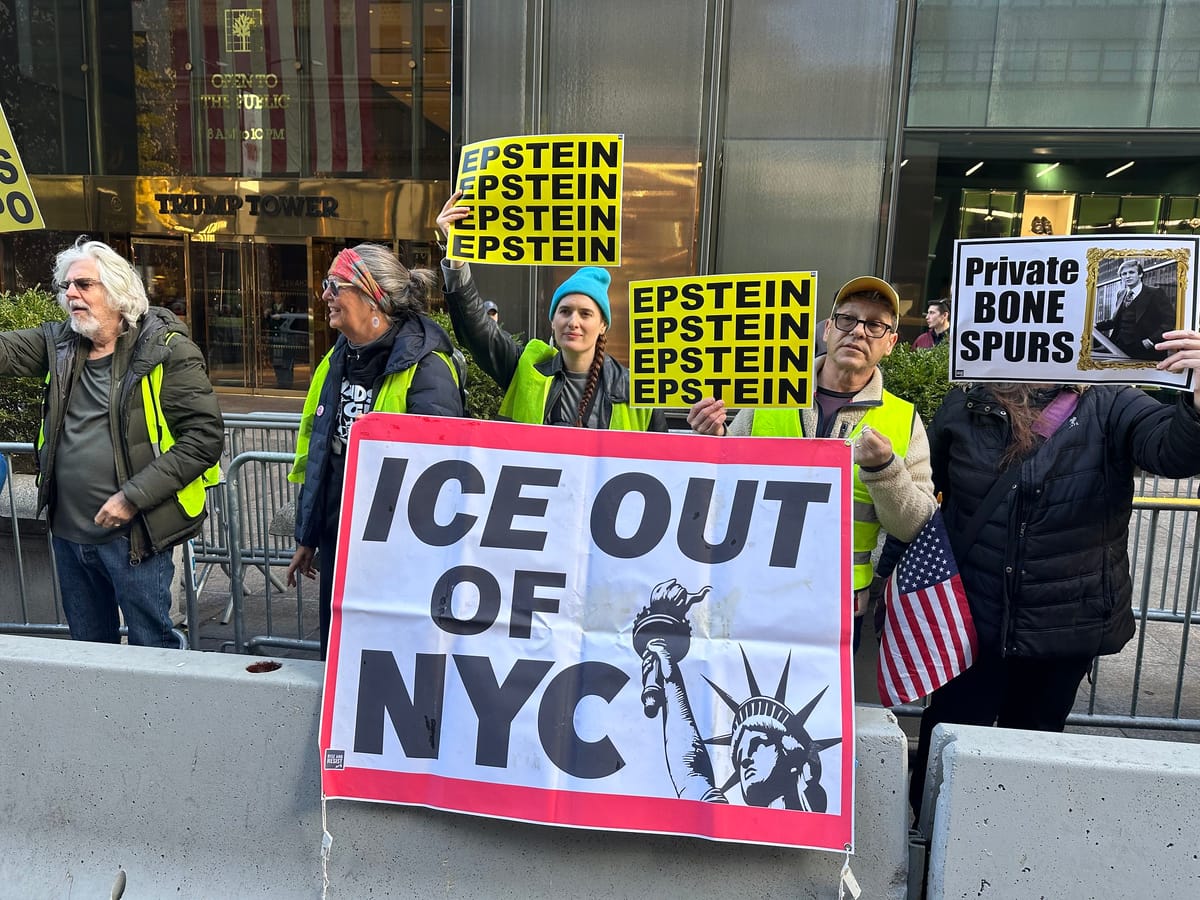
Tuesday’s march was just one of many in the city this week, and that day, alone: other protesters were rallying in solidarity with the nurses strike uptown, which was also infected with anti-ICE sentiment, since Pretti was a registered nurse. But the mass attendance on short notice, along with the bitter cold and heavy snow banks attendees often found themselves marching through, seemed to signal that the movement is tapping into something ecumenical across the city.
The hundreds of people included the after-work crowd, someone holding a MOMA Design Store bag, people wearing hats for the nurses union and several people audibly talking about how they were unprepared for the cold; outside the Hilton, a mom and her two young kids walked by, with one little boy in a Rangers beanie teasing the protest chanters in a sort of “nah nah nah” mocking voice; the mom admonished him: “we’re on their side.”
“The other thing that’s moving is that in fact there are numbers of white people out supporting the rights of not-white people,” Kathleen Chalfant said. She and her husband are protest veterans: their first date was protesting the Vietnam War in 1965. They remembered the last time they protested in a cold this biting, in 2003 leading up to George W. Bush’s invasion of Iraq; a protest they wished more people had attended. Now, they were encouraged by the turnout.
“[The Trump administration] thought we wouldn’t care, and we do care,” she said.
Serwer captured this sentiment in his Atlantic piece, about how Minnesota proved the MAGA movement wrong, saying: “The secret fear of the morally depraved is that virtue is actually common, and that they’re the ones who are alone.”
We haven’t seen the scale of anything that Minnesotans have been dealing with locally, a seemingly nonstop flow of horrible images, from a congressional representative being attacked to children being tear gassed, and the videos of straight-up murder on the streets.
New York is so far responding out of solidarity, but not with the same level of frostbitten skin in the game. The messaging in the crowd on Tuesday, chanting at times to hang Kristi Noem (after a speaker pointed out that treason is an executable offense) and “chinga la migra,” (fuck the immigration police) seemed to be of the “fuck around and find out” variety. Minneapolis was able to mobilize its population in the deep Midwestern cold to stand up to ICE thanks to intricately built networks and hyperlocal Signal chats; the feds will face a potentially face a different kind of challenge in New York, where any street is already full of the chaos of hundreds of people, who now seem ready to activate, even if they’re just walking by in work clothes.
 Dave Colon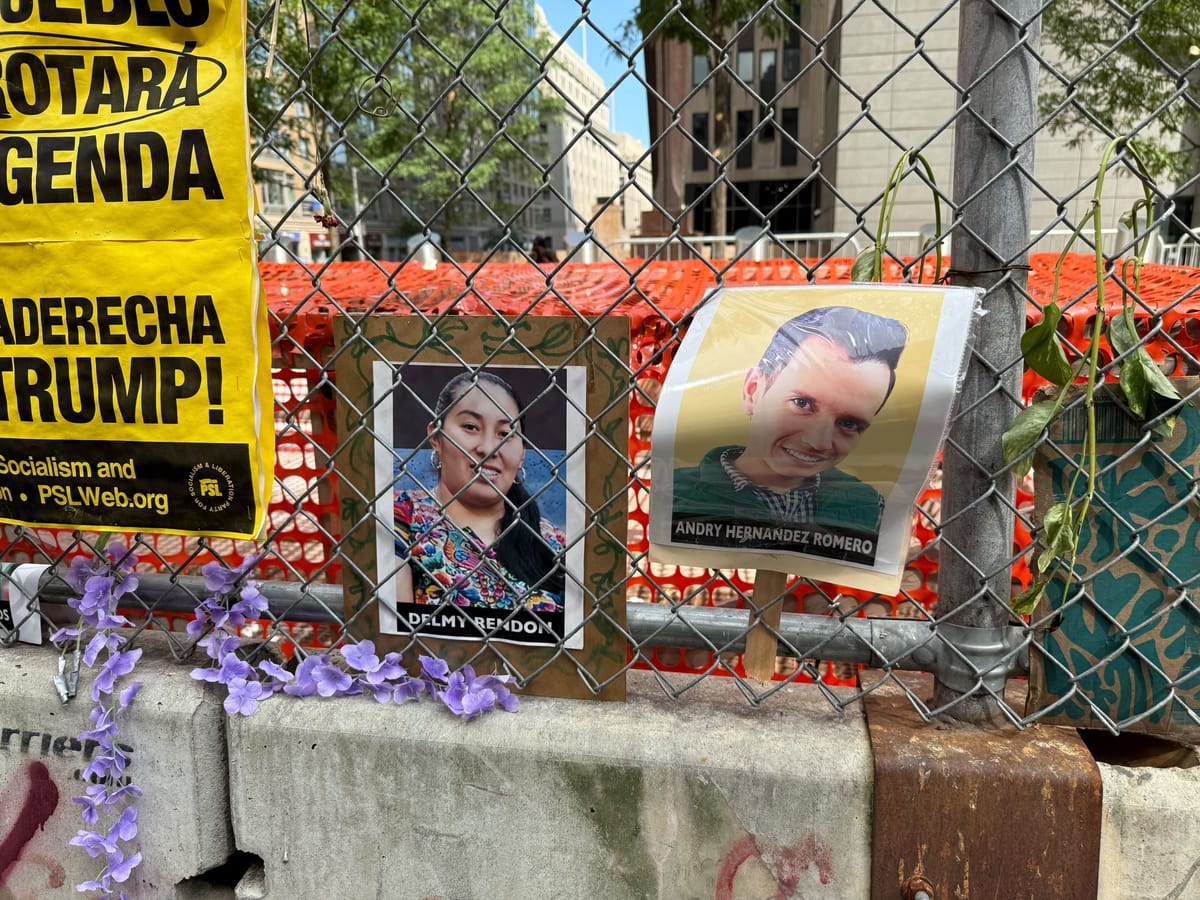
Chris from Astoria held his jug of rock salt on his head as he marched in the cold. If ICE comes to storm the city, he might be less freaked out to attend a counter protest next time.
“It’s not going to be good for them if they come here,” he said.

Comments ()