
Why this diner (and other local businesses) are filling your feed with AI slop
Daisy's in Park Slope has leaned hard on AI, saying it's a necessary tool to stay competitive.
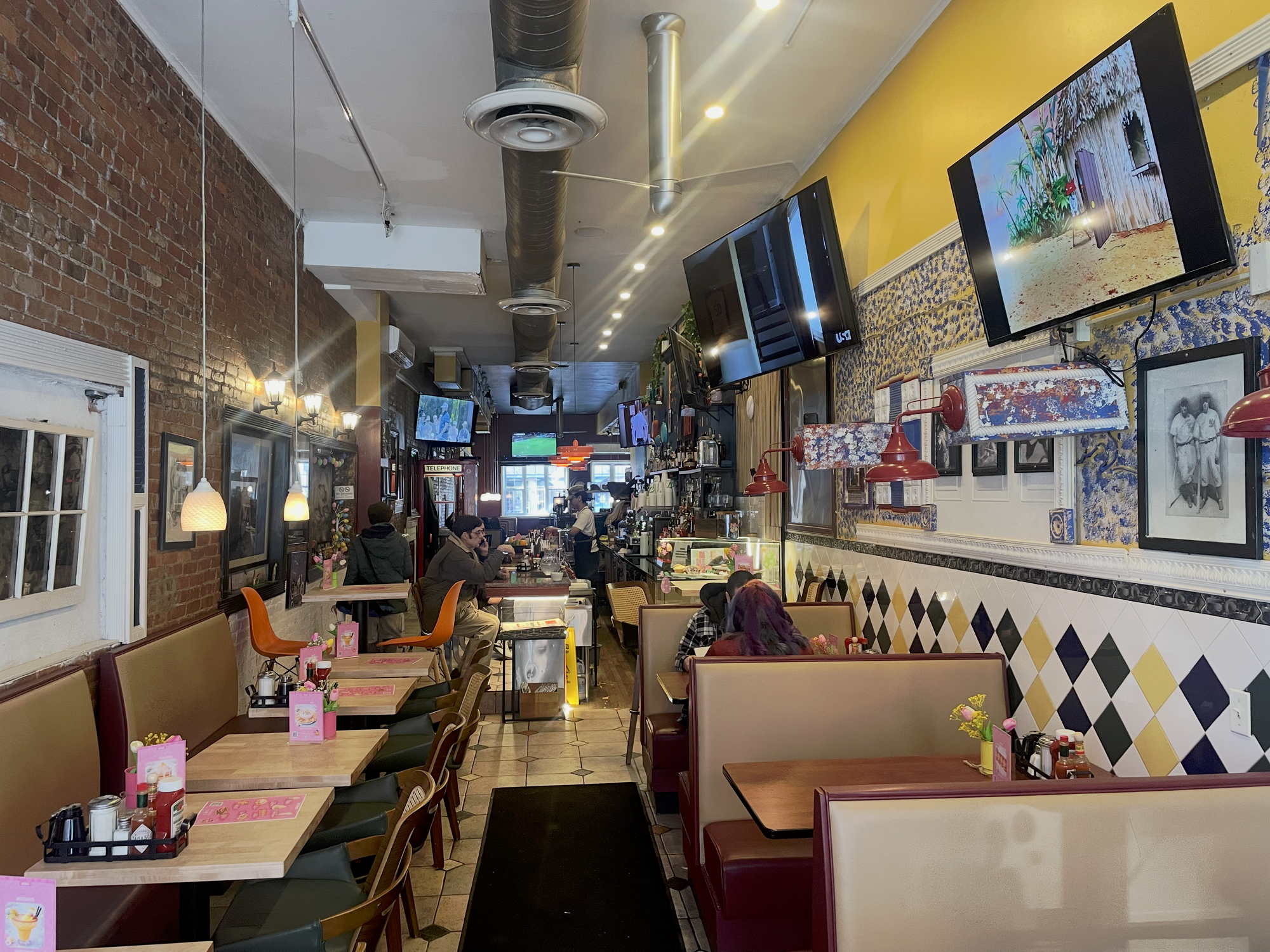
Daisy’s Diner in Park Slope is about as cute and quaint as you could want out of a 24-hour diner in the city. It’s got random pictures of movie stars on the wall, cozy booths, bric-a-brac decorations, a shelf of hot sauces, a cake display case right in the window, a defunct fireplace and an old red telephone booth that’s used to store a vacuum and some coats. As someone who grew up in the metal-and-mirror aesthetic of New Jersey diners, this place is practically Stars Hollow to me.
The menu is standard diner-style — sprawling and gigantic — ranging from western omelets to chicken marsala. The bar sells local beers and pounder cans of Twisted Tea and recently upgraded to selling cocktails. It’s overall got a real lived-in, neighborhood-staple vibe, appropriate for a place that’s been open on Fifth Avenue for almost 40 years.
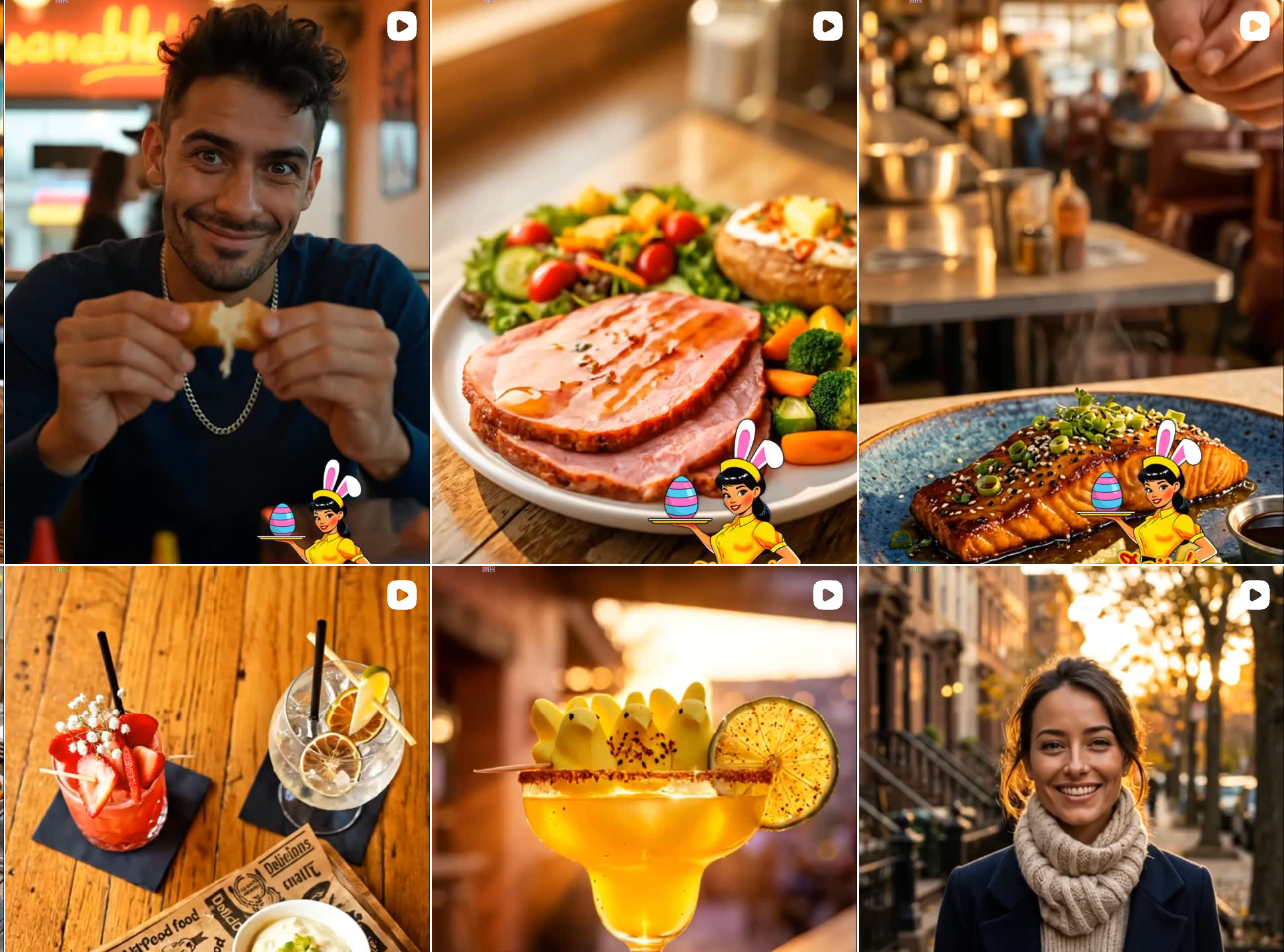
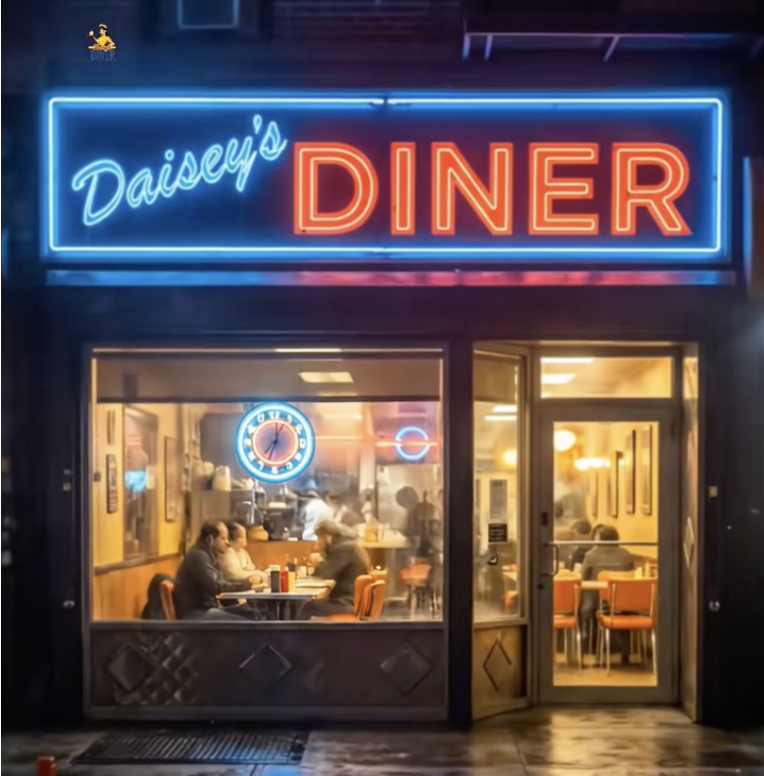
The image of the diner online, however, is different, noticeably shinier and more sleek than the brick-and-mortar version. Google the business and you’ll be presented with preternaturally glistening pictures of salmon filets, endlessly steaming deviled eggs and impeccably smiling faces of customers and staff. At times, it literally doesn’t look like the same place: images on its Instagram show the middle-of-the-block diner on different corners of the block; one TikTok shows what appears to be a completely different neon sign and restaurant entirely. Sometimes the lettering on signs of neighboring businesses shows up garbled.
The diner is one of a seemingly growing number of local businesses that are trying to “leverage AI,” in the words of owner Jordan Beau, for a competitive advantage in the harsh world of the New York restaurant industry.

For me, it’s been jarring to see our feeds flooded with AI from all angles; I might expect it from peddlers of slopulism, national brands hawking vodka or low-quality political memes. It’s more of a shock to see it spread among the tier of small businesses across the city. But it’s all of a sudden everywhere, from new businesses announcing themselves to established ones rebranding their menus. I caught at least one grungy arts-adjacent organization using it to promote a ukulele event. Bodega sign AI slop has become a whole category in itself.
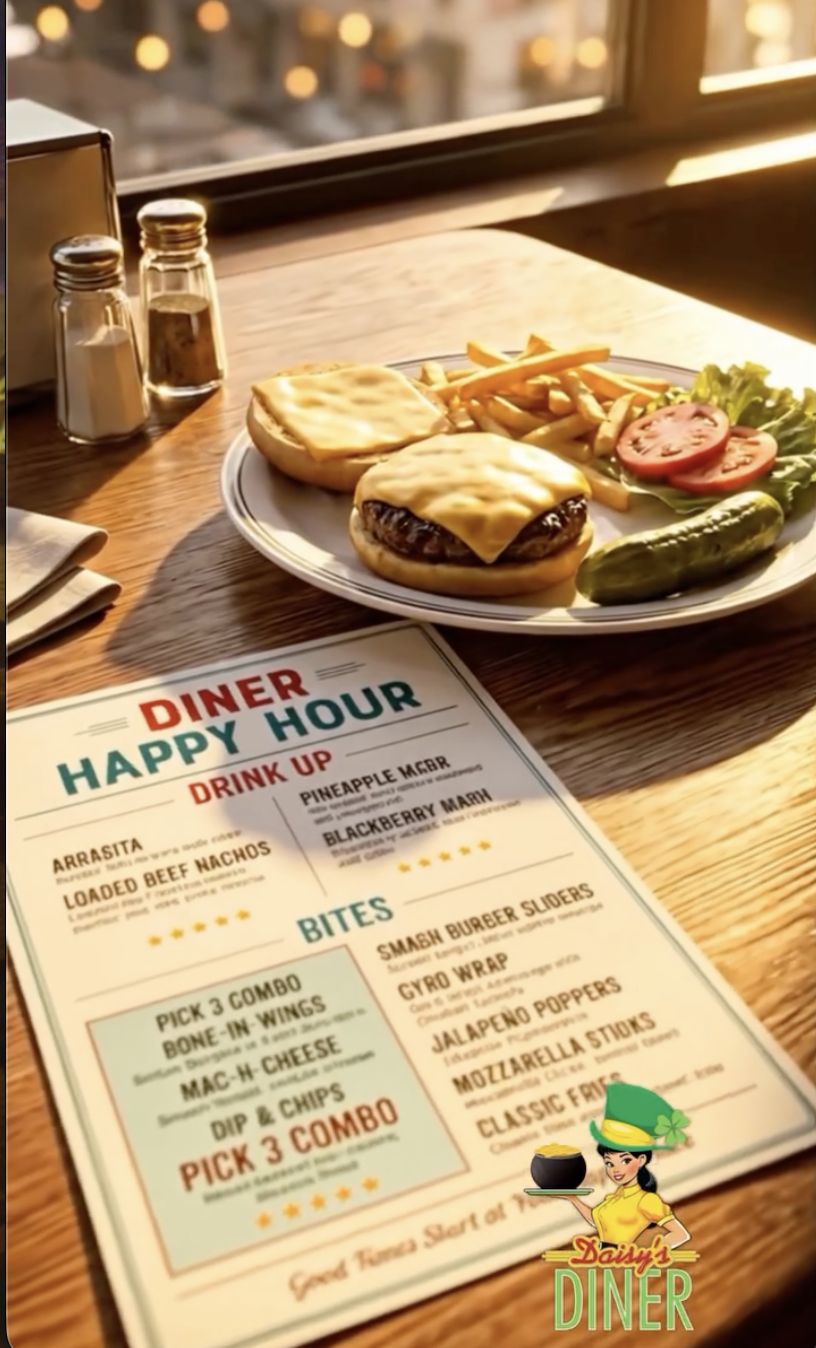
As most of us know (and can easily spot at this point), there’s something off-putting about the AI ads that makes them both easily identifiable and viscerally cringey. They’re too clean, too shiny, somehow a product of extremely advanced computing but with an output that all feels the same. Why would a local business do this when so much of their appeal comes to being the little guy? To find out, we did our own version of the infamous “check in with a diner” journalism by visiting Daisy’s this week.
“So I think when it comes down to it, it's about time, and all the videos that we produce, we produce, and then we leverage AI to make them professional,” Beau told The Groove. “What it does do is it saves us time, really, and resources to try and compete in a marketplace, especially in an industry that you know, [a large percentage] of diners in New York City are dead or dying.”
Beau, who took over the Park Slope institution two years ago, told me that all of the videos are real: the diner films them, and he uses real employees and customers as the centerpoint before asking various AI programs to touch them up, add details or polish, such as fixing a broken neon tube in the sign outside. He said videos of the interiors are not touched up at all (though clearly not all of them, based on the social media videos).
AI, he said, is a way to compete with “some of the Fortune 500 companies that have 40-people marketing teams and their own photography department.”
An AI-polished video, with tinny voiceover and unnatural camera movement, is clearly still not the same quality as a professionally shot brand content. Some of those big brands (who also have the money to extensively research what customers actually want) are already distancing themselves from the technology, adopting “no AI” disclaimers to “stand out among the slop,” according to the Wall Street Journal.
For companies like Le Creuset and American Eagle, the “‘no AI’ disclaimers are less mission statements than appeals to consumers who have developed a certain cynicism regarding the use of generative tools,” the WSJ reported. The story cites a study from a market research firm that found 68% of consumers regularly question whether the content they see is real, and 50% would rather spend their money with brands that don’t use generative AI in marketing.
But it is true that small eateries have been struggling in the city, especially since the pandemic. Diners that stay open 24 hours are particularly an endangered species. Oftentimes it feels like the only new things opening in the city are tiny aesthetically pleasing places with $20 cocktails and $30 tiger prawn linguine. It feels impossible that a new middle-of-the road, family friendly restaurant might ever open again.
“Leveraging AI has been a godsend, truly,” Beau said, citing an upward trajectory for the restaurant since he took over the business. “Come in and see the people in the AI videos … Do we use AI to put steam on the macaroni and cheese? Yeah. But that's my mac and cheese. You know, there's nothing AI about that mac and cheese.”
Of course, the trick of tech companies forcing AI into every crevice of your life, from your inbox to seemingly every single ad on the subway, is to create the appearance of inevitability, the idea that you need to use this tech, because everyone else is going to use it too. Then, as you start to offload the basic operations of your brain to a tech company’s profit-hungry, water-vampire supercomputer, the reliance on AI might only grow and grow.
“If you're worried about AI taking your job, then be smarter than AI,” Beau said. “Learn to run AI, learn to learn to operate AI, and learn to take advantage of it, and how is it going to enhance your career? Every day I have to figure out where I'm going to get X, Y and Z to maintain a competitive advantage.”
The gambit has drawn plenty of critics on Reddit; like other businesses that lean on AI, the diner’s Instagram comments are often pocked with people calling out AI slop.
“I should have known!” one redditor wrote in a post titled Daisy’s Diner sucks. “They've been running Al slop ads, and if they care so little about their marketing, it makes sense they also wouldn't care about the service or food.”
It’s especially odd because when I visited on Wednesday, the actual restaurant was a far cry from the kind of AI bot farm that you’d associate with a fly-by-night ghost kitchen. The staff was friendly and personable. The coffee came in a pleasingly big-bottomed ceramic mug. Beau and others said hi to a steady stream of regulars.
Beau said he has seen the online criticism and thinks it’s a little unfair.
“For me, it adds a dimension to it that makes it look more competitive in today's marketplace,” he said. “If you look at some of the other people that are kind of surviving and thriving, they're producing quality products. They have a whole marketing and media team that we don't. … I'm not, like, live-and-die AI. Like, I am still about local, local economy.”
The diner is “farm-to-table,” he said, sourcing most of its products within a 100-mile radius; its eggs are laid 48 hours before they’re delivered.
“The diner industry has typically been focused on high volume, low quality,” he said. “And we're just focused on great quality and we'll build volume over time.”
Daisy’s is far from alone in embracing AI: a new cafe in Bed-Stuy announced its opening on Reddit earlier this year, saying it was named in honor of the founder’s great grandmother who moved to Bed-Suy shortly before the Great Depression.
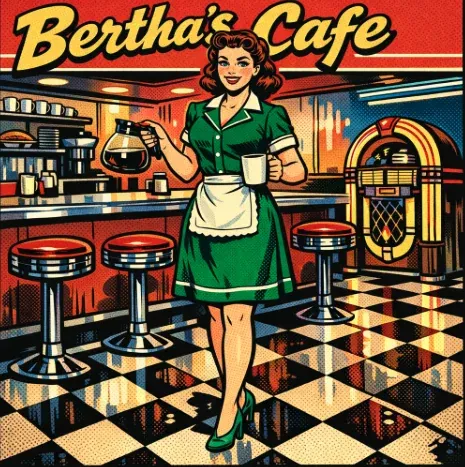
“I am extremely excited to be able to provide wholesome, family recipe meals, at reasonable price points to the community my family has lived in for over 100 years!” the founder wrote under an image of an AI-generated diner waitress. Commenters pounced, and someone noted: “Would urge you to replace it with anything - text or a scribble - that isn’t ai. Will turn people against you even before you open.”
Eventually, the founder added an edit: “Appreciate the feedback received on the AI slop of an image I used for the post … The image above is merely concept art, I am a terribly untalented artist myself. I am working with a local artist on finalizing the storefront graphics and some of the posters that will go on the inside throughout the cafe!”
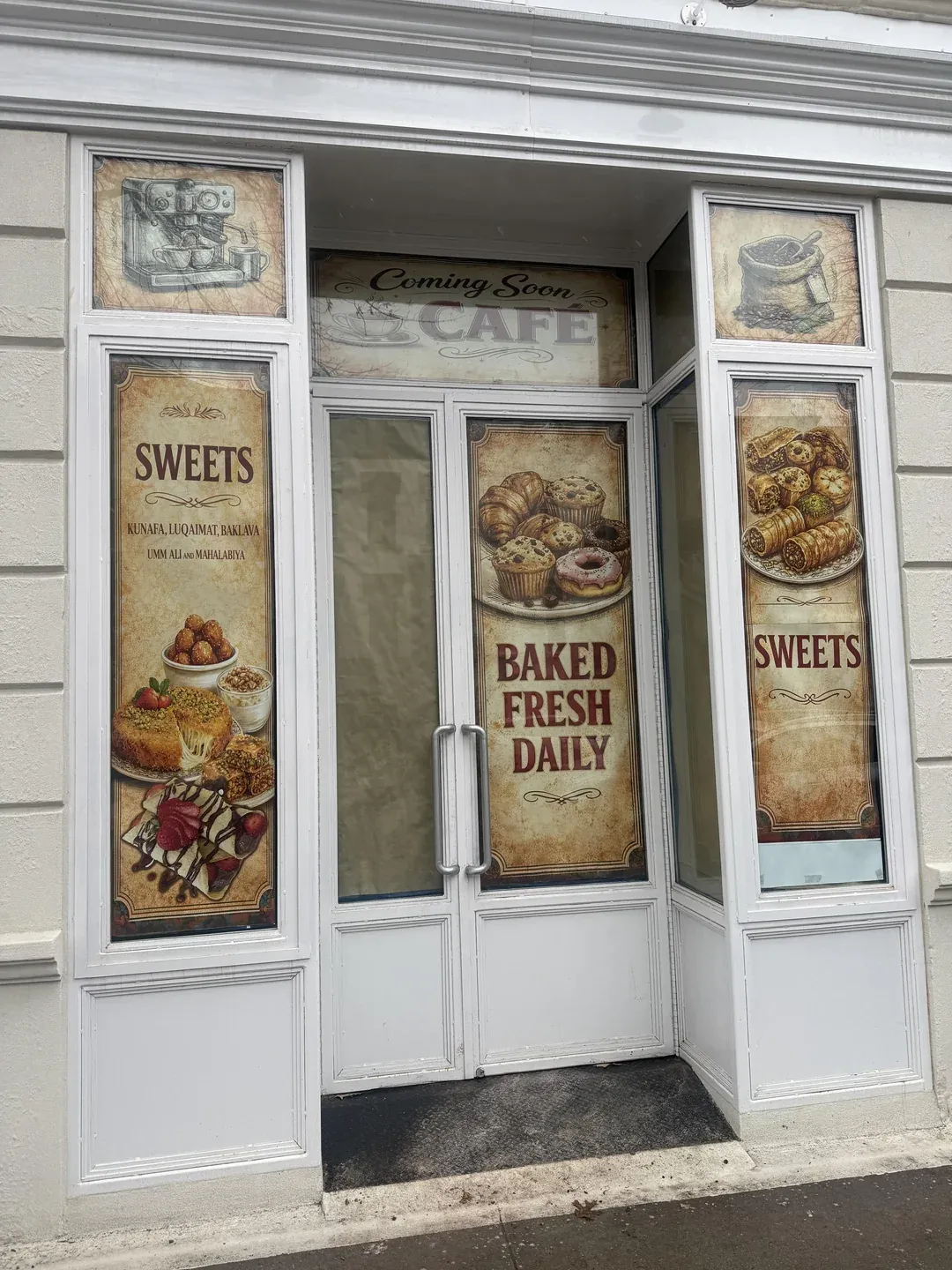
Another cafe opening soon was labeled by Redditors simply “AI cafe on Halsey.” In addition to the lazy graphics, commenters pointed out how vague they were: what exactly is this cafe selling? Another cafe in the neighborhood didn’t even bother to unscramble the AI text in its logo. I’m in a Rockaway Beach neighborhood Facebook group that is seemingly teeming with AI images, for veterans events, fitness centers, new restaurant openings and event spaces.
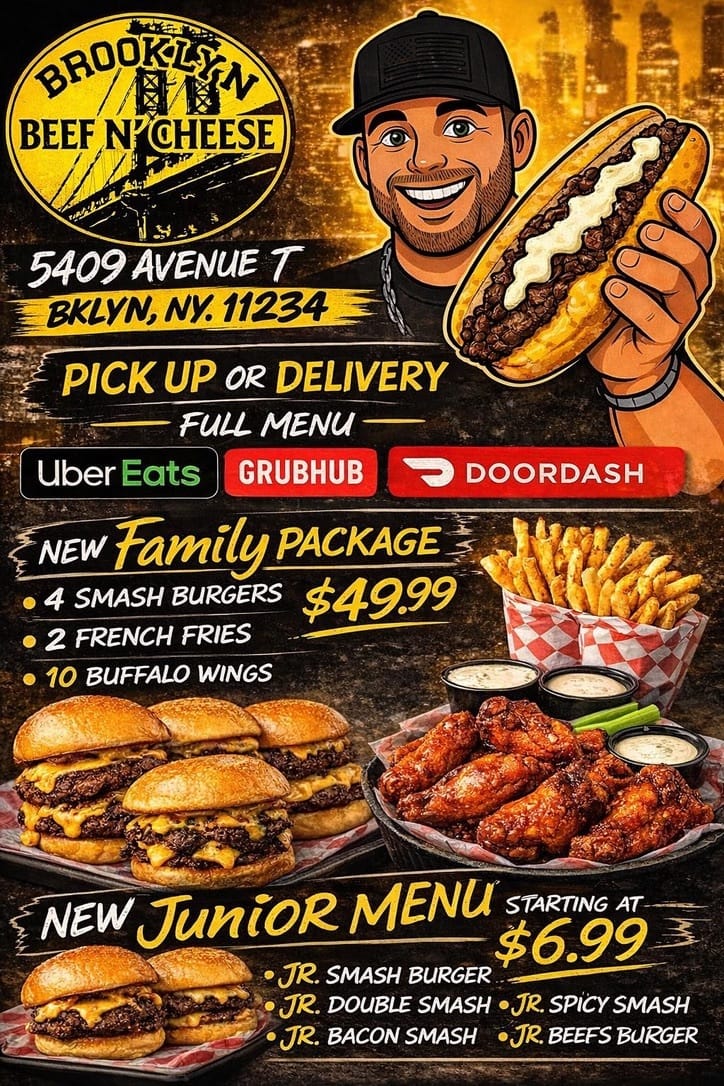

The slop is everywhere, but somehow it all looks the same? (via Facebook and Instagram)
It’s also not the first time widely available graphic design has been looked down upon. Businesses over the past 20 years have received flack for bad Photoshop art or tacky filters on their photos. People have joked about the spread of Canva-based designs and templates in recent years.
I wanted the opinion of an actually talented graphic designer so I reached out to Eric Lee, who designed The Groove’s logo, posters and merch as well as lots of stuff for various other businesses. He said this wave feels different than other democratized design tech of the past.
“It really bums me out to see local businesses not supporting local artists when there are so many living in the city,” he said. “AI art can be spotted so easily now that it’s kind of a wild move. Like, you’re not fooling anyone and what you think you’re saving in money and effort could actually hurt your business. AI art never looks cool or impressive and no one in the community benefits from it.”
Since Beau took over the diner, he and the staff refreshed the menu and added cocktails to the bar and a $5 margarita happy hour until 9pm on weekdays (the Instagram comments on the post announcing this were not kind about the AI use here either). He said he’s trying to blend old-school diner with modern dining trends. I’ve been to Daisy’s before but before our conversation this week, I had a coffee and some fries (as a vegan, fries are often my diner go-to option, but fries are also an easy metric to judge a diner’s quality overall. They were decent, standard diner fries; no complaints about the coffee).
The spread of AI art for local businesses has bothered me in part because the images all end up looking kind of the same, missing that janky, comic-sans quaintness of homemade graphic design (to say nothing of the concerns about the environmental impacts and general dumbing down of society that are implications of AI use). But it’s also messing with my head: I sometimes stare at a photo and think, “Is this AI? Or just a really touched-up photo? Did ChatGPT make this poster, or did some artist just make some unfortunately mundane design choices?” I don’t like feeling this way, doubting my own eyes about whether I’m looking at a real sandwich in a restaurant’s online ordering page or something served up directly from the uncanny valley.
Park Slope is one of the few neighborhoods in the city that still has a concentration of diners (including another 24-hour option at 7th Avenue Donuts and Diner). Beau said the AI aesthetics of the messaging were less important than getting out there that everything they serve is fresh and homemade. Nothing is frozen, he noted, except, as it happens, for the French fries I had ordered. He personally doesn’t like hand-cut fries.
He invited any critic to come in and have a conversation about the AI use.
“You don't have to eat. Let's have a conversation about it,” he said. ”We'll talk through what the struggles are for restaurants, and we'll talk through what the struggles are for competing in today's marketplace.”
The other thing about the AI images on the menu is that, to me, they just don’t look appetizing. AI-inflected imagery always looks a half a pixel away from curling off into some Lovecraftian nightmare, even if they’re only getting a fresh coat of AI paint. Tech companies have infected our culture so much that people think they need AI to survive, but that’s running the risk that it turns off more people than it attracts.
The city needs places like Daisy’s to survive, where you can get a pounder can of Twisted Tea and an omelet late at night. I hope real pictures of food are enough to save them.

Comments ()