Everything you need to know about the MTA’s anti-fare evasion gates pilot
One potential outcome? 'AI-driven computer vision' for detecting fare evasion
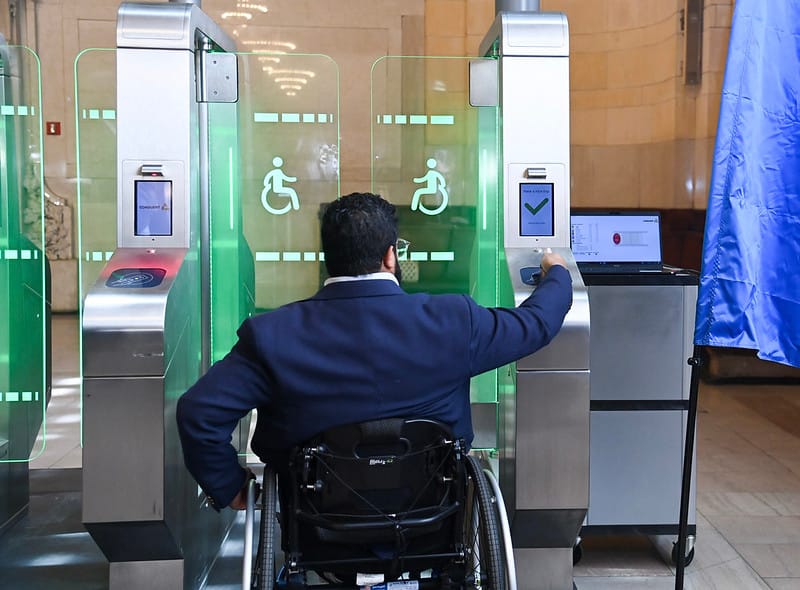
Modern life is finally pulling into New York City’s MTA stations — and while the agency is still miles away from updating the centenarian signal system, subway entry and exit points are on their way to complete technification.
The one-step turnstile hop is going the way of the MetroCard with the advent of the new fare gates, which are currently being piloted at stations across the boroughs. These upgrades are in service of a better transit system where every rider pays their fare share (sorry) toward the MTA’s operating budget, according to the agency. Fare and toll evasion reportedly cost the agency $900 million last year across the system. The agency’s annual operating budget is about $20 billion, including $8.6 billion a year in state tax money.
Of course, befitting a city built on disorder and creativity, New Yorkers have already found ways to hack the new technology in protest. But that won’t stop the upgrades from moving forward, albeit with a few kinks to work out, including those hardware flaws uncovered by research from fare evasion Olympians.
Change is hard, and implementing new technology in a high-volume transit system is even harder. Brian Fritsch, associate director of the Permanent Citizens Advisory Committee to the MTA, said the new gates are a necessary step forward in making the city’s aging subways look less shitty on the world stage.
“We've been calling for this type of pilot for a long time, in terms of the MTA modernizing its system,” Fritsch told The Groove. “I think it's a step in the right direction.”
With those initial steps come the inevitable traffic slowdowns and technical difficulties riders have experienced in the pilot’s first few weeks. Instead of riders pushing through the traditional rotating arms of analog turnstiles, the upgraded gates being piloted use smart technology with the potential to malfunction. At least one child was sent to the hospital after getting their head stuck in the doors of a fare gate at Broadway-Lafayette, and some gates have had issues integrating with OMNY.
It’s all in the name of progress and a long-term goal to improve safety and accessibility, not just to curb fare evasion, Frischt added. Riders will have to deal with the growing pains while the MTA figures out the holes in the new systems and solutions to remedy them.
In due time, the gates will also hopefully reduce the “need” for the legions of police patrolling stations, he said.
Like it or not, the future is underway. With so little known until the MTA compiles the data and selects a vendor, what comes next is speculative. What I can do, however, is compile the information the MTA has provided thus far as we move into a new era of public transportation.
What will the final fare gates look like?
There are three companies competing for the MTA’s roughly $1.1 billion fare gate installation contract: Cubic (which you may know as the company responsible for OMNY’s clusterfuck of a rollout), Conduent and STraffic. Cubic and Conduent’s systems are already being piloted as of late December — happy holidays!
When STraffic’s systems go live, the technology will officially be in 20 stations across the boroughs. You can see a full list of the stations where the fare gates are installed or soon-to-be installed on the MTA’s website. The new technology across the three systems feature one wide-aisle gate as a replacement for emergency exit doors.
The MTA hasn’t decided on a deadline for its vendor selection, just that it will happen sometime later this year. All said, the agency plans to replace the turnstiles across nearly 200 stations by 2029.
Here’s a breakdown of the three designs.