
The Transit Museum is the latest proof that museum unions are having a moment
'The very first exhibit you walk through is all about the history of labor unions in transit history'
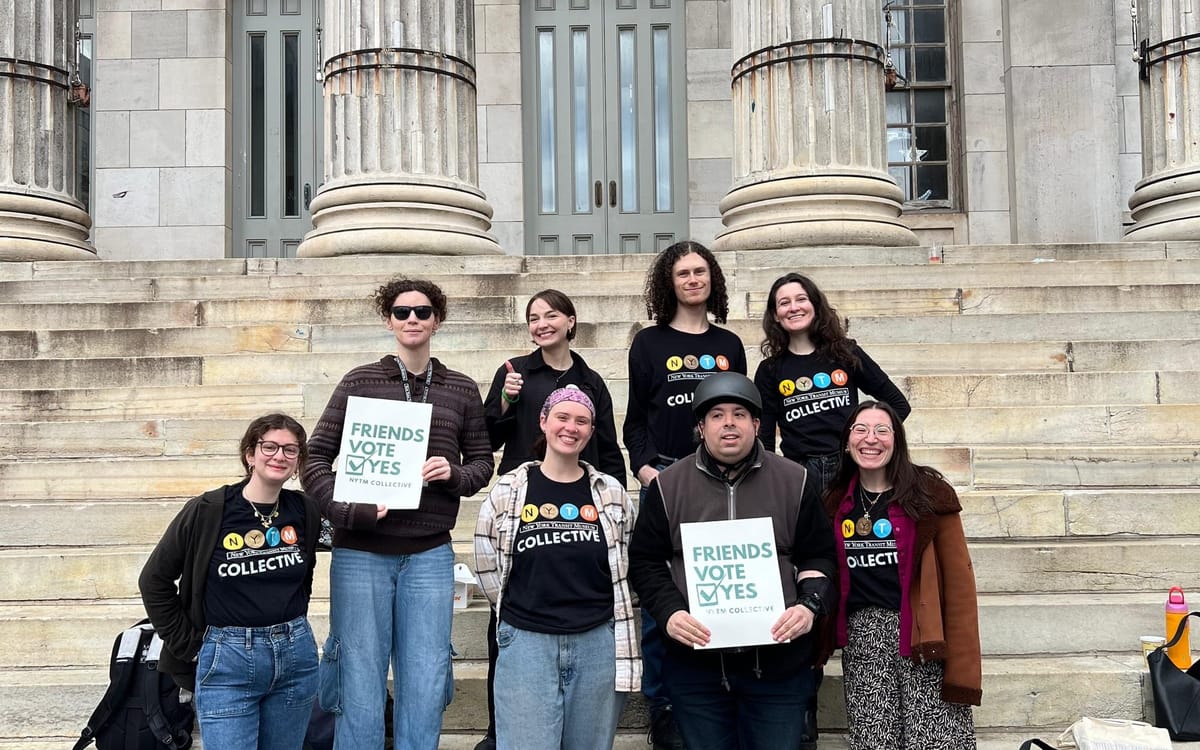
Workers at the New York Transit Museum voted unanimously in favor of unionizing on March 27, making them the latest in a growing wave of unions at cultural institutions across the city. Members of the newly-formed New York Transit Museum Collective had been in talks about organizing since last spring, and officially announced plans to unionize back in February.
“The very first exhibit you walk through when you enter the museum is all about the history of labor unions in transit history,” Patricia Jannick, a school youth and group programs coordinator and NYTM Collective member, told The Groove. “[Our exhibits] also highlight the formation of the Transport Workers Union, and how organized labor is so essential to transit history and what keeps our system moving today.”
The irony of showcasing this proud labor history while not having any meaningful labor protections themselves has been lost on no one who works at the museum.
“Having that framework going into bargaining and thinking about management’s response, it’s a little hypocritical,” said Ava Dennis, a museum educator and union member. Transit Museum management initially denied a request for voluntary recognition of the union, and as of press time, hasn’t issued a response to last week’s vote. They did not respond to a request for comment for this article.

Workers at the transit museum also share a workplace with colleagues who are employed by the MTA and therefore already organized under the Transport Workers Union, which the museum’s retail workers recently joined in a separate union drive.
“Not only are people organizing in cultural institutions and museums and winning, that literally happened in our building with people who we see every day and know,” Jannick said.
“Just hearing the material ways that unions have actually been able to put the bread and butter on the table, prevent people from being laid off, we felt like we want those same protections.”
And about those other institutions: The museum is indeed also part of a growing wave of museums that are unionizing across the city. Workers at the Met voted to unionize back in January; workers at the South Street Seaport Museum announced their unionization last spring; the Brooklyn Museum, the Whitney, and New York’s Hispanic Society Museum and Library all organized back in 2021, with union workers at the Brooklyn Museum negotiating to stave off layoffs just last year.
“Definitely a lot of us are very inspired by the other museums' organizing and their unionization processes,” Jannick said. “Just hearing the material ways that unions have actually been able to put the bread and butter on the table, prevent people from being laid off, we felt like we want those same protections.”
The Transit Museum’s new union is organized under DC 37, the largest public employee in the city, which also represents workers at the American Museum of Natural History, the Met, the Brooklyn Museum, and the Brooklyn Children’s Museum.
 Virginia K. Smith
“It’s clear these workers are passionate about carrying out the museum’s mission, and they have done an incredible job fighting for their right to unionize,” Henry Garrido, executive director of District Council 37, said in a press release last Friday. “We’re proud to welcome the New York Transit Museum Collective to the DC 37 family and look forward to continuing the momentum as we bargain a first contract for fair wages and dignity in the workplace.”
The nascent union’s primary demands are common ones — higher wages and improved benefits, more reliable and guaranteed hours for part-time workers, better transparency and communication across the board, Dennis said.
“When we started having get-togethers with your coworkers outside of work and talking about our issues, we realized a union can help us address these, and turn issues into action,” she said.
“Organizing is really just about becoming friends with your coworkers and building trust. At the end of the day, having solidarity with your coworkers is the most important thing, and this process has made me enjoy coming to work more and generally have a positive attitude because of the people I work with,” she added. “Without community, what’s even the point?”
The process is still in its early stages, but union members are optimistic. “It’s a shame the museum didn’t recognize us and it took us pushing it to an election,” Jannick said. “But it’s not a surprise to me that it was so successful, not only because of organizing and the community we built, but also because so many of us value transit history and therefore labor history.”
Comments ()