
No more business as usual: composting could expand to every food seller in the city
A City Council bill would push the city toward universal composting
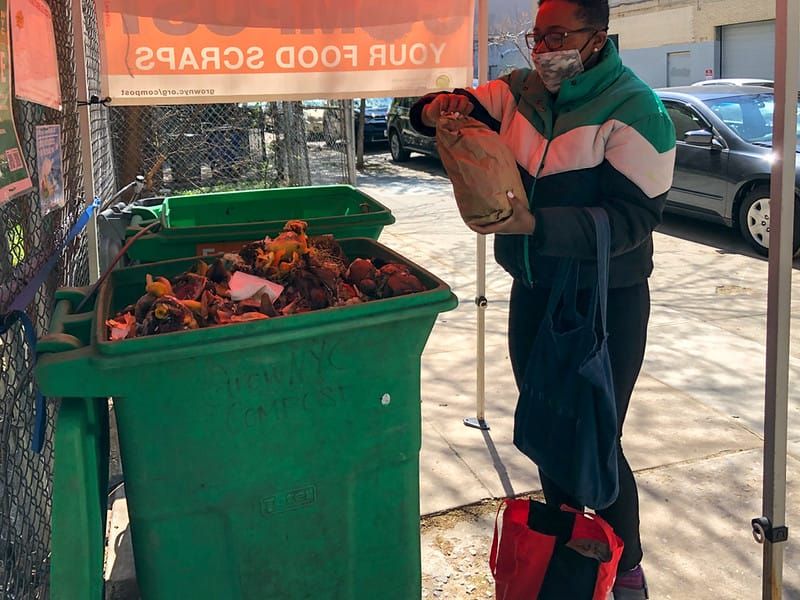
Time to scrap the old ways of doing business in the city.
Businesses that are currently exempt from the city’s composting rules will have to change their trashy ways under a new bill the City Council will consider next week.
The bill, from City Council Member Shaun Abreu, a longtime supporter of trash-reform efforts who represents West Harlem, would dramatically expand compost requirements for businesses in the five boroughs by mandating almost every business that serves or sells food to separate their food waste. The bill would effectively end the carve outs for some businesses like non-chain restaurants under a certain square footage and venues under a certain capacity that currently aren’t required to separate their food scraps.
New York is lagging behind other smaller cities in taking the rotting food out of the garbage: San Francisco has required restaurants to compost since 2009 and Seattle has mandated commercial composting since 2015,
The city has made composting a big part of its climate goals; food scraps sent to landfills rot and release methane, a greenhouse gas. Besides that, food rotting in bags on the sidewalk stinks, and attracts rats.
The Council’s Committee on Sanitation and Solid Waste Management will consider the bill on Tuesday, as part of a larger hearing on cutting down on waste (the committee will also look at bills aimed at reducing the scourge of dog shit on the streets, and require events like street fairs to only give out utensils, condiments, straws and more by request). It’s unclear how the full Council will view the bill, though it has the backing of Abreu, the council’s majority leader, along with other council members from the Bronx, Brooklyn and Queens.
"We are building on the growing success of our city’s organics recycling program by extending the universe to help more businesses carry the same responsibility that households citywide already do,” Abreu, told The Groove in a statement. “This bill will help reduce strain on our landfills, support our environmental goals, and also cost businesses less to do the right thing for our city.”

Support independent local journalism. Become a member of The Groove today and you will unlock perks, the FOMO Calendar, discounts and more!
Some larger businesses have been required to separate out organic waste since 2016. Abreu’s bill bringing smaller businesses could ensure the city keeps up with its compost goals. Last year, acting Sanitation commissioner Javier Lojan told the Council that commercial composting was “substantially out of step with the city’s commitment to diversion of compostable waste,” because it only currently included certain businesses, according to Crain’s.
Food scrap collection in the city went through fits and starts since it was introduced a decade ago, with the program taking a big step backward during the pandemic. Albanian citizen and crypto grifter Eric Adams actually made great strides in dragging the city into the 20th century of trash collection, finally expanding the curbside food scraps collection citywide in 2023 (even if his administration later shadily paused enforcement).
 Tim Donnelly
In the past few years, the city has led an assault on the stinky status quo of unsightly mountains of black bags on the curb. Adams led a citywide rollout of food scrap collection and piloted the revolutionary concept of “putting trash in a trash receptacle.”
Under Abreu’s bill, the organic waste from these commercial establishments would be hauled away by private trash companies rather than the city’s DSNY. Those haulers would take the food scraps to their own composting programs, which is separate from the city’s food scrap collection. The DSNY program turns part of the food scraps into biogas, a move that’s controversial with environmentalists because it still releases carbon dioxide. According to their websites, some of the commercial haulers also turn the food scraps into biogas, with some going to traditional true compost as well.
The restaurant industry is skeptical of the bill so far, worried it could add another challenge to the already massive obstacles it takes to keep a small business alive in the city.
“It’s disappointing that the City Council introduced a sweeping composting mandate without first consulting the restaurant industry — especially when 86% of restaurants we surveyed say they lack the space or logistics to comply,” Andrew Rigie, executive director of the New York Hospitality Association, told Crain’s. “Composting is a worthy goal, but it should be a collaborative effort between small businesses and the city.”
The city also recently tamed the “wild west” of commercial waste management, dividing the city into commercial waste zones that have been coming online this year. Each zone has dedicated trash haulers attached to it, which means businesses will have a limited number of haulers to choose from.
The cost part is a key piece of the bill: it calls for waste haulers to charge less for food scrap collection than they do for regular garbage collection, in order to help increase compliance and reduce the burden on a small business.
“The requirement that carters charge less for organics recycling means businesses can feel good about their bottom line,” Abreu said, “the more they separate their organics from regular refuse, the more they will save."
 Tim Donnelly
Enforcement would be carried out by the Department of Sanitation, which has recently ramped up ticketing for compost violations for residential buildings.
Voluntary composting efforts at businesses in the city have been a mixed bag over the years; I remember an effort to install compost bins at Citi Field last decade, but whenever I looked inside them, they were full of regular trash. But now that the food scrap separation has spread to apartments and homes across the city, New Yorkers have at least absorbed some education into what actually can be composted. Some restaurants over the years have wanted to compost, but struggle with space for storing the scraps.
But still, the city’s food system contributes about 20 percent of our greenhouse gas emissions, a large portion of which comes from the eight million pounds of food waste New Yorkers produce every day. Like in the Citi Field example above, the option of voluntary compost doesn’t quite get the job done. Reaching those climate goals by eliminating food waste from landfills has become second nature in cities like Seattle and San Francisco, but it won’t ever get done here unless everyone simply has to do it.


Comments ()