
Your chance to help Park Avenue become a park again is finally here
Mamdani wants to restore part of the ritzy street to the public, and its former glory.
Pictures of old Park Avenue occupy the “look at how they massacred my boy” realm of historic photos that show a more dignified, less car-choked past, alongside the trolley tracks of the Brooklyn Bridge. Old images show Manhattanites strolling around wide, lush pedestrian malls lined with Gilded Age apartment buildings. Park Avenue wasn’t always for cars and gated-off tulips. But it wasn’t even always “Park” avenue either.
Before all that, the wide avenue was home to a trench of tracks for the New York and Harlem Railroad, where a deep gash was cut into the bedrock to help the steam locomotives that struggled to get up the incline of Murray Hill. Eventually, public pressure over safety, soot and the aesthetics of a train rushing through the growing neighborhood led the city to cover the tracks in a tunnel. By the 1870s, the street-level surfaces were topped with parks and wide pedestrian malls; the next decade, it was renamed from Fourth to Park Avenue, and quickly became an international symbol for Gilded Age wealth.
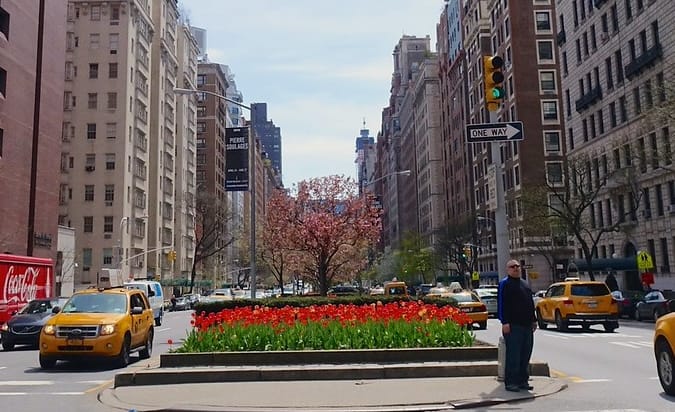
Eventually, the decision was made to open things up for cars, because who needs a pedestrian mall when you can make room for more Ford Explorers? So now, the remaining greenery of the street is often most enjoyed by the people who look out onto it from the grand apartment buildings lining the avenue, the cars that speed by its vibrantly colored mums and tulips, or anyone who passes by while dodging cars in a crosswalk.
Park Avenue is “not a place where people are encouraged to gather,” Barbara McLaughlin, the president of the Fund for Park Avenue, told the New York Times in 2024. The traffic is dangerous, she said.
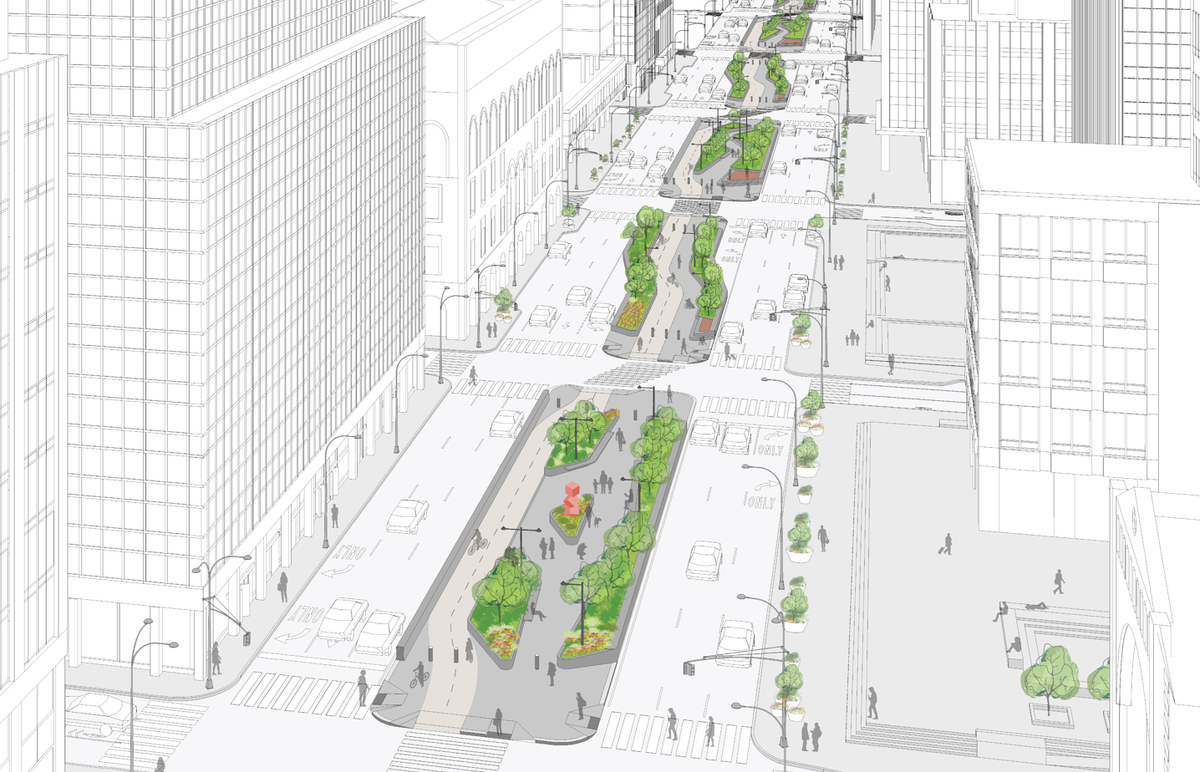
But this bit of old New York (unlike the Brooklyn Bridge trolley tracks) has a chance of making a comeback. The Mamdani administration this week unveiled a plan to put the “park” back in Park Avenue along an 11-block stretch from 46th Street to 57th Street, with sketches for a redeveloped street that would lop off one lane in each direction of the four-lane roadway, and expand the medians for walking, biking or sitting.
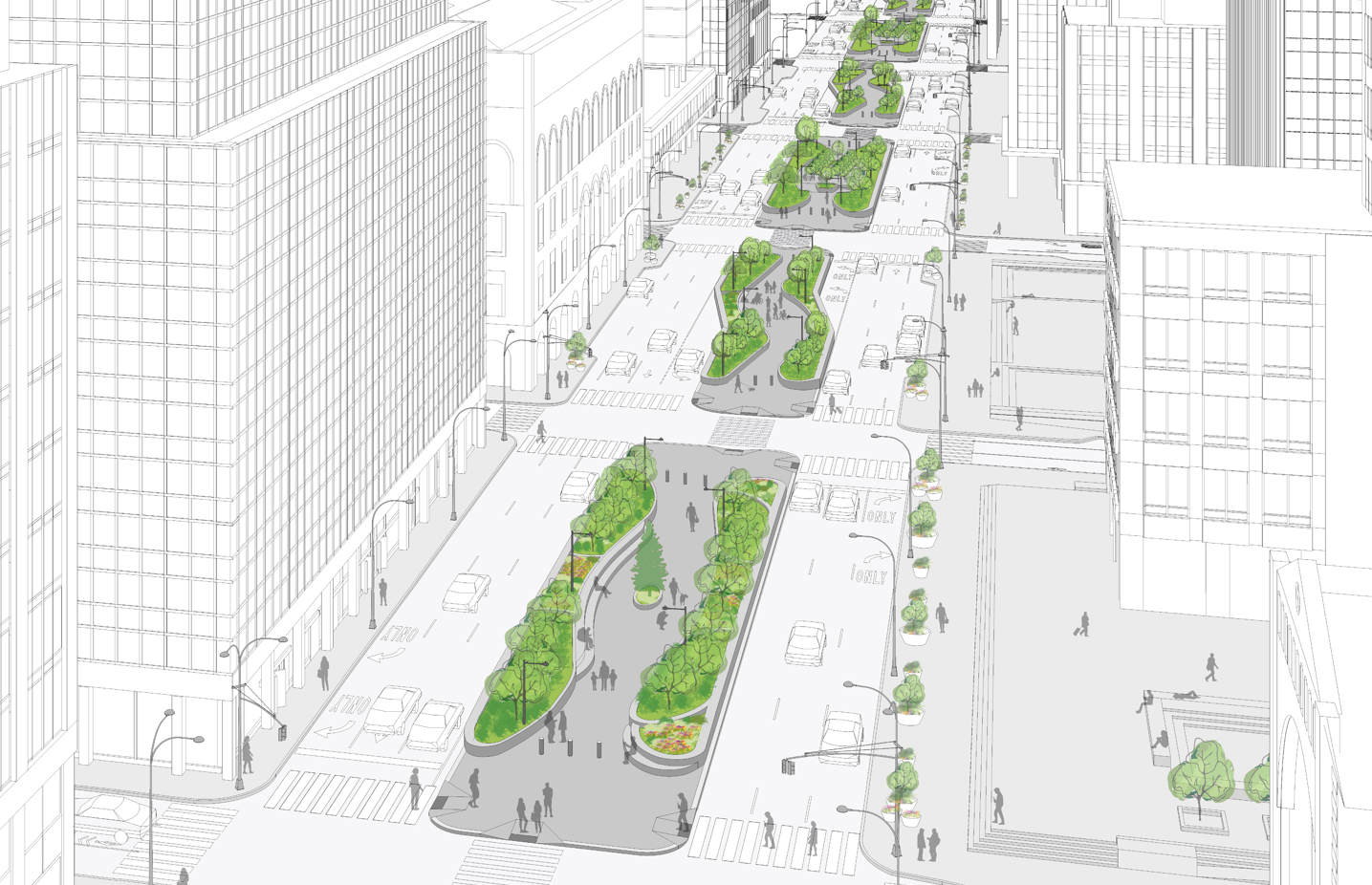
You have a chance to weigh in on the plan: the city is kicking off the design by asking for public feedback in a public forum, several community board meetings and a survey you can fill out right now asking what amenities are most important to the street.
‣ Fill out the Department of Transportation's survey here.
‣ Attend a public feedback event on Saturday (May 2) at St. Bartholomew’s Church from 10am-12pm.
‣ Attend a virtual meeting of Community Board 6 on May 4 at 7pm.
‣ Attend a meeting of Community Board 5 on May 28.
Expanding this median from a lonely outpost where you wait to cross in between eight lanes of traffic may sound like a no-brainer, and even something you can avoid weighing in on. But never underestimate the way your fellow New Yorkers insist everyone in America’s most transit and walk-reliant city are actually driving everywhere.
“I feel conflicted,” a media producer named Janald Dufont told The Times. “I’m all for green and serene, but a lot of people around here rely on cars. If they cut the traffic lanes, it’s going to cause more congestion. It’s getting to the point where walking will be faster.”
The new plan has been in the works since at least 2020, tied to renovations to the underground 100-year-old Grand Central Train Shed that routes Metro-North trains, which are already underway and will require tearing up parts of the street anyway.

The plan is only for 11 blocks of Park Avenue’s greenspace, which runs from E. 49th Street to E. 96th Street, where it merges with an actual park (that you can enter and sit in) one block long before the train tracks reemerge heading into East Harlem.
By moving the Park Avenue redesign forward, Mayor Mamdani could democratize the green space on one of the avenues most associated with wealth. In the 1920s, the Brooklyn Eagle dubbed it the “Most Exclusive Residential Avenue in the World.”
Residents of the neighborhood once fought to protect their exclusivity: they successfully opposed the introduction of public buses in the 1910s.
In the next few decades, the sidewalks and pedestrian malls were shrunk to make way for more lanes for vehicle traffic.
The stretch is now home to bursts of color not found in many other streets in the city, maintained by local civic organizations like the Patrons of Park Avenue, who often also fill the spaces with head-turning art.
Making Park a pleasant thoroughfare for pedestrians, cyclists and strollers ties in with Mamdani’s vision of a more equal city less divided by wealth, and one where people actually get to enjoy vibrant public spaces.
“By upgrading the medians and seating," Deputy Mayor for Operations Julia Kerson said in a press release, "Park Avenue will finally, truly belong to the public."


Comments ()