
How to raise a little New Yorker without leaving your little apartment
No need to move to the suburbs for what — the chance to yell at each other across the house?
As New Yorkers, we're used to forgoing personal space — on the sidewalks, the subways, and in our homes — in exchange for all the city has to offer. Today, with exorbitant rents and low housing stock (particularly of two bedrooms) most people I know will hold onto a Good Enough apartment for dear life, especially if it's rent-stabilized. If you decide to add an infant roommate to the mix, you have a few options: leave the city for your second- or third- or fourth-choice metropolitan area or suburb to get more space for better value, if your job situation is flexible enough to allow it; try to find a bigger space locally that's still within your budget; or, make do with the spot you're living in now.
I'm an example of the make-it-work-where-you-are type of New York City parent. When my partner and I decided to have a kid, we had no intention of leaving New York, or our apartment. It's a 600-ish-square-foot one-bedroom railroad, but it's rent-stabilized, and we're paying well below market rent in Greenpoint, a neighborhood we love. We think it'll be cool to raise a native New Yorker, even if her first word might be "transplant," mouthed in our direction. Would we benefit from more space? Probably, but not if the tradeoff is moving away and forgoing the city we love, the community we've built, the walkable lifestyle we're used to, for what? The chance to yell at each other across the house?
As I write this, my baby girl Loretta is 12 weeks old; our apartment must feel like a palace to her. She still sleeps in our room in a bassinet, per the American Academy of Pediatrics' recommendation to room share until at least six months old, ideally up to a year, in following with their safe sleep guidelines.
We made a number of rearrangements as we prepared for her arrival, from consolidating our books into a super-tall bookcase that goes all the way to the ceiling; repurposing our hoosier cabinet as our changing table; finding shelves that fit just right to create storage for our car seat, stroller, and more baby gear in the nothing nook between the refrigerator and the wall; to name a few adaptations. As she grows, we'll have to get creative, playing Tetris with the apartment—possibly switching around rooms, or looking into temporary dividers—but we're committed to figuring it out as long as we can.
We're hardly the only New York City parents who believe the juice is worth the squeeze; the commenters in a recent r/nycparents Reddit thread, in which a mom asks how long she should stay in a one bedroom with a baby, (well below market rate, in a desirable neighborhood, with great schools to boot), pretty much unanimously tell her it's a no-brainer to stay, while sharing their own small space solutions.
Looking for camaraderie (and tips), I asked a few local parents what they're doing to make their apartments feel more accommodating, from room dividing, to storage hacks, and the products that make the difference.
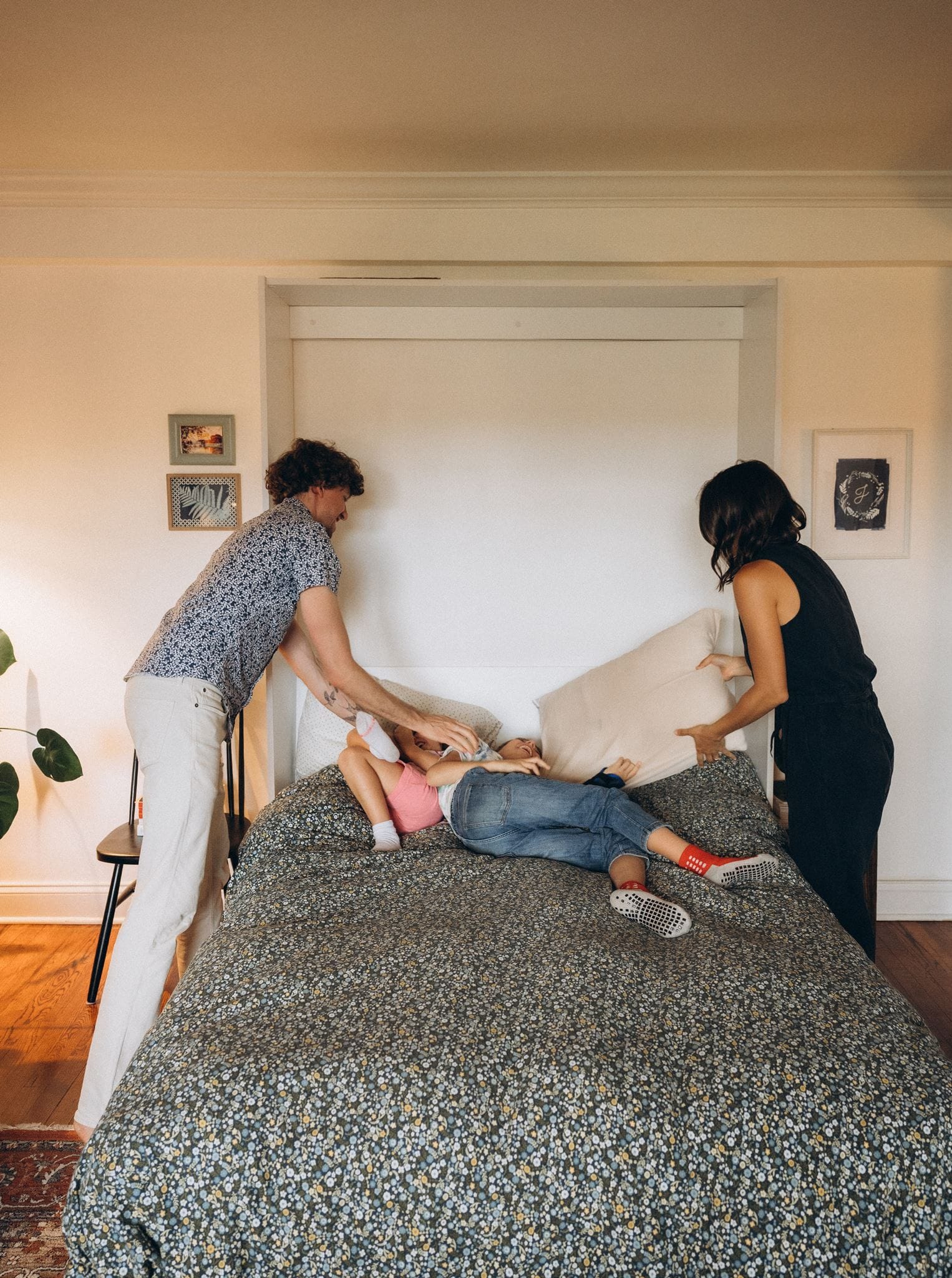
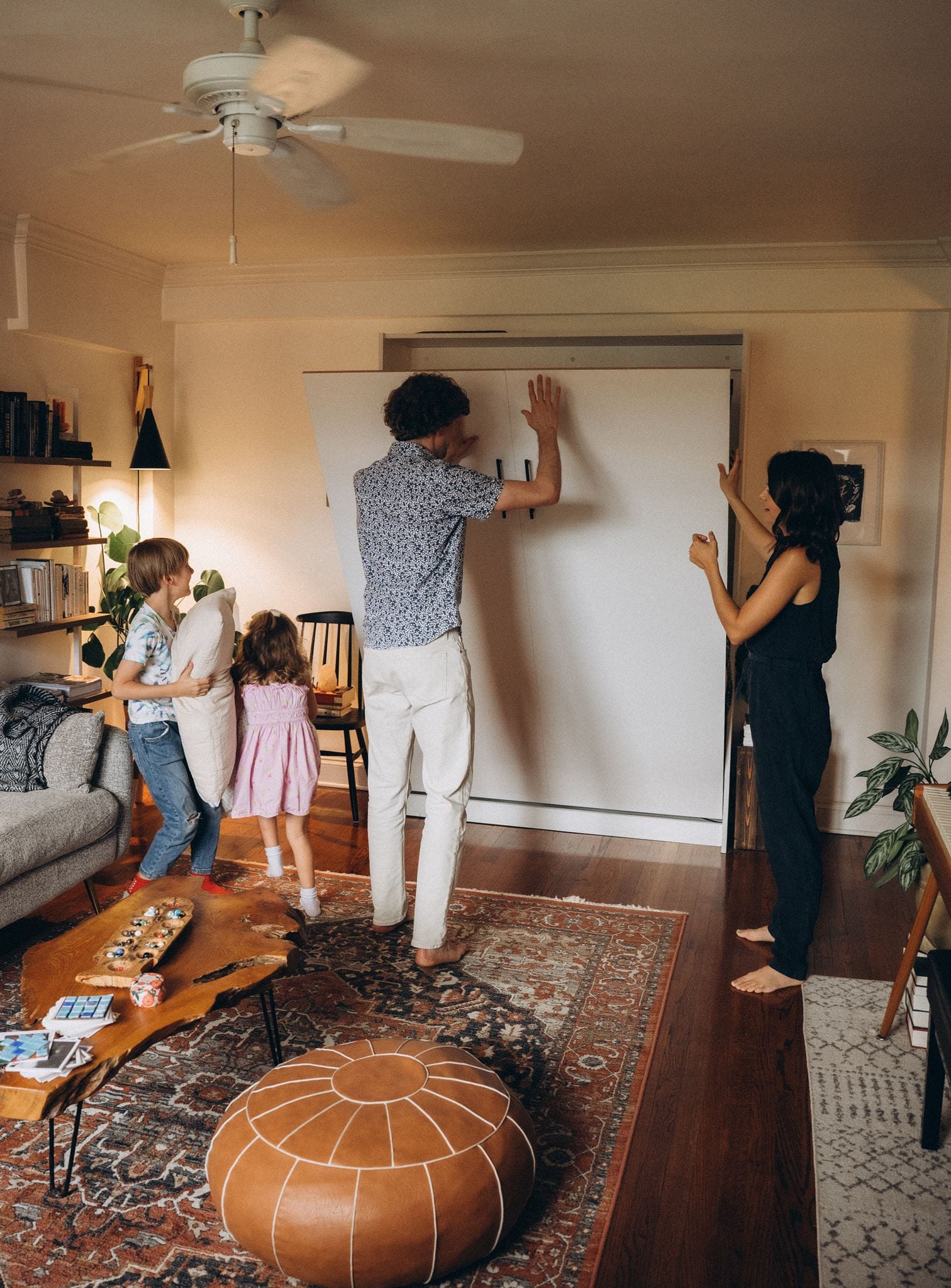
The Murphy bed 'saved us 30% of our square footage on our floor just by putting a bed on the wall,' Jaspers said. (Photos courtesy Khrystyne Jaspers)
Make your own extra room: Divide and conquer, or hide your bed on the living room wall
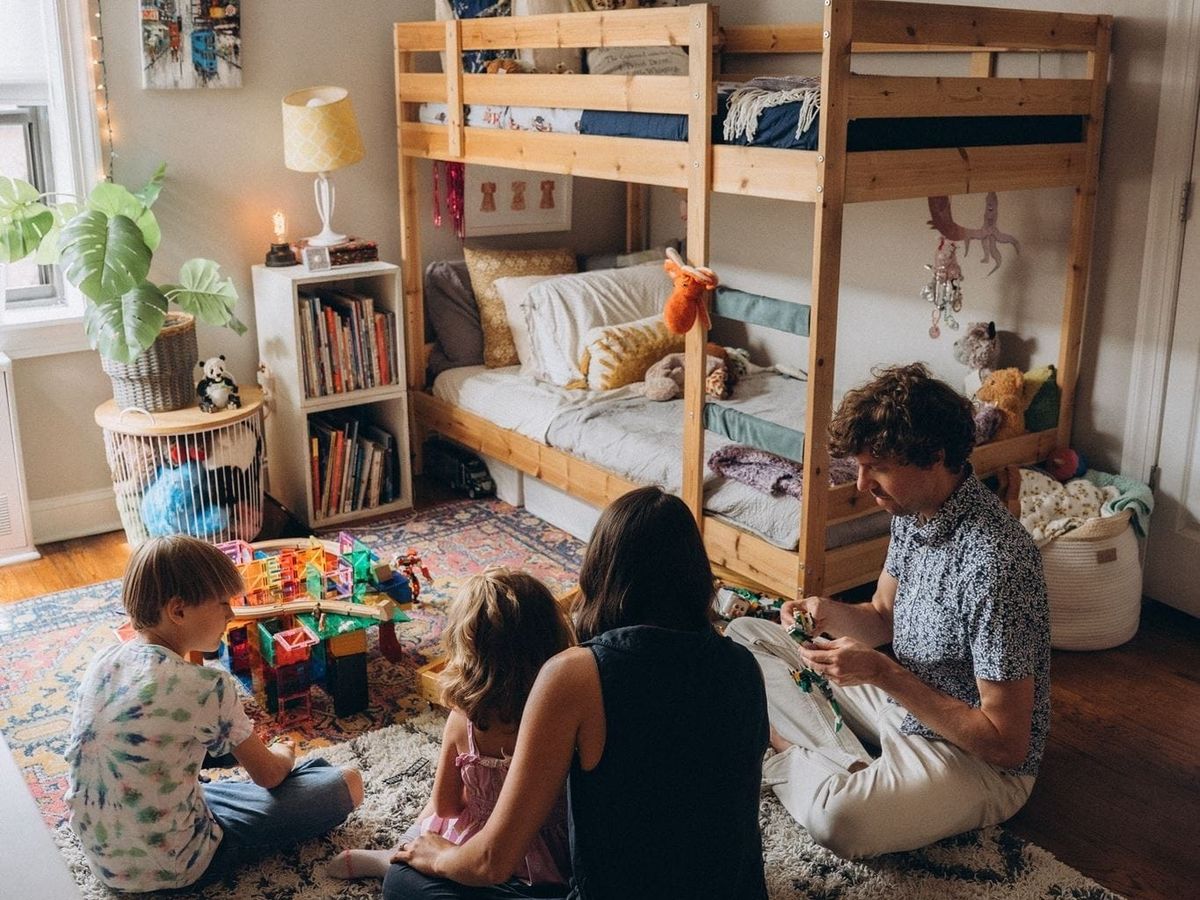
Khrystyne Jaspers, a lifestyle and organization coach, and her husband are raising an eight-year-old and a five-year-old in a 700-square-foot one-bedroom apartment in Upper Manhattan, a COVID deal that Jaspers said they seized on, even though the single bedroom initially gave them pause. She and her husband quickly saw that if they gave the kids the bedroom, relegating their toys and play area to there as well, they could free up the living room to be their own; they'd just have to figure out where to sleep.
The solution: a good old-fashioned Murphy bed. She describes it as a "sustainability move" that allowed her family to stay in the city while living within their means.
Murphy beds are still a thriving industry in the city, with several companies providing ready-to-assemble options (or you can have them install it). They found theirs on BredaBeds.
"I calculated it in my apartment: it saved us 30% of our square footage on our floor just by putting a bed on the wall," Jaspers said.
While Jaspers reconfigured her living room to double as her bedroom, other New Yorkers have created rooms within rooms using temporary dividers, throwing up curtains, screens, or literal walls. Caesar Ekya, owner of S'Mac, first invested in a pressurized wall to create a makeshift nursery in his and his wife's bedroom of their 1,000-square-foot Lower East Side apartment.
"It was just big enough to have a crib in there, close the door and then, you know, sleep close to them, but not in the same room," Ekya explained. (The second bedroom was initially used for visitors, and then a bedroom when they had a second kid.)

Ekya liked that the pressurized wall created a temporary partition that goes up to the ceiling (modifiable if you want to include a door or a window) and it only put him back about $700. Because the wall is held in place by pressure, but isn't hammered or screwed into anything, you (or the company) can remove it at any point without causing any damage to the ceiling or adjacent walls. (Read more about how pressurized walls work in this Brick Underground piece.)
Ekya and his wife have since moved into another similarly-sized apartment, where their boys, now 13 and 16 years old, are sharing a bedroom. Ekya is considering installing a pressurized wall to divide their room so the big kids can have a little bit of personal space.
Think outside the box
To thrive in a smaller living space, you have to get creative, and challenge any preconceived notions you might have about what should go where.
"It's such a simple thing, but people just have it in their head, 'This room is for a kitchen, this room is for sleeping,'" said Jaspers, who parlayed her personal journey navigating her one-bedroom as a family of four into a career as a small space design and organizational coach. She shares her tips on Instagram.
Instead of holding onto rigid ideas, Jaspers recommends taking stock of what you prioritize in your space, and being ready to pivot. For example, she repurposed a kitchen cabinet into an arts-and-crafts cubby for her kids, because having a designated area for that was more important to her than, say, extra kitchen appliances. In my apartment, we use one for sports equipment. Why not?
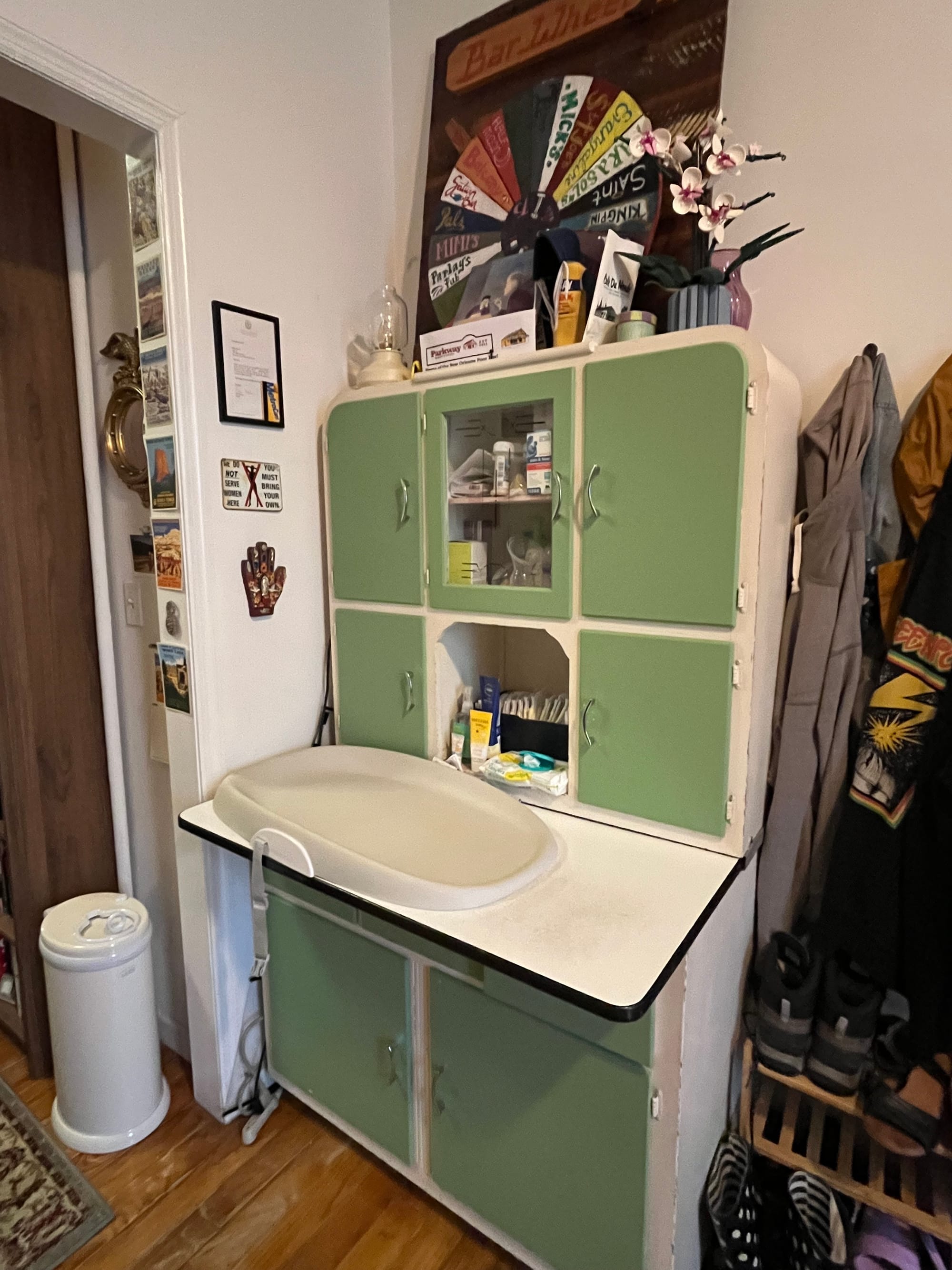
Having furniture that provides multiple functions kills (many) birds with one stone, saves space, and can be more sustainable, too. Instead of buying a designated changing table, we repainted our beloved antique hoosier, placing a Skip Hop diaper changing pad on the counter and filling the compartments with easy-to-reach baby supplies. There are still enough drawers and cabinets left over to hold the dog's food, medicine, first aid, toiletries, sundries like bike supplies, and even a drawer for our winter hats, scarves and gloves.
Sometimes a new product comes with multiple uses. Crown Heights resident Jay Ackley, new dad to a three-month old baby boy, Simon, opted for a bassinet, the Arm's Reach Co-Sleeper, that has wheels, so in the daytime he and his co-parents can essentially push their baby around the apartment, keeping nap and play time mobile, rather than purchasing a Pack 'n Play that would take up its own real estate in the living room.
Problem solve with clever design
Take the Lovevery play gym. It's a favorite among parents, but the arches that the toys hang from frustratingly don't disassemble, so you end up with this "four-foot-by-four-foot thing in your living room all the time" that you can't easily put away, explained Ackley.
Lurking on a Park Slope Parents chat, Ackley learned about a guy who 3D printed a "locking folding connector" that enables the arches to actually collapse; all the parents were gagged. He promptly ordered one on Etsy. "[Now] we can actually make our living room look like a real living room if we want to," he said.
Jaspers recommends the company Transformer Table, which, as the name suggests, designs tables that transform: a dining table that turns into a desk (also, raise your hand if growing up you without fail did your homework at the kitchen table?); a small round table that extends into one that can fit multiple guests; a coffee table with storage that opens up into a couch-side table, etc.
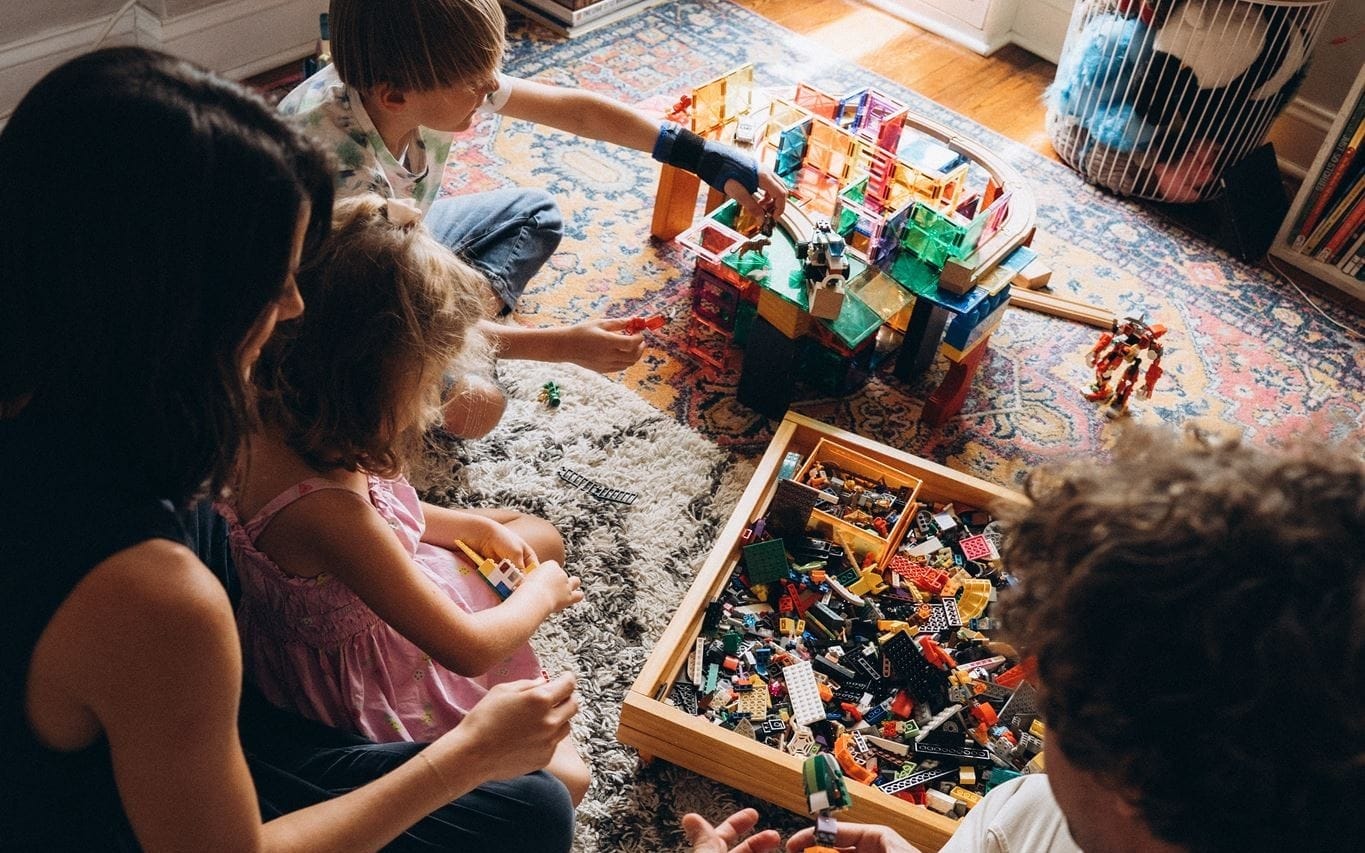
Jaspers also DIY'd a "Legos tray" out of a recycled crib frame that fits under the kids' bed, making it easy for them to pull it out to play, and put it away after, a smart design move that helps to minimize the chaos of endless Lego parts, while also facilitating intuitive and independent play for her kids (a topic Jaspers is passionate about, stemming from her background in elementary education).
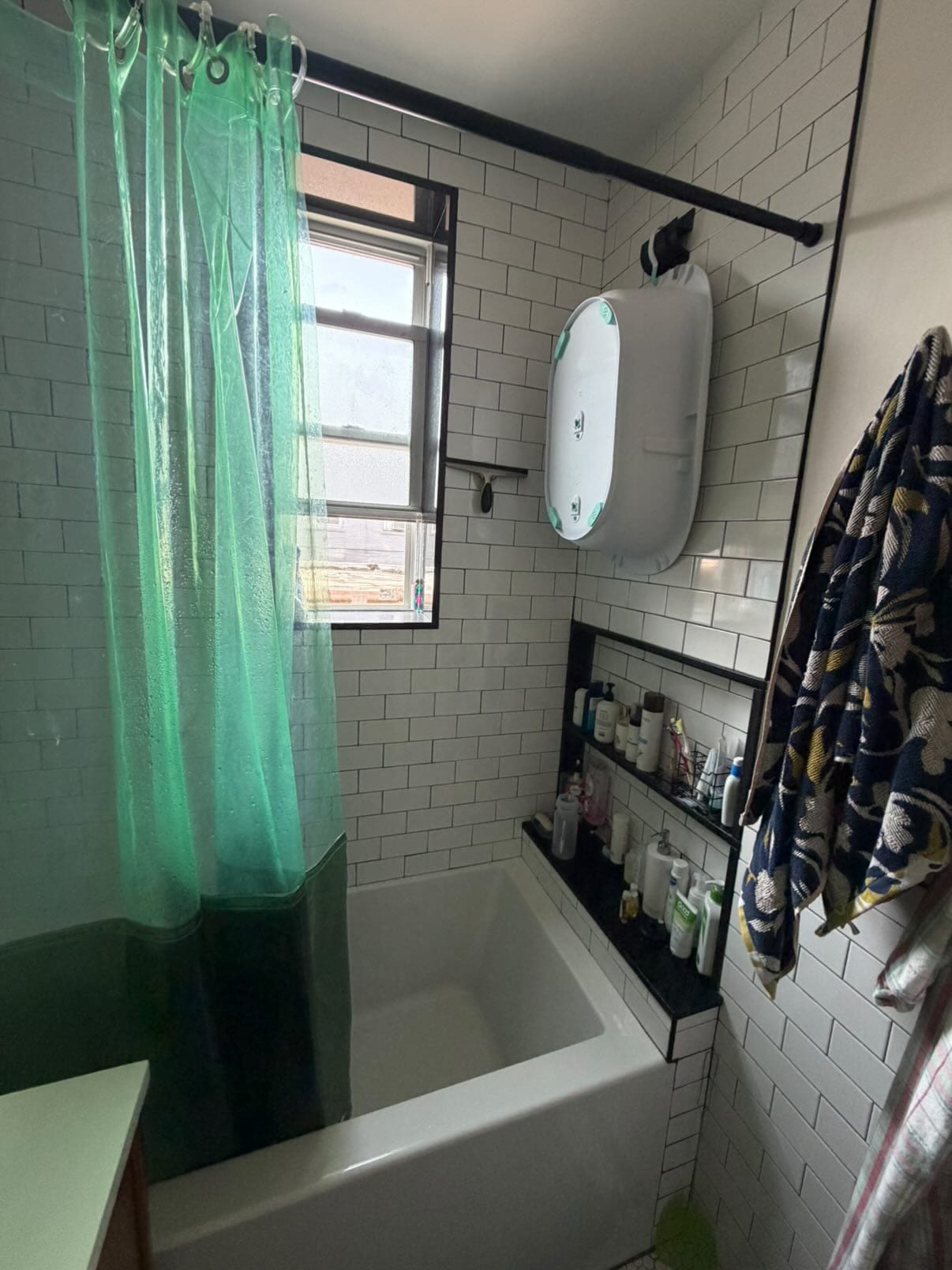
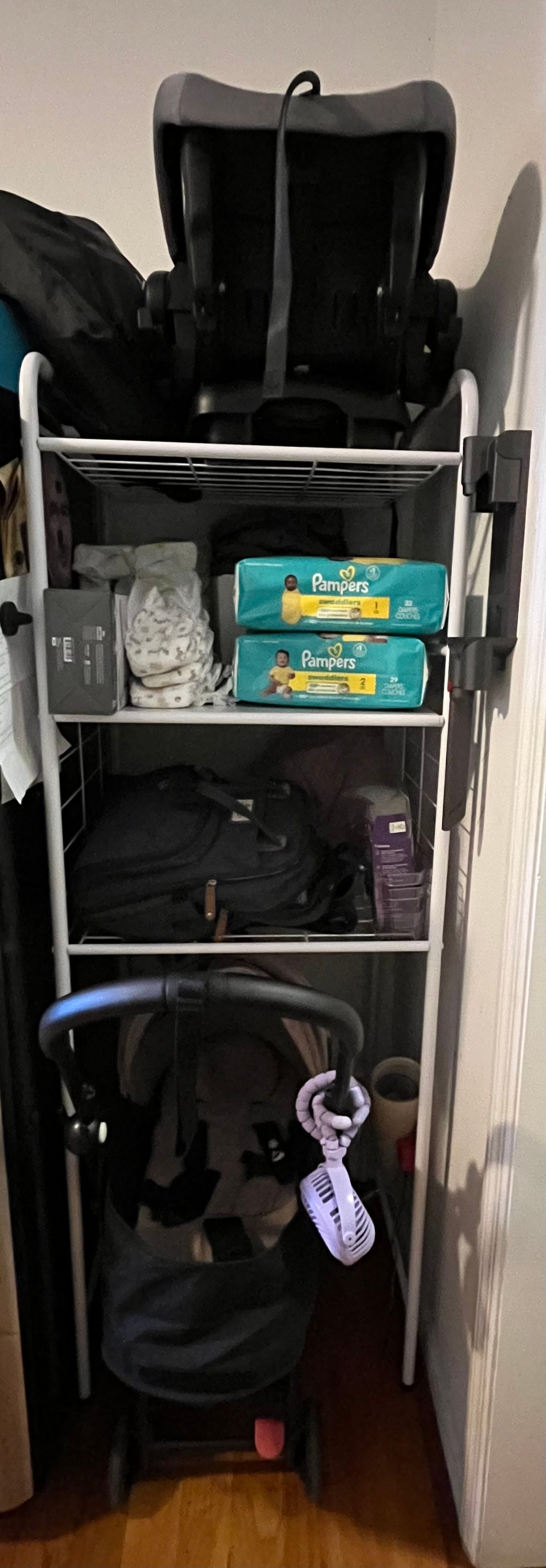
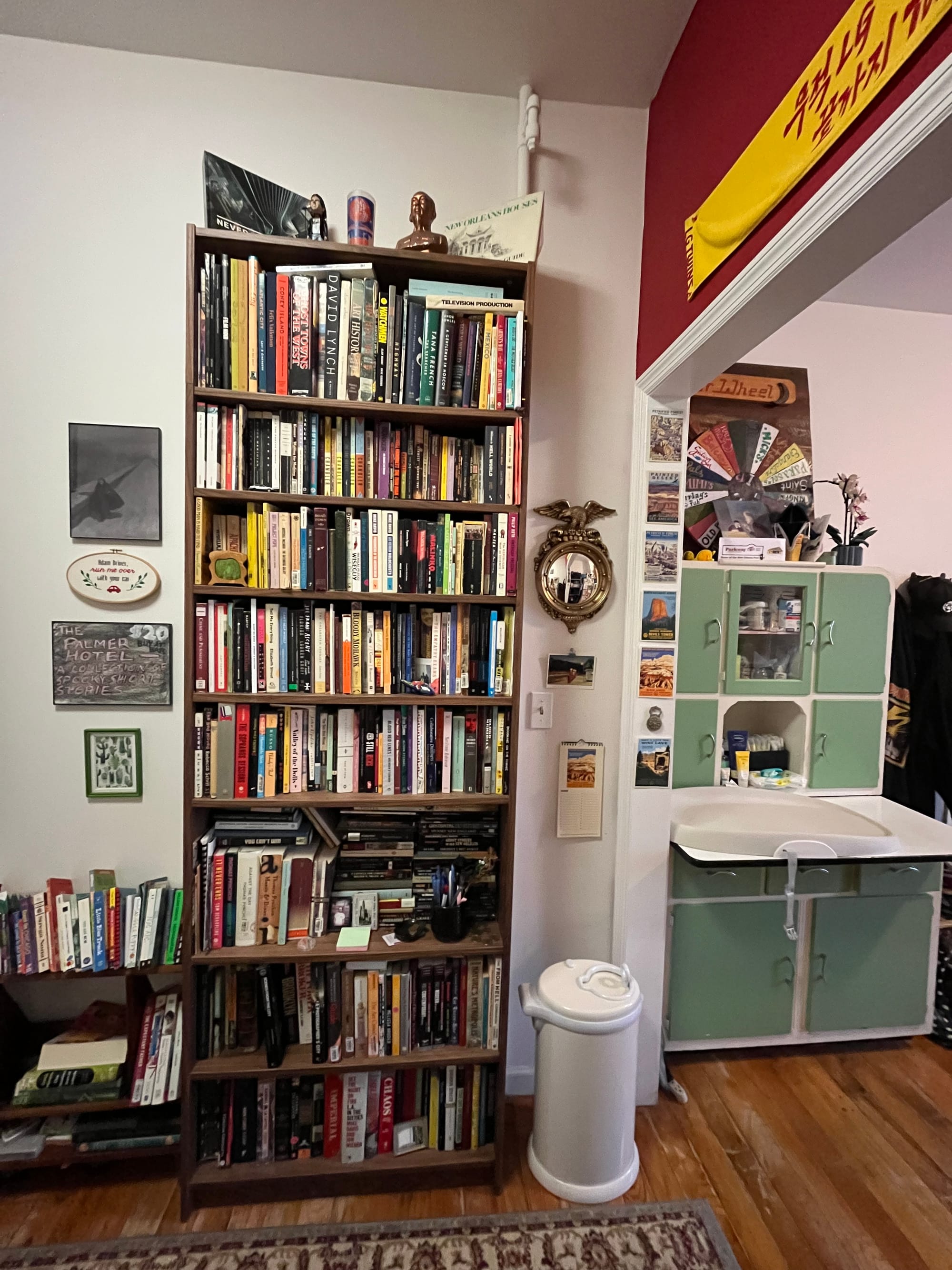
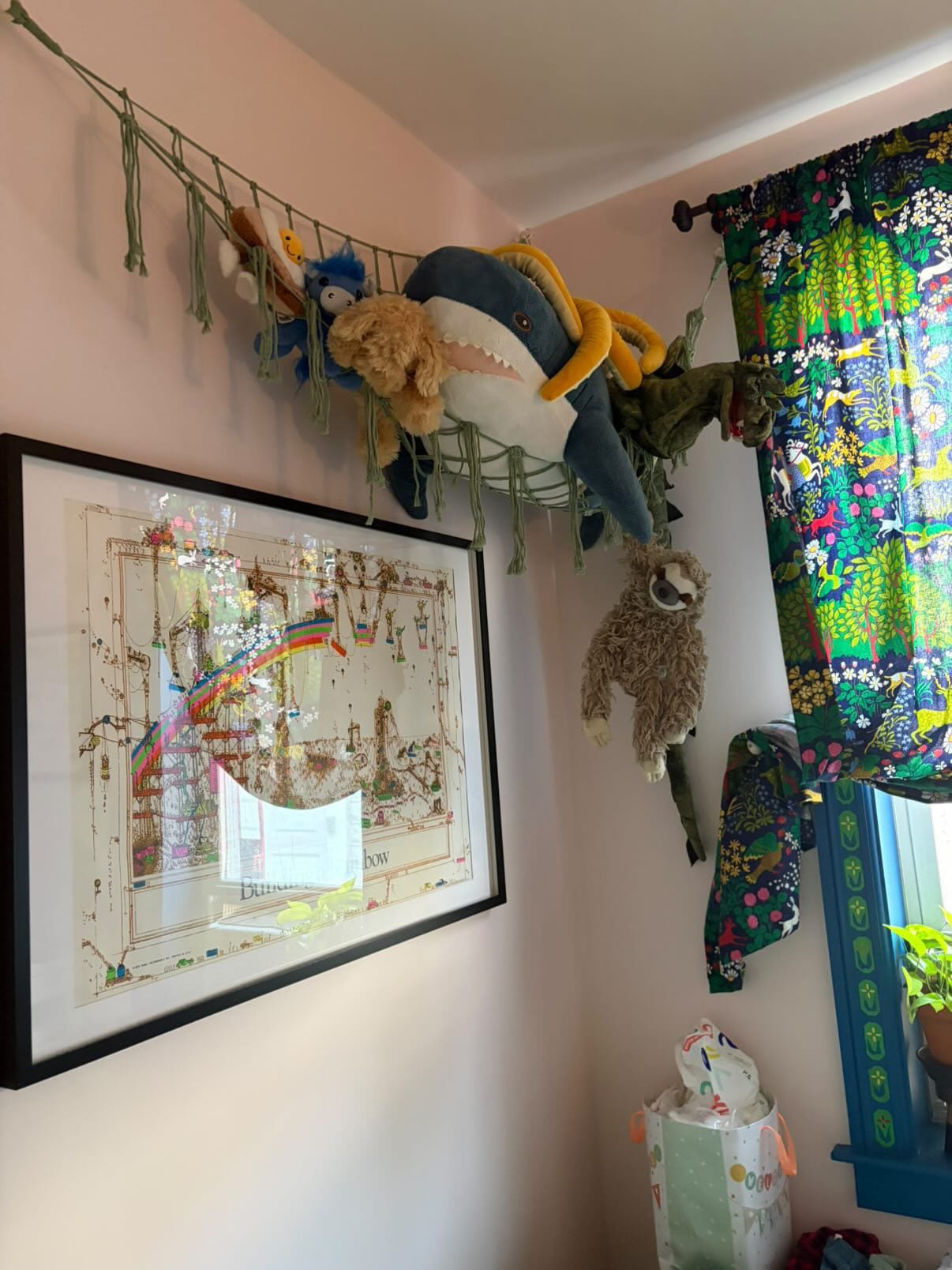
The square footage of your apartment includes all that vertical space, so make the most of it. (Shelving pictures by Kate Mooney; stuffed animal hammock and hanging bathtub via Jay Ackley)
Look up, grown-up
When you're low on square footage, vertical space is your friend.
We have extremely high ceilings in our apartment, which allowed us to consolidate pretty much all of our books in one approximately nine-foot tall bookcase (and made room for a mini, sidecar bookcase just for Loretta's baby books). We also obtained narrow and tall utility shelves to turn the aforementioned nothing space between the refrigerator and the wall into storage. Elsewhere throughout the house, we've added sconces that make reading in bed or on the couch possible without running extension cords; a mounted wall fan to cool our breakfast nook; a projector to watch movies on a wall in the living room without having a TV take up permanent space, to name a few. Put it on the wall, Paul!
Similarly, Ackley got a netted hammock to neatly stash stuffed animals in the upper corner of one room and get them off the floor. When he couldn't find a spot to store Simon's baby bathtub in their small bathroom, he installed a ladder hook right in the shower tile to hang it from (which as a bonus, allows it to easily drain).
Be ruthless about inventory management
To keep a small apartment livable, you have to be a practicing minimalist, with or without a kid in tow; when it comes to baby and kids gear and clothing, you have to be super organized to keep things from piling up as they outgrow each phase.
Jaspers advised expecting parents "to get really clear" on what they want to have in the house, "because when kids come, stuff just rolls in with them and it makes it harder" to manage.
"I always tell people it's much easier to keep things out of your house than it is to get things out of your house," she said. "Less is more."
Ekya said they have a rule in his family: you can't buy anything new unless you get rid of something first. Since their kids were born, they've relied on Facebook parenting and community giving groups to both donate and obtain used items. They also have a small storage unit in Brooklyn for things like luggage and seasonal sporting gear that they only use a few times a year.
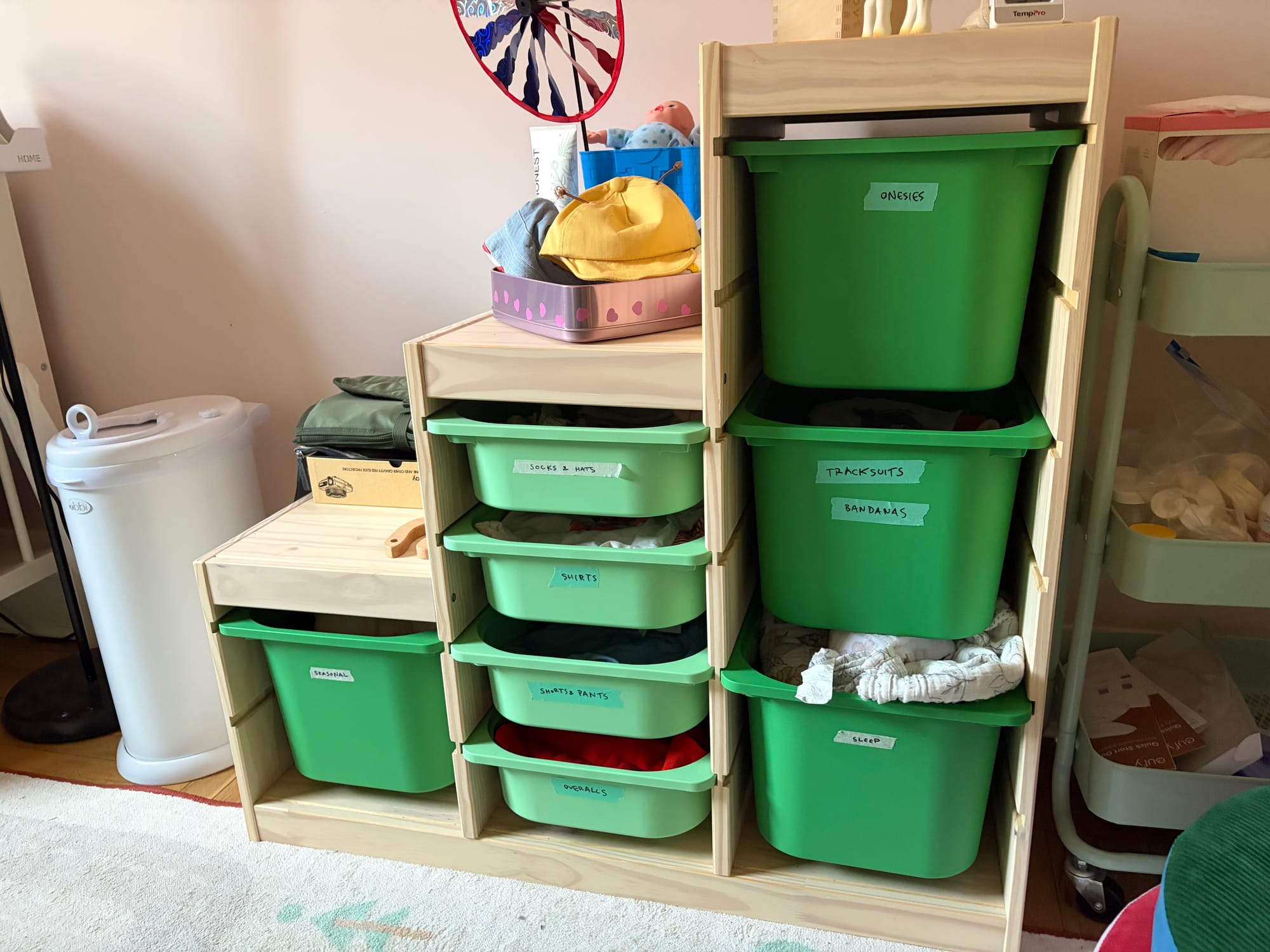
Ackley uses a set of labeled bins in IKEA shelving and is "constantly swapping in and out what's in them," to manage the pile up of outgrown or out-of-season clothes.
I feel like I should win some sort of Marie Kondo prize because I just filled a cute little basket with the main stock of onesies Loretta is wearing right now, and placed it on top of her dresser. Now I can just grab one when I'm getting her dressed, knowing it'll be the right fit without having to dig around all her hand-me-downs.
City kids for the win
While keeping things livable will require constant inventory management, an ongoing game of trial-and-error Tetris, especially as Loretta grows, I feel confident we can meet the challenge, and pivot when we need to.
I'd rather experiment and troubleshoot solutions here, in our small but "well-loved" apartment, than move my family out to some suburb where we don't know anybody.
Ekya said his city kids grew up navigating tight apartments, and "don't know any better." But they're not suffering for it.
"When we visit family, they find it odd that their cousin is in one corner of the house and, you know, the aunt in the other and you have to yell across the house," Ekya said. "When we go to grandma's house, they do enjoy the backyard, but if I ask, ‘So do you want to move here?' They're like, 'No, I'm fine where I was.'"
 Kate Mooney

Comments ()