
What do subway delays mean and how do they affect you?
Some delays last minutes, some last hours, but how can you tell when a delay is more or less serious?
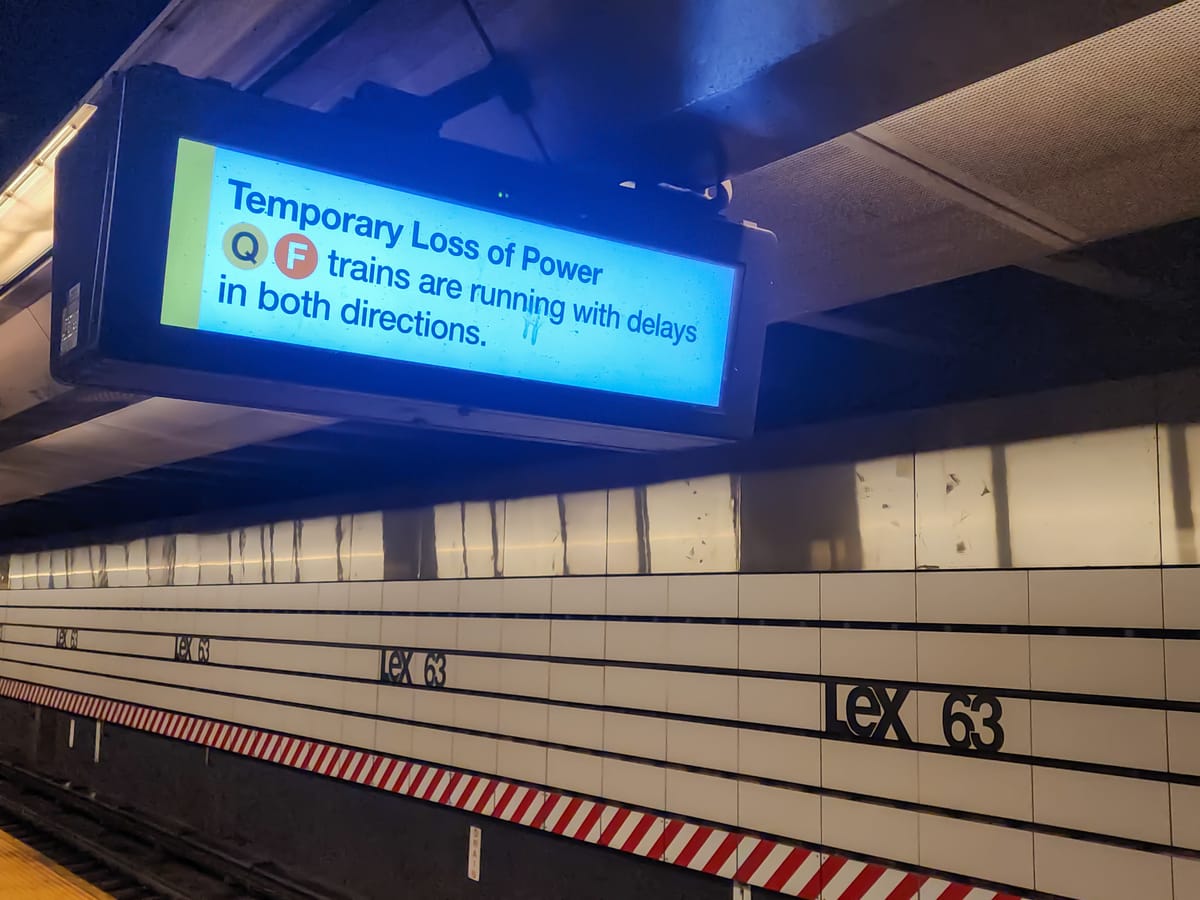
The New York City subway is the backbone of New York City. Every year, over 2.7 million trains are scheduled to run and last year, 486,614 trains did not arrive at their destination on time. It’s good that over three quarters of trains arrive on time, but those trains that do not arrive on time can completely derail an entire day for people.
Every New Yorker has had their commute disrupted at one point or another, because even the most minor disruption can disrupt the delicate rhythm of such a busy, interconnected network of trains. Some delays last minutes, but some last hours and can send a train to a completely unexpected place on the map. But how can you tell when a delay is more or less serious? For a long time, we just had to guess. There were no explanations and very little in the way of specifics; sometimes you’d get a PA announcement if the system worked. Even now, the MTA doesn’t explain delays in terms of time, nor does it elaborate on what caused a delay beyond a sentence-long description.
This leads to a lot of very understandable frustration, whether you’re stuck standing on the platform or helpless on a train. When it happens, there’s always someone (maybe you!) that needs to just let out a groan. To help you better understand what you’re dealing with, we’ve combed through the MTA’s robust open data as well as other sources to explain what the most common subway delays mean, and how many groans you should let out if you find yourself affected by one (or several at the same time).
The MTA categorizes its unplanned delays in a few categories, and while some of these can be very broad, they’re a great starting point to explain more about what these issues entail and start ranking them on the Groan-O-Meter!
The higher the Groan-O-Meter is, the more impactful those delays are and the more of these guys (😮💨) you're gonna see. One groan means that you should be okay, you might not even notice the delay happening while five groans means you will need to make alternate plans since your commute is almost certainly affected.
Police/medical emergency 😮💨
These delays are pretty simple to explain: they are delays that require a response either from the NYPD or EMS. Sick passengers, vandalism or other arrestable offenses are the most frequent of these delays. They’re usually not the worst issues, because once the rider in question is off the train, service can return to normal. If you’re on the train that needs police or medical assistance or you’re waiting for the train to get to your stop you would justifiably be annoyed, but for the majority of subway riders, this will not affect their commute much, if at all. The further away you are from a delay like this, the less it impacts you. This gets 1 groan out of 5.

Persons on trackbed 😮💨😮💨😮💨😮💨😮💨
The MTA loops this in with police/medical emergencies, but for our purposes, these are noted differently in the MTA app, and have a more pronounced impact. These delays are often listed on the MTA app as either a person struck by a train, or as an unauthorized person on the tracks. These will almost always require that power is cut from the third rail. This means no trains can pass through the tracks that are powered by the respective substation.
These can be the most impactful delays because, in order for service to continue for the most people possible, trains will either turn around early or reroute to avoid this section of track. This will affect the whole line, and can take a significant amount of time to resume normal service. These can be tragic events, and a reminder that there are worse things than a subway delay.
Still, it is a 5 out of 5 groan situation if you happen to be on a suspended train line.
Signals 😮💨😮💨😮💨
Subway signals are the backbone of the system, they control when and where trains go and space them out at a safe distance. When these stop working it can be disastrous. This is one of the most common causes for an unplanned delay, if not the most common caus. Many of these signals, and the equipment used to operate them are more than 100 years old, which means they break down pretty easily. A lot of times, the first alert comes out before it is clear what the exact problem is, which is why the alert is so vague in the MTA app. Signal problems may sound bad, but considering that these are common delays, it’s hard to say that they are definitely going to ruin your day.
Unless, that is, the signal happens to be controlling an area where trains need to switch lines, a track setup called an interlocking. For example, a signal problem at 96th Street on the 1/2/3 would be more impactful than one at 72nd Street one stop before, because at 72nd Street train traffic needs to be carefully controlled, so there’s no way around the signal issue. Trains have to either turn around before 96th Street or reroute to a completely different line, if that’s even possible. This happens fairly often, and is why you’ve seen something like a 2 running on the 5 or an F running on the A/C in Lower Manhattan.
If you see a signal problem is centered on a major station where a lot of lines converge, definitely brace for impact. One example occurred this summer, when a power outage messed up signals on Eighth Avenue and Sixthy Avenue. There is a lot of potential here for these to be bad, and when a signal problem gets bad it can be really bad. Even if one of these ends up only being a minor delay, I always get anxious that it could spiral out of control.
I give signal problems 3 groans out of 5.
Subway car
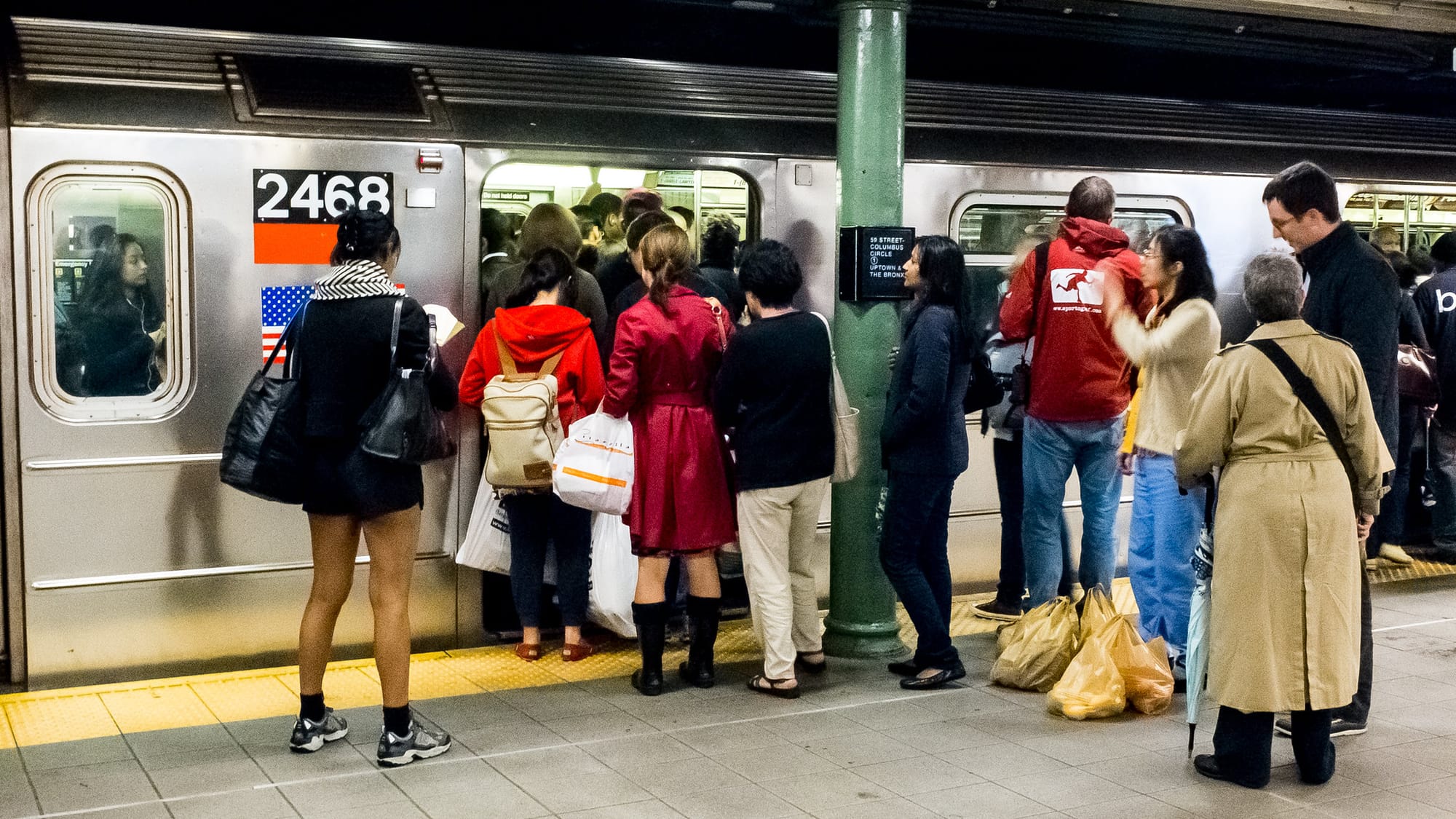
Defined by the MTA as “Broken doors, seats, windows, lights, brakes, and other problems caused by defective trains, such as power or air conditioning failures,” this is a very broad set of issues, some of them fairly common like door problems and some less common like a chicken running loose on the N train overnight.
Door Problems, 1/2 😮💨
The exact nature of the delay is what determines how groan-worthy of an issue you’re dealing with. If there’s a door problem, for instance, a member of the train crew has to try to fix the door. Sometimes the door has to be taken out of service, but the train can still run. While it can be a bit annoying, if a door is taken out of service, it results in the door being locked and unable to open. Door problems are usually not a big deal, even if you face it you might not even notice it. It can be fixed in the time it takes for you to get out of your apartment and down to the subway.
I would give these half a groan out of 5 for being so quick to fix.
 Virginia K. Smith
Train out of service 😮💨😮💨😮💨😮💨
In a worst-case scenario. a train is taken completely out of service. Once a train is taken out of service, your commute becomes a headache. First, the train crew has to make sure all the passengers are off the train. In the short term, the train that pulls into the station after this delay is resolved will be extremely crowded, fitting two trains’ worth of passengers into one train's worth of space. It also creates a gap in service, which can increase your wait time exponentially, especially if a train is taken out of service at night or on a weekend.
The process of taking a train out of service can also lead to rerouting, in a scenario where it makes more sense for everyone if a train goes around the problem rather than sitting behind it waiting for it to clear; moving a busted train can take a bit of time. This is sometimes why a train goes from local to express without much heads up. I give it 2.5 groans out of 5 if you’re on a train that has to get around a subway car issue.
But, if you’re on a train that is taken out of service or the passenger on the subsequent overcrowded car, this shoots up to 4 groans out of 5. This is one of my least favorite things that happens on the subway.
Emergency brake activation 😮💨😮💨😮💨
Another common delay type in this genre is the activation of the train’s emergency brakes. The emergency brake can be pulled by train riders, and oftentimes, when it happens, there is no true safety risk that requires the emergency brake to be pulled. The only reason for a person to pull the brake is if the subway moving would cause serious danger to a person's life, such as a person's arm being stuck in the train door.
On older trains, the emergency brake cord is very visible and easy to pull. Newer trains still have the emergency brake accessible to passengers in every car, but they are in a proprietary cabinet with an alarm that makes it just a bit harder to falsely pull. I give these delays 3 groans out of 5, with added points if you happen to be standing on a train when an emergency brake is pulled. It is really not fun.

Track 😮💨😮💨😮💨
This category is pretty important, and it covers some delays that are not expressly the MTA’s fault. Track fires are often caused by us, the passengers. When people throw trash onto the tracks, it accumulates and if that trash comes into contact with the third rail it can create a fire. As you can imagine, a fire is a very serious situation that requires FDNY response, cleanup and potentially even evacuations to prevent smoke inhalation.
The MTA has tried to tackle this problem with special vacuum trains that can suck up all the trash on the tracks, and it’s been working well. Track fires, like almost every delay on this list, are inevitably going to happen every once in a while, but it is nice to see investment in reducing our annoyance levels. Track fires get 3 groans out of 5, as they can be very disruptive. They’re definitely preventable though. Not only can we do something about it by being mindful of our litter, but the MTA invested the money to solve the problem.
Switch problems/broken rail 😮💨😮💨😮💨😮💨😮💨
There are also much more disruptive track issues that are not our fault, the most common being switch problems and broken rails. Switches are key parts of the track, responsible for sending a train to a different line like at 125th Street where the 6 branches off from the 4/5, to guide it onto the local track instead of the express track like the Q does at Prospect Park, or turning a train around at the end of the line like how the 7 turns around at Hudson Yards.
When these disrupt the flow of trains, it will result in severe impacts on not just one subway line but possibly multiple lines depending on where in the system the switch breaks. The same goes with broken rails. If a rail is broken, no train can go across that track (duh).
These delays can take a bit of time too, and because they mean all trains must go around the problem area while it is powered off and fixed, so these get the maximum 5 groans out of 5. If you see these delays, start looking at alternate ways to get where you need to go.
Stations and structures 😮💨😮💨😮💨😮💨
This is a very uncommon set of delays, but if you happen to come across one, it can be pretty significant. These delays cover, “damage to tunnels or debris on the right-of-way; electrical problems such as defective wires, cables, and power systems that aren't on trains, including traction power to run the trains.”
One recent example, which I believe falls in this category, is from October, when a serial copper thief pulled wires off the tunnel and cut power to the signals. While this exact type of vandalism is very uncommon, the fact that this delayed 755 trains over three days does show how important these cables are, and how impactful the types of delays in this category are. These are hard to score because you are very unlikely to deal with these, but if you do, then it is pretty eventful. I am going to go with 4 groans out of 5.
Other
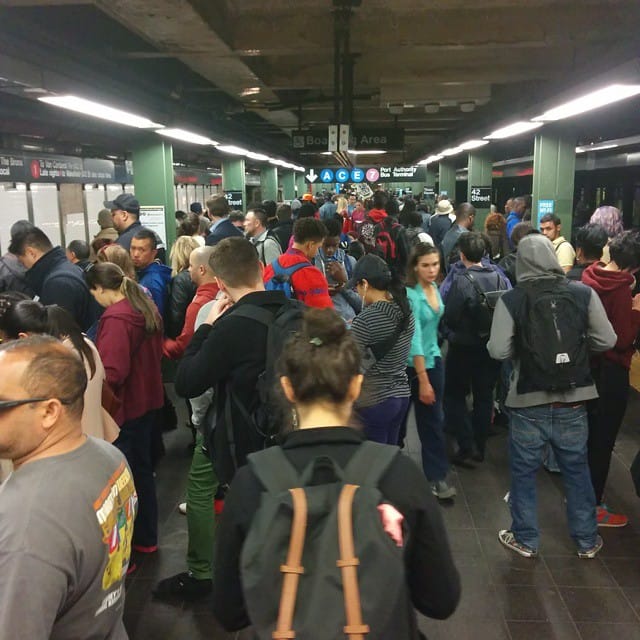
This is the most obvious catch all of the MTA’s list of delays. It defines the “others” as “inclement weather, water conditions, external power supply failures, as well as drawbridge openings and other external conditions, such as unstable nearby buildings, nearby fires, civil demonstrations, and/or parades.” Most of these are pretty insignificant and rare, not even worthy of a groan. Let’s focus on the three most prevalent delays in this category:
Fallen trees 😮💨😮💨
There are parts of the subway network that are particularly vulnerable to fallen trees caused by inclement weather. The B/Q as well as the N in Brooklyn are pretty infamous for this issue, since a lot of those lines are buried in an open train cut that’s technically below-ground but is still exposed to the elements. You’ll notice a lot of trees above the tracks around there, and while the MTA does try to keep them from being a hazard, sometimes the wind has other plans.
These get a 2 out of 5 groan. There is a potential for a fallen tree to damage the tracks, but if that doesn’t happen, then it is fairly easy to restore service as soon as the track is clear of any debris.
Flooding 😮💨😮💨😮💨
Everyone has also seen at least one viral video of the subway flooding, which in extreme circumstances can lead to severe disruptions because water does not mix well with the third rail. These accounted for very few delays in reality, regardless of what New York City-based Instagram accounts sometimes suggest.
Your commute will definitely be wetter, and you might regret wearing sneakers, but it will not disrupt the actual trains on the tracks. These get 3 out of 5 groans, mainly because even if the trains are running fine, it can still be pretty annoying to deal with all that water. There is also still the chance that the floods force power to be cut to the third or stations to be closed, which bumps up the score, since the worst case scenario is really bad.
 Tim Donnelly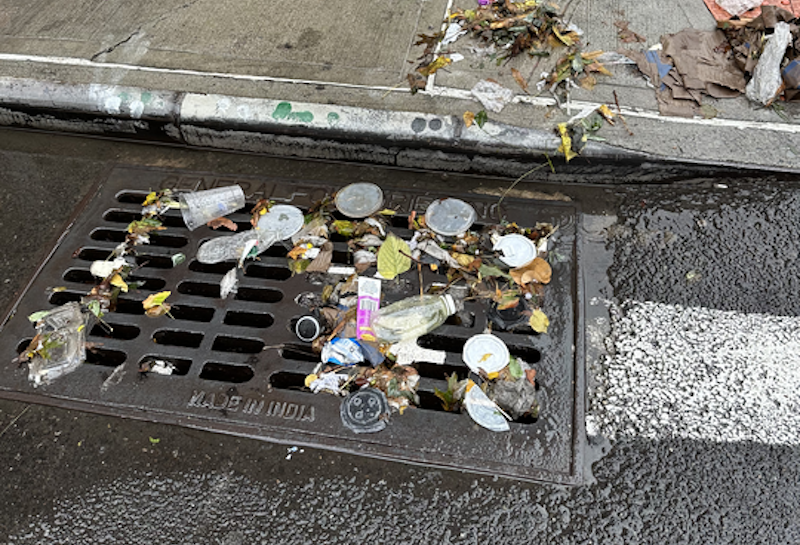
Power failures 😮💨😮💨😮💨😮💨😮💨
The last major delay in this category is external power supply failures. Last year, there was a viral incident where a Con Edison power station exploded near Jay Street-MetroTech, knocking out service the A,C, G and F trains. These are rather infrequent, but I am going to give them a 5 out of 5 groan scale, since anything involving power is immediately disruptive and anything that requires external assistance will take longer to coordinate. Even though these are infrequent outside of the summer, if you are unlucky enough to be caught in this delay you will be more than annoyed.
What to do besides groan
Let’s say it's too late, you already paid your fare and went to wait for your train but you find to your surprise that the train is delayed or rerouted! What do you do now?
First things first, stay calm. You’re in New York, not the middle of the forest. There is always another way to get where you need to go. Will it be as simple? No, but you will get where you need to go, I promise.
Make sure you talk to the station agent as well, they are useful resources for alternate routes and they give you the most important item for rerouting, a GO pass. GO passes allow you to use buses and re-enter the subway if you already paid a fare and unplanned delays force you to find another route. All you have to do is ask the station agent for a pass, then show either a bus driver or another station agent the pass so they can let you board. A lot of people are unaware or forget to get a GO pass, and you’re giving the MTA more money than you need to if you neglect grabbing one.
Also, keep in mind there are dozens of people who are responsible for juggling these delays with the needs of the commuters, and unless you are one of those dispatchers I hope you feel a sense of relief that you don’t have to deal with these for the entirety of your work day.

Comments ()