
Please, I beg you to stop putting food menus on TVs
It's the worst way to order food, and it portends an evil dynamic pricing future, too
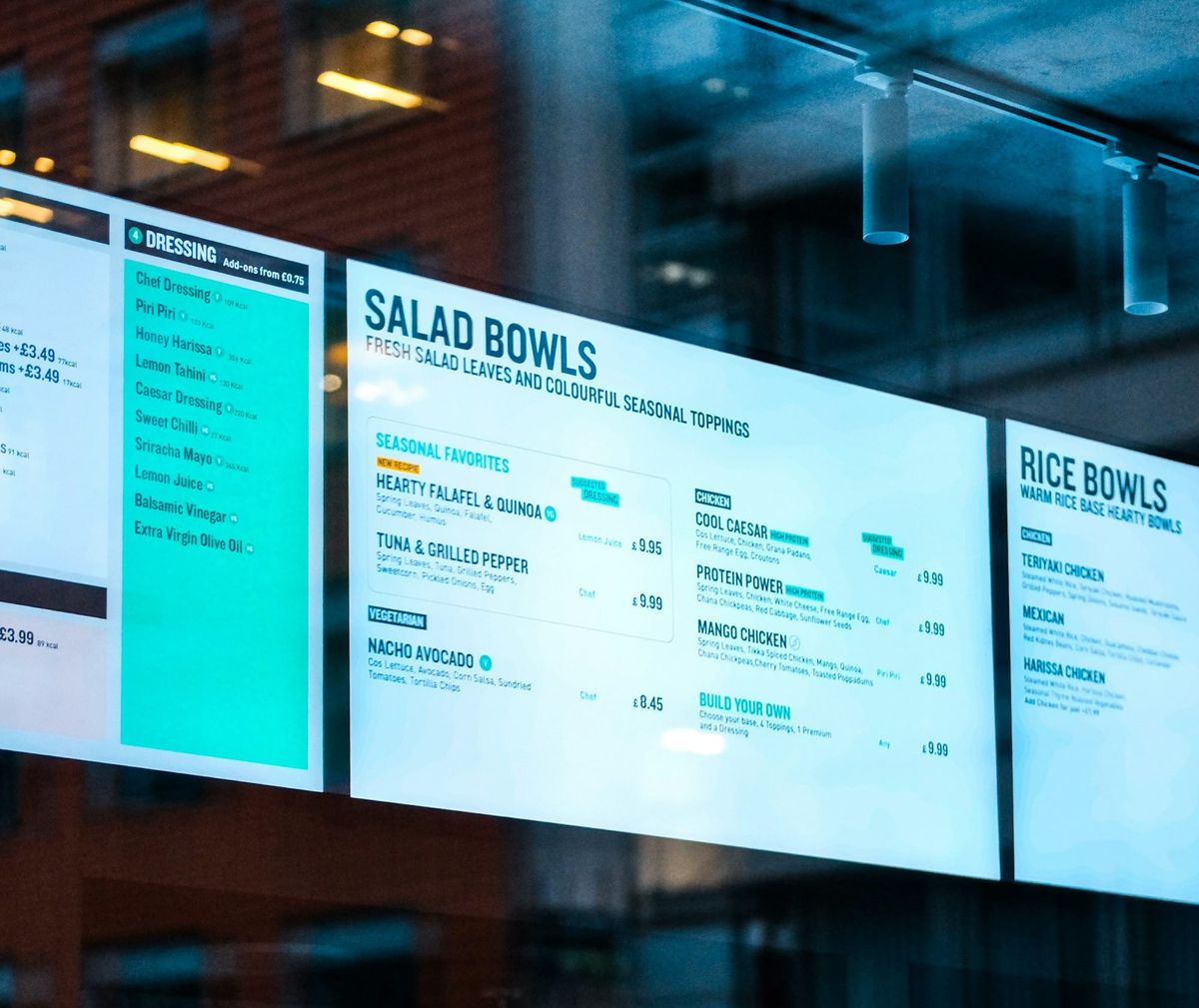
We’re firmly in the tank for the exquisite joys of minor league baseball in this city, but last week at the Cyclones stadium, the vibes were very off.
Not only was it a cold and glum start to a mostly washed-out Memorial Day weekend, concessions at the minor league stadium had undergone some sort of refresh in the offseason seemed to suck their small-time charm out to sea. The stands were covered in aggressive new, suspiciously-AI coded art. None of the concession workers seemed to understand the Friday night ticket meal deal that happens every Friday night all summer long for the past several seasons. The condiment packets were all in one big wet pile for some unclear reason. At least the Cyclones pulled off a huge 10-3 win.
Worse for me personally: the veggie dogs, a staple of both the minor league stadium and its big league cousin at Citi Field, appeared to have vanished from the menu. This was shocking news to the several other people in our group who don’t need to consume the international conglomeration of mystery beef parts that go into a Nathan’s hot dog with our baseball game; more so because we were also counting on it as our only dinner that night in Coney Island, a rather vegan-hostile place in general.
But figuring out whether they were truly gone from the menu took longer than it should have, because the stadium has embraced a technology that is a blight on the food-ordering public, a stick-in-the-eye to anyone trying to read a list of food items, a move that haunts us with technology in another area where we did not need it. The stadium has shifted its concession menus from static signage to the worst possible way to display a menu: a constantly rotating TV screen.
Those screens blink away from the list of items for sale faster than your eye can digest the information, only to switch to a picture of a pretzel or a soda, meant to entice you to buy those things, as if there wasn’t a rotating rotisserie case of pretzels right in front of you and Pepsi branding everywhere already. It took me a few minutes of standing there, waiting for the screen to cycle back so I could properly analyze it, only to be disappointed.
I know that it can seem, in current horrors of the wide world, that there is no room for petty grievances like this, but not today, not here, friends: we’re going to take a minute to call out this aggravating technology that has infected bagel shops, delis and concession stands citywide, frustrating hungry line-waiters and creating a technical solution to a problem that simple paper and paint have perfected for centuries. I have seen this elsewhere, from the concessions at Central Park SummerStage to a bagel shop in my neighborhood. It is an assault on the cozyness of any place, but it’s also dumb as hell, and potentially nefarious.
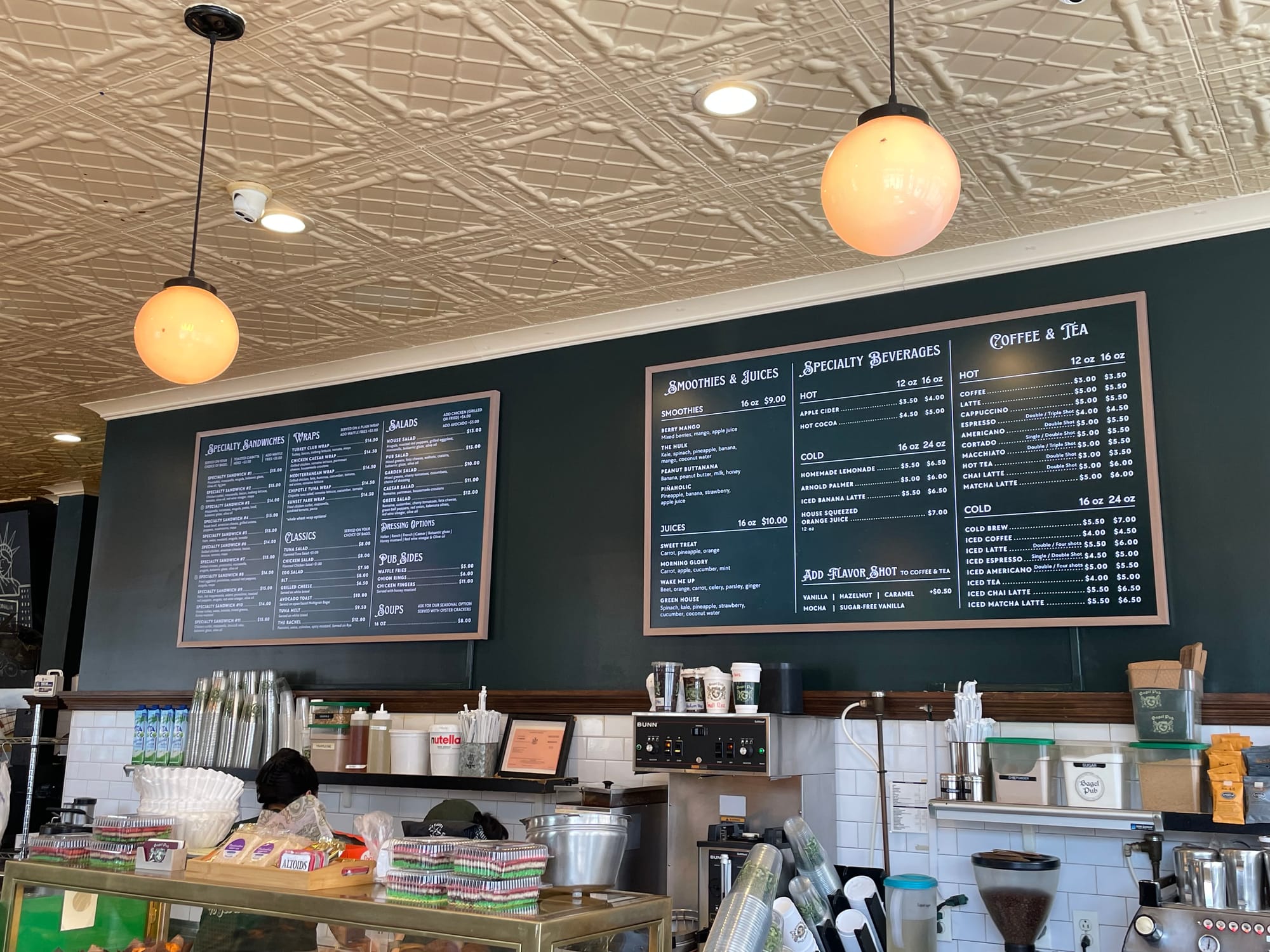
The digital menu screen is a sign of a failing society, one that values the need to stuff extra advertising into every crevice of your eyeballs, even when you are in the very act of buying a product being advertised. You are trying to pick an ice cream from the menu, price compare sandwiches or read all the ingredients on a salad, only for the screen to jump away, cycle to another page or aggressively do sponsored content for a sandwich you were never going to buy. It is a fellow handmaiden of hell with the odious QR code menu, an idea that you simply must engage with a screen whenever you want to leave the house, even for the very analog experience of enjoying a meal.

Support independent local journalism. Become a member of The Groove today and you will unlock perks, discounts and more!
The selling point of these, according to industry providers I researched, is to increase sales by providing pictures and animations of the food, allowing quicker updates to the menu and providing chances to push promotions. People buy more when they can see pictures of the food, the companies argue; and restaurants save money by not having to replace signage when items change.
There is a more pernicious thing at work here, I think, related to a desire to jack everything into a technological mainframe that can be updated and changed on a whim, another subscription service businesses hire forever instead of owning outright. I never understood how a bank of ever-lit TV screens is more efficient than a physical menu, even if it’s one of those quaint but labor-intensive peg letter boards. A three-screen installation and operation, which includes hardware and software to update it, can cost between $4,600–$13,200 for the first year, according to one local provider.
The push to digitize everything means there’s an energy suck and potential endless stream of e-waste being produced just to tell you, say, what flavors of chicken wings a place has, a communication innovation no one really needed.
But consider this lurking evil and how TV menus will inevitably enable it: dynamic pricing, which is coming for everything faster than you know. (You’re probably already subjected to it, especially if you’ve ordered food through a third-party app lately.)
For the uninitiated, dynamic pricing is the sinister plan to remove objectivity from cost. It means stores can use whatever data they can harvest about you — whether from facial recognition software, shopping history or just the time of day you are seeking a smoothie — to change prices based on how much they think you will pay. This is easy to do online for Ticketmaster or Amazon, it’s much more challenging for the bagel shop or deli to try to gouge you with their posted static menu. Yet, one local provider of TV screen menus already advertises how its screens can be used for dynamic pricing. Gouging should only happen the old fashion way: whether the bodega guy knows you well enough to tell you the real price for a sandwich.
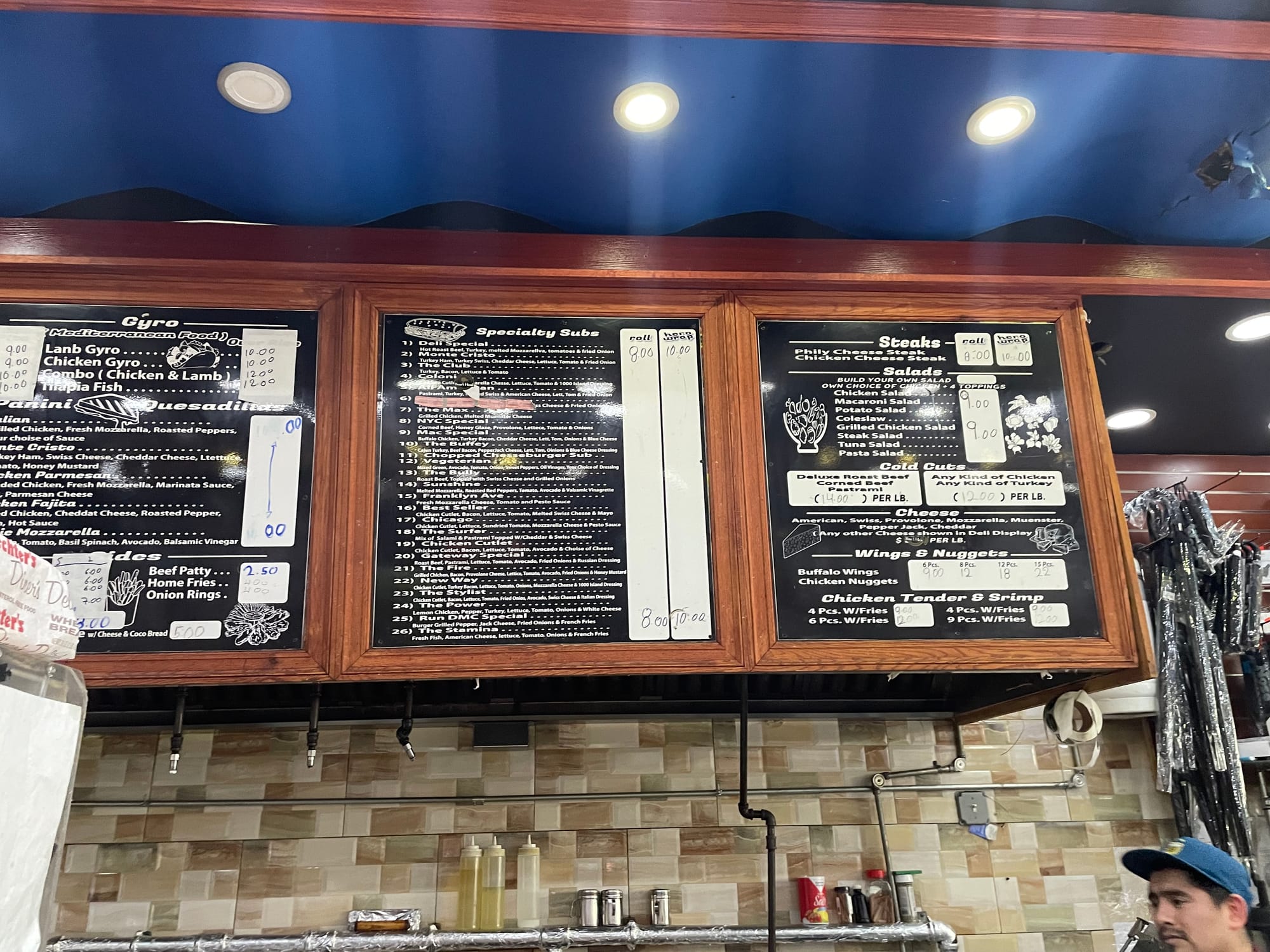
All that is assuming of course that the digital menus survive the inevitable fate of all over-designed tech: breaking down, either in the physical sense or because the one guy who has the password for changing the screens doesn’t work there any more. Then we, the food-ordering public, are served with a totally useless menu: the TV’s system menu that advises you that no input has been found, while the Verizon logo bounces around the screen. By the screen-hawkers’ logic, I will crave to eat Verizon, but I’m pretty sure the bagel shop doesn’t sell that.

I'd rather read this Tolstoy of a menu at Sunny & Annie's Deli than have to stare at a screen. (Photo via Edenpictures/Flickr)
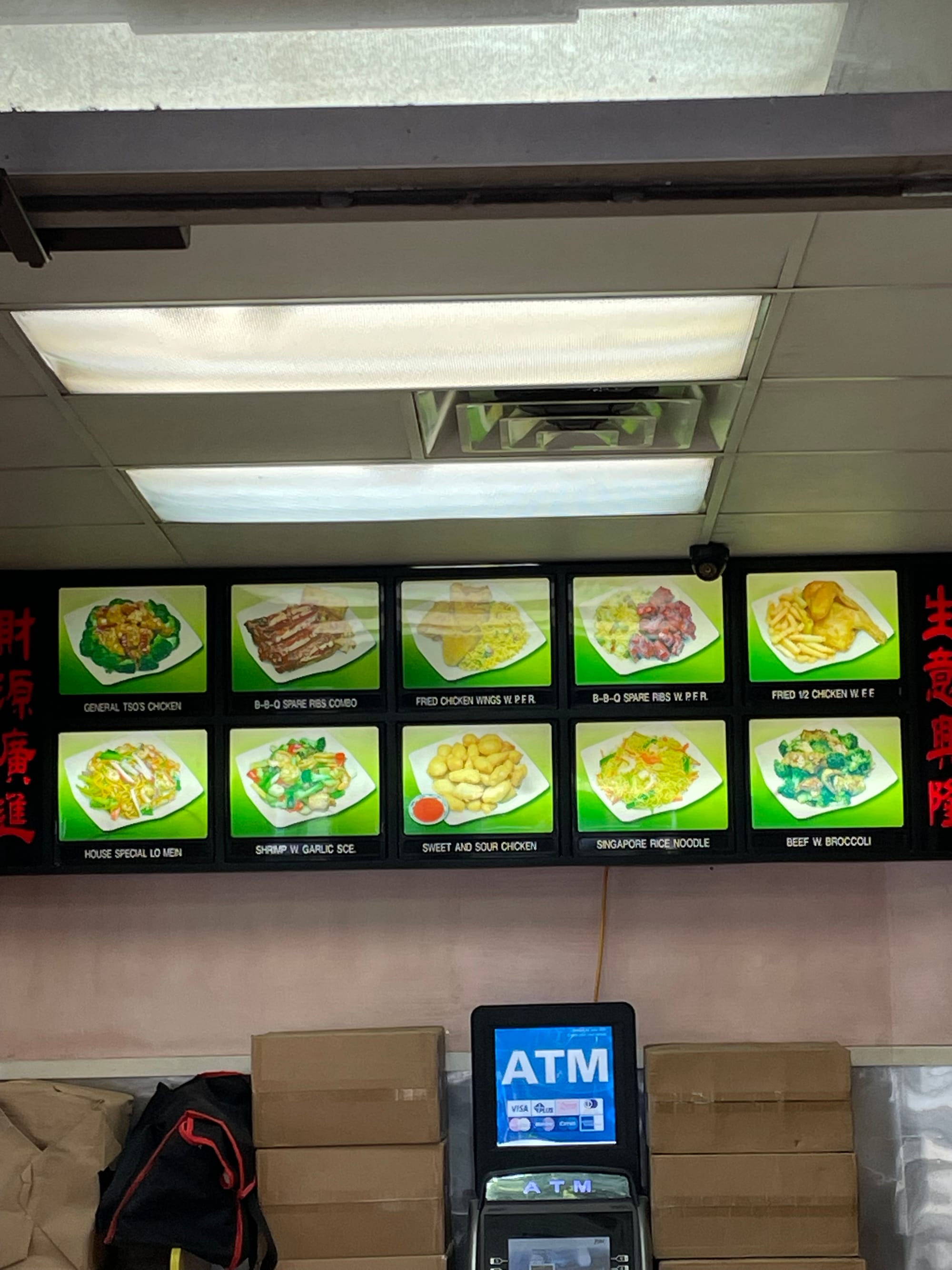
Static menus have always served as a palimpsest of a restaurant or deli’s history, with the ever-thickening line of stickers or Sharpie marks over past prices allowing you to track the steady rise of inflation via the halal plate index. The TV screen menus are the opposite of the faded Chinese food picture menu that shows you the restaurant both has history and is at least good enough that they’ve never had to update that greasy picture of lo mein that has been there since the Giuliani administration.
We spend so much of our time looking at screens, constantly distracted by flitting videos and flashing ads. When I manage to log off to sit at a baseball game, I just want to know if you have a hot dog for me, but I’m forced to have more screen time just to find out.

Comments ()